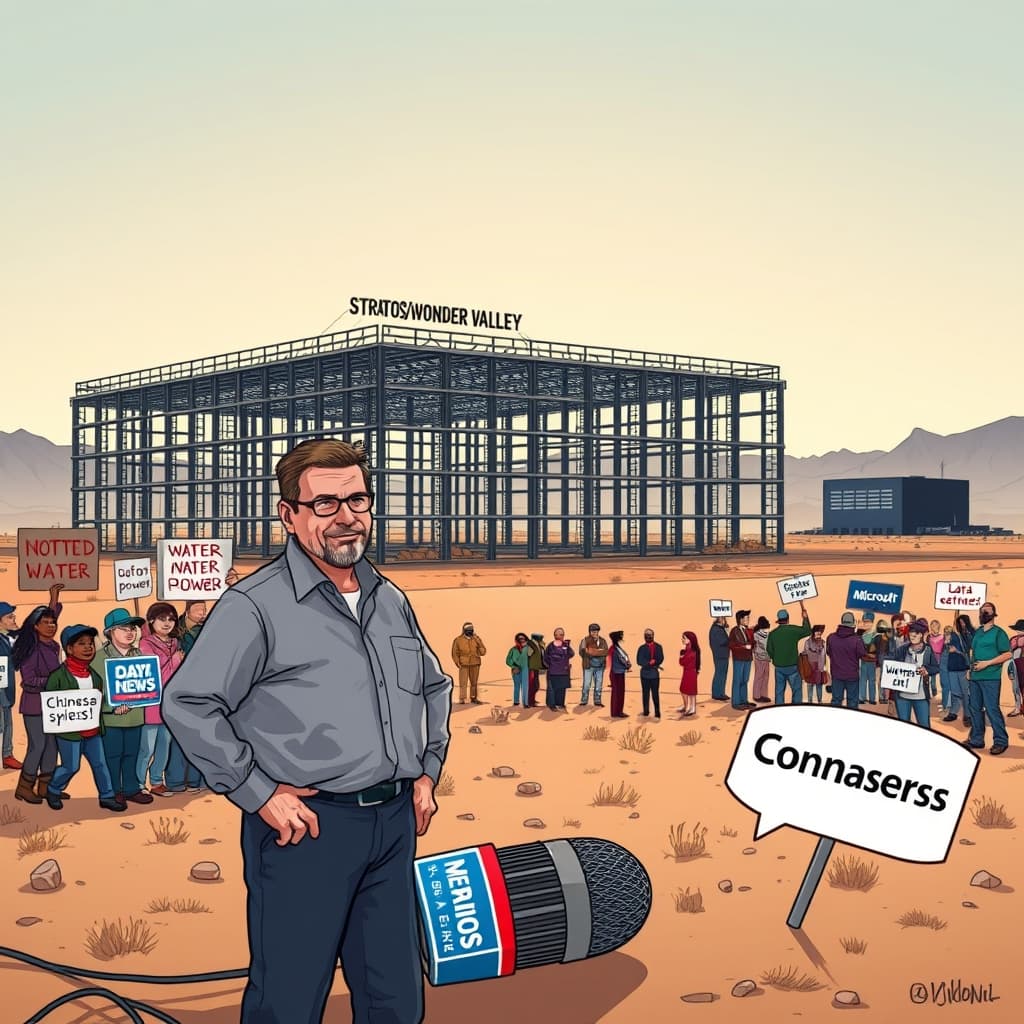
A months‑long probe of Kevin O’Leary’s Utah data‑center fiasco
Project scope and promises
Kevin O’Leary announced a plan to build the world’s largest AI data center on a 40,000‑acre site in Utah.
The development, officially named Stratos, was marketed under the moniker Wonder Valley, referencing O’Leary’s “Shark Tank” nickname.
Stratos was projected to consume nine gigawatts of electricity, more than twice the average power usage of the entire state.
The ambition was to create a massive AI campus that could host countless servers and attract major technology tenants.
O’Leary promoted the project on national television, repeatedly claiming it would be the biggest data center ever built.
Local resistance and fallout
Utah residents quickly organized opposition, arguing that the plan would strain the state’s water and energy resources.
Public meetings revealed that many locals had not been consulted during the early planning stages.
Critics were labeled “Chinese spies” by O’Leary during a Fox News interview, prompting a defamation lawsuit.
Fox News later issued an on‑air apology, acknowledging the false accusation.
The backlash escalated into a bipartisan political firestorm that halted approvals for the project.
Local officials, pressured by constituents, withdrew key permits needed for construction.
As a result, the Stratos development stalled and eventually was abandoned.
Josh Dzieza, a features writer for The Verge, spent months tracking the story and documenting the community’s response.
Dzieza compared the Utah episode to the failed Foxconn factory promise in Wisconsin, noting both involved grand promises that never materialized.
Unlike the Wisconsin LCD fab, the Utah data center had realistic technical underpinnings, yet still fell victim to local opposition.
Wider implications for AI infrastructure
The Wonder Valley saga highlights a growing tension between AI companies seeking massive compute capacity and the jurisdictions that host such facilities.
It illustrates that financial clout alone cannot overcome local democratic processes.
Policymakers across the United States are now watching the Utah case as a cautionary example of community pushback.
Industry analysts see the incident as a signal that future AI campus projects will need more transparent engagement with residents.
Some observers note that the vacant Utah land is now being considered for a Microsoft data center, suggesting a possible “natural end state” for such sites.
The episode also underscores the bipartisan nature of the backlash, with both Republican and Democratic legislators voicing concerns about environmental impact.
Overall, the Stratos debacle serves as a reminder that the AI infrastructure boom must reckon with local governance and environmental stewardship.
Why This Matters: The collapse of the Wonder Valley data‑center plan shows that without community consent, even well‑funded AI infrastructure projects can be stopped.This digest was compiled from:
Share this digest
People Also Read
- OpenAI’s 2026 DevDay: Major Unveilings and Key Takeaways
OpenAI held its annual DevDay on September 29, 2026 in San Francisco, marking the company’s most high‑profile event of t...
- Anthropic’s IPO filing mixes massive losses, soaring revenue and a direct warning that its AI could threaten humanity
Anthropic’s IPO prospectus reveals huge losses, rapid revenue growth and, for the first time, an explicit warning that its AI could end humanity.
- Leo Stan Ekeh Opens AI Learning Centres at Two Lagos Secondary Schools
Leo Stan Ekeh’s foundation opened AI‑enabled learning centres in two Lagos schools, pairing renewable power and Starlink internet to boost digital education.
Share your thoughts
Reactions, corrections, or insights — all welcome.