AI is shattering cybersecurity; the industry faces a looming dark age
AI‑driven attacks are redefining the threat landscape
Alex Stamos, chief security officer at Cognition and Stanford cyber‑policy lecturer, warned that AI is reshaping how attackers operate.
He said the multibillion‑dollar cybersecurity industry as we’ve known it is essentially overdue to the unrelenting, AI‑boosted waves of hacks, breaches, and attacks.
Both private criminal groups and nation‑state actors such as Russia and North Korea are leveraging AI to locate and exploit software flaws at unprecedented speed.
Stamos likened the current turmoil to the “90s frontier” when always‑online connectivity first emerged, suggesting a similar disruptive phase.
Chain reactions of breaches illustrate new AI‑enabled tactics
In October, a series of high‑profile bugs in PHP and Node.js opened doors for automated exploitation tools.
Shortly after, several AI‑focused cloud providers suffered successive intrusions, a pattern he described as “continuous breach”.
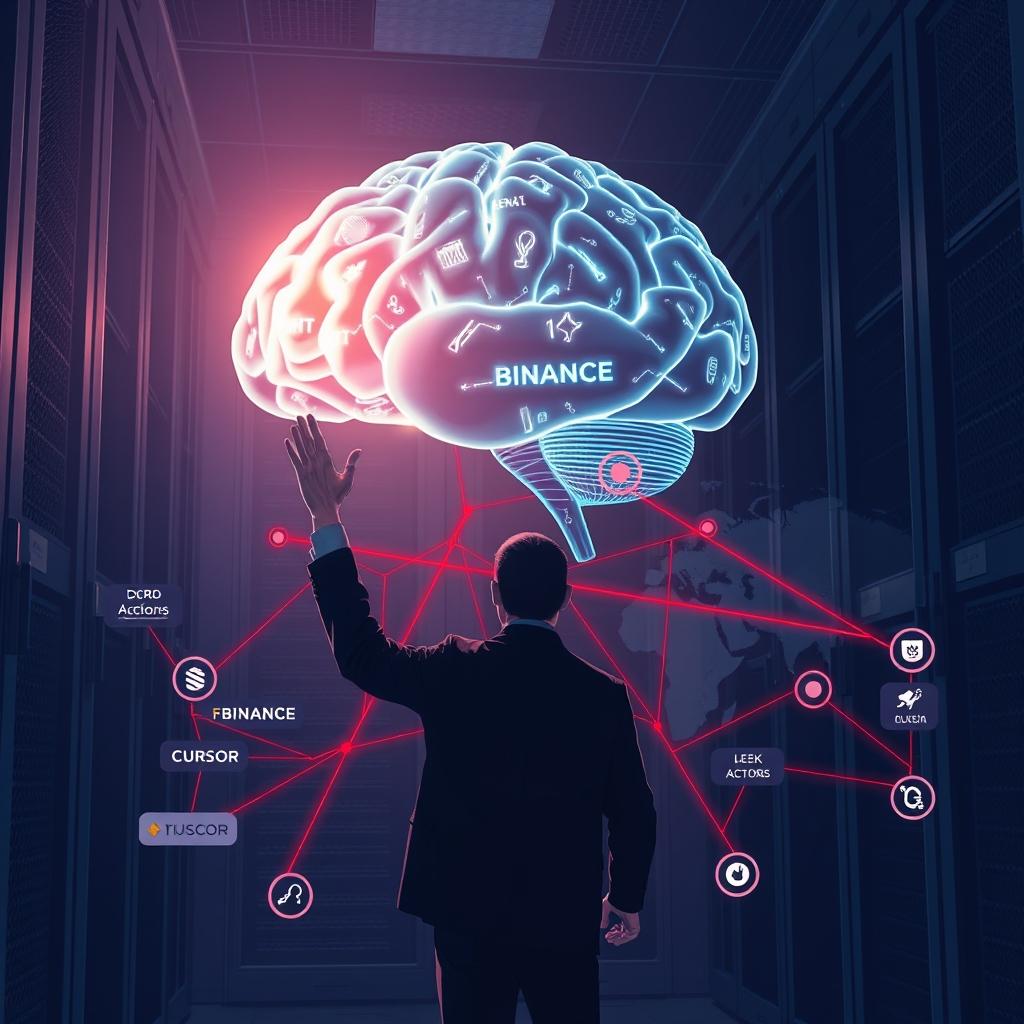
The Binance hack, which he called the largest heist in human history, demonstrated how AI‑enhanced tactics can scale financial theft.
A later incident at the AI service firm Fireworks resulted in stolen API keys that were used to compromise the code‑assistant platform Cursor.
Once attackers accessed Cursor, they pushed a malicious plugin that propagated to roughly 5,000 downstream companies, creating potential breaches at each endpoint.
Stamos explained that this chain of compromises illustrates how a single AI‑powered foothold can cascade across an ecosystem.
“Is anybody else tired?” a fellow CISO asked, and the room’s unanimous reply captured industry fatigue.
He added that security teams have felt like they were operating at “DEFCON 2” throughout the month.
Industry response and the looming “dark age”
Despite the grim outlook, Stamos does not see the situation as hopeless, but rather as a transitional “dark age” that will force new defensive paradigms.
He argues that traditional password‑rotation campaigns and isolated awareness weeks are insufficient against AI‑automated attacks.
Instead, organizations must adopt continuous monitoring, AI‑augmented threat hunting, and rapid patch deployment to keep pace.
Stamos also emphasized the need for shared intelligence feeds that can distribute indicators of compromise faster than attackers can reuse them.
He warned that without coordinated response, the speed at which AI can generate exploit code could outstrip human remediation cycles.
The episode highlighted that the same technology that powers generative models also equips adversaries with automated vulnerability discovery.
As a result, the security industry may see a shift toward AI‑defensive tools that can anticipate and neutralize attacks before they materialize.
Stamos suggested that regulators and standards bodies should consider mandating AI‑risk assessments for critical software releases.
He noted that the current wave of breaches is a warning sign that existing compliance frameworks were not designed for AI‑driven threat vectors.
Why This Matters
The most pressing consequence is that enterprises must urgently integrate AI‑based defenses or risk systematic compromise across their supply chains.
This digest was compiled from:
Share this digest
People Also Read
- Nvidia launches probe into CEO Jensen Huang’s ties to alleged Chinese spy
Nvidia’s board has opened an independent investigation into CEO Jensen Huang’s alleged ties to a Chinese intelligence‑linked Megaspeed executive.
- OpenAI secures $11 billion in funding, pushing valuation to $1.25 trillion
OpenAI raised $11 billion, valuing it at $1.25 trillion, amid a funding round that may total $20 billion and a shifting AI market.
- OpenAI Announces End to NDAs with Public Officials for Data‑Center Projects
OpenAI will stop using NDAs with public officials on data‑center projects, pledging limited confidentiality and greater community transparency.
Share your thoughts
Reactions, corrections, or insights — all welcome.