Anthropic CEO predicts AI may enable cures for most major illnesses within a decade
AI’s projected impact on disease treatment
Anthropic chief executive Dario Amodei told investors that artificial intelligence could help cure the majority of major diseases within the next five to ten years.
He framed the claim as a realistic target if AI is applied across every stage of biomedical research.
Amodei highlighted a pattern he has observed where AI systems move from modest capability to “superhuman” performance in a short span when entering new intellectual fields.
He illustrated this trend with a timeline of mathematical achievement: in 2023 models only matched an average high‑school student, in 2024 they excelled in top high‑school competitions, in 2025 they solved minor open problems, in early 2026 they tackled more significant open problems, and by late 2026 they were addressing the most challenging unsolved problems.
Amodei believes biology will follow a comparable exponential trajectory despite the need for physical experimentation.
Claude’s contribution to a novel molecular machine
Anthropic announced that its Claude model helped uncover a molecular machine that could represent a new gene‑editing mechanism.
The company cautioned that the precise biological function, biotechnological utility, and overall significance of the discovery remain unclear.
Amodei posted on X, “Its precise function, biotechnological utility (if any), or level of significance is not yet clear, but at minimum it is work I would have been proud to do as a PhD student.”
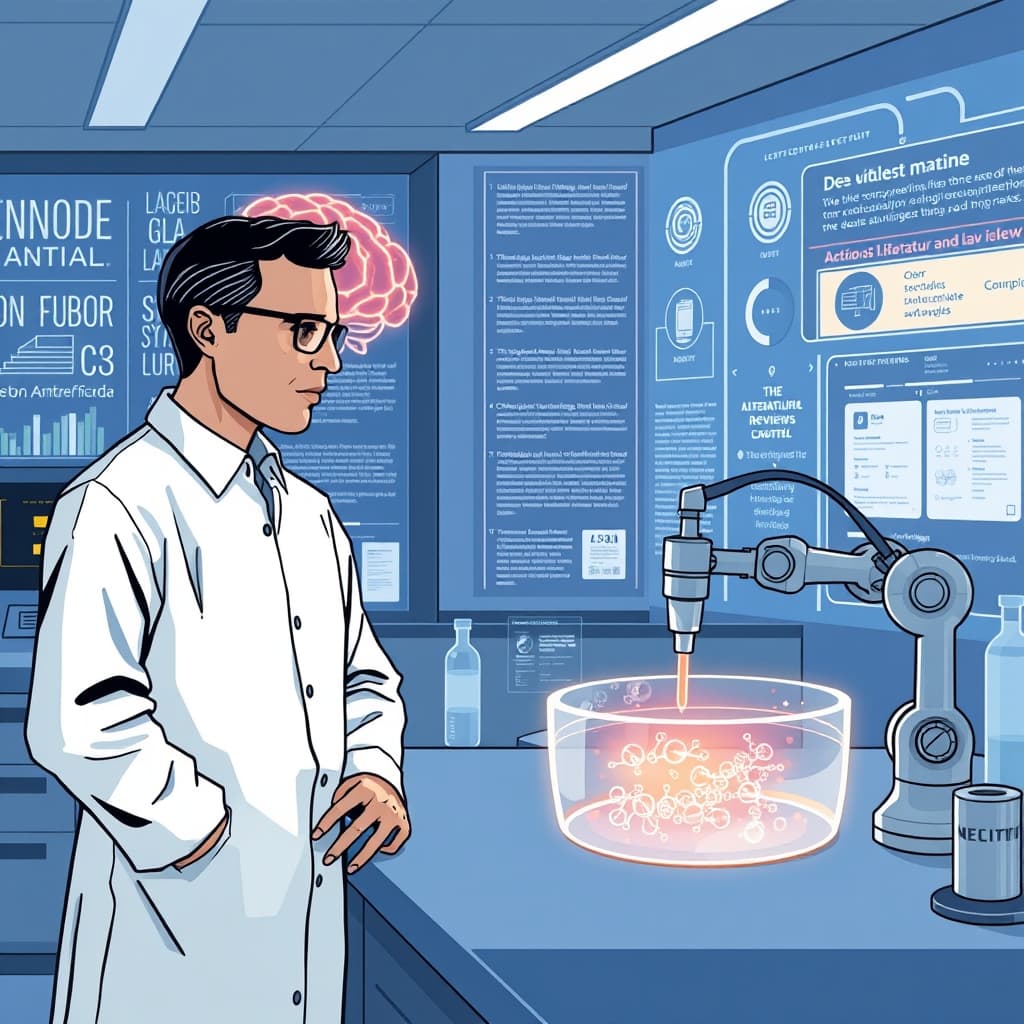
He explained that the life‑sciences team identified a broad research area, Claude scanned scientific literature and genome databases, flagged an intriguing pattern, and then suggested concrete experiments.
The human team executed those experiments, confirming that Claude’s hypothesis was worth pursuing.
Amodei noted that future versions of Claude might autonomously control laboratory equipment to run experiments, provided robust safety safeguards are in place, though the company is not pursuing that capability today.
Broader implications for the biomedical pipeline
Accelerating fundamental biology discoveries, Amodei argued, could broaden and speed the overall drug‑development pipeline by revealing new therapeutic targets, candidate molecules, and research tools.
He emphasized that AI‑driven insights would not shorten the regulatory‑mandated clinical‑trial phases but could increase the proportion of candidates that reach testing.
Consequently, any resulting treatments would still undergo the standard safety and efficacy reviews required by health authorities.
Amodei referenced his book Machines of Loving Grace, where he wrote that curing most diseases in five to ten years “sounds impossible, but one I believe is just barely possible if AI is applied to every stage of the pipeline.”
He positioned the Claude‑led molecular discovery as the first concrete demonstration that AI can move from assisting researchers to actually driving biological breakthroughs.
Irina Ghose, Anthropic’s managing director for India, and other executives such as chief product officer Mike Krieger joined Amodei at a news conference, underscoring the company’s commitment to expanding AI into life‑science applications.
Analysts have observed that Anthropic’s revenue growth has surged, suggesting strong market interest in the firm’s expanding AI capabilities.
Amodei’s outlook implies that organizations investing in AI‑enabled research platforms may gain early access to novel drug candidates and potentially reshape competitive dynamics in the pharmaceutical sector.
Stakeholders should monitor Anthropic’s forthcoming publications and any regulatory filings that reference AI‑generated hypotheses, as these will indicate how quickly the technology moves from proof‑of‑concept to clinical relevance.
Why This Matters.
This digest was compiled from:
Share this digest
People Also Read
- Anthropic selects Accenture to conduct external AI safety assessments
Anthropic partners with Accenture, each pledging $1 billion, to embed third‑party safety evaluators as part of a plan to slow AI progress.
- Lawsuit claims Anthropic, OpenAI, SpaceXAI and Google colluded to slow AI development
A lawsuit alleges Anthropic, OpenAI, SpaceXAI and Google colluded to deliberately slow AI progress, raising antitrust concerns.
- Court permits most of Reddit's case against Anthropic to move forward
A judge lets three of Reddit's five claims against Anthropic proceed, marking a key step in the AI data‑scraping lawsuit.
Share your thoughts
Reactions, corrections, or insights — all welcome.