Anthropic Debuts Claude Science: A Workflow-First AI Workbench Targeting the Reproducibility Crisis
On Tuesday, June 30, 2026, Anthropic announced the launch of Claude Science, an AI-powered workbench designed to streamline scientific workflows, analyze complex data, and manage high-performance computing tasks. This beta release, available to Claude Pro, Max, Team, and Enterprise subscribers, marks a major step in the IPO-bound company's life sciences and healthcare initiative, which began in October 2025. Instead of introducing a specialized, fine-tuned biological model, the platform runs existing models, such as the recently updated Claude Opus 4.8, betting that resolving workflow inefficiencies is more valuable to researchers than developing a novel foundational model.
A Unified Digital Lab for Researchers
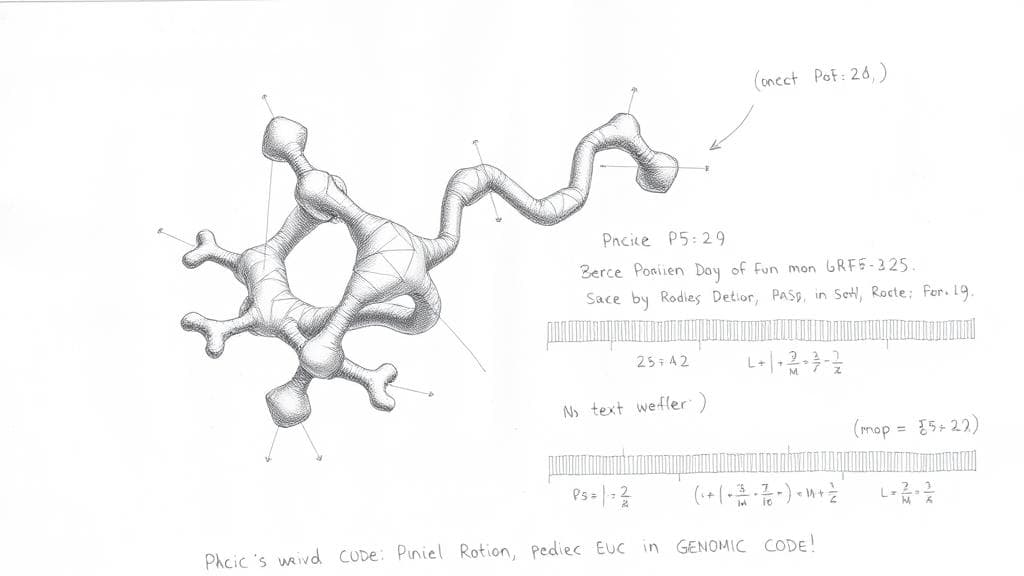
Scientific research frequently requires navigating fragmented environments, forcing scientists to bounce between databases, command terminals, and tools like PubMed, Jupyter, and R. Claude Science unifies these tools into a single interface. The platform features a coordinating agent that can delegate tasks to specialized sub-agents and access over 60 pre-configured skills and connectors tailored for fields like genomics, proteomics, single-cell analysis, cheminformatics, and structural biology. Additionally, the system natively displays molecular structures, proteins, and chemical compounds. To ensure accuracy, a dedicated reviewer agent automatically checks citations and calculations, flagging potential errors before publication.
Data Privacy and Solving the Reproducibility Crisis
To address the strict data privacy requirements of the pharmaceutical industry, Claude Science is designed to run locally on macOS and Linux or connect securely to high-performance computing clusters via SSH and HPC login nodes. This architecture ensures that proprietary or sensitive lab data remains off Anthropic's external servers. Furthermore, the platform targets the ongoing reproducibility crisis in computational biology by attaching full code provenance and environment details to every generated figure. This auditable history allows peer reviewers and other researchers to trace, validate, and replicate scientific outputs exactly.
Strategic Rivalry and Academic Incentives
Anthropic's workflow-first approach contrasts sharply with its primary competitors. While Google DeepMind relies on proprietary foundational models like AlphaFold and OpenAI launched its gated, enterprise-only GPT-Rosalind model in April, Anthropic is offering standard models wrapped in a specialized scientific workspace. Early adopters of the workbench include neuroscientist Jérôme Lecoq at the Allen Institute and Stephen Francis's research group at the UCSF Brain Tumor Center. To accelerate adoption across the scientific community, Anthropic has launched an academic pipeline program, offering up to 50 research projects $30,000 each in platform credits through December 2026, with applications closing on July 15. This launch coincides with other major developments for the company, including the release of Claude Sonnet 5 and recent regulatory hurdles, such as a US export control directive suspending access to its Fable 5 and Mythos 5 models. By prioritizing workflow integration over proprietary model development, Anthropic is banking on the idea that the true bottleneck in modern science is not the lack of intelligence, but the friction of the laboratory tools themselves.
This digest was compiled from:
- https://en.wikipedia.org/wiki/Anthropic
- https://www.anthropic.com/news
- https://www.anthropic.com/news/claude-science-ai-workbench
- https://www.youtube.com/watch?v=WsqotomF2Dw
- https://www.facebook.com/yahoonews/posts/anthropic-on-tuesday-launched-claude-science-an-ai-platform-designed-to-help-sci/1400654615253553
Share this digest
People Also Read
- OpenAI’s 2026 DevDay: Major Unveilings and Key Takeaways
OpenAI held its annual DevDay on September 29, 2026 in San Francisco, marking the company’s most high‑profile event of t...
- Anthropic’s IPO filing mixes massive losses, soaring revenue and a direct warning that its AI could threaten humanity
Anthropic’s IPO prospectus reveals huge losses, rapid revenue growth and, for the first time, an explicit warning that its AI could end humanity.
- Leo Stan Ekeh Opens AI Learning Centres at Two Lagos Secondary Schools
Leo Stan Ekeh’s foundation opened AI‑enabled learning centres in two Lagos schools, pairing renewable power and Starlink internet to boost digital education.
Share your thoughts
Reactions, corrections, or insights — all welcome.