Anthropic Faces Class‑Action Over Alleged Misleading Max Subscription Terms
Anthropic’s business model relies heavily on power users who run large‑scale Claude workloads.
Those users have become the focus of a newly expanded class‑action lawsuit alleging deceptive marketing of the company’s Max subscription tier.
The Max Plan’s Promised Limits
The Max plan, positioned above the $20‑per‑month Pro tier, offers two price points: $100 per month for “5x” usage and $200 per month for “20x” usage.
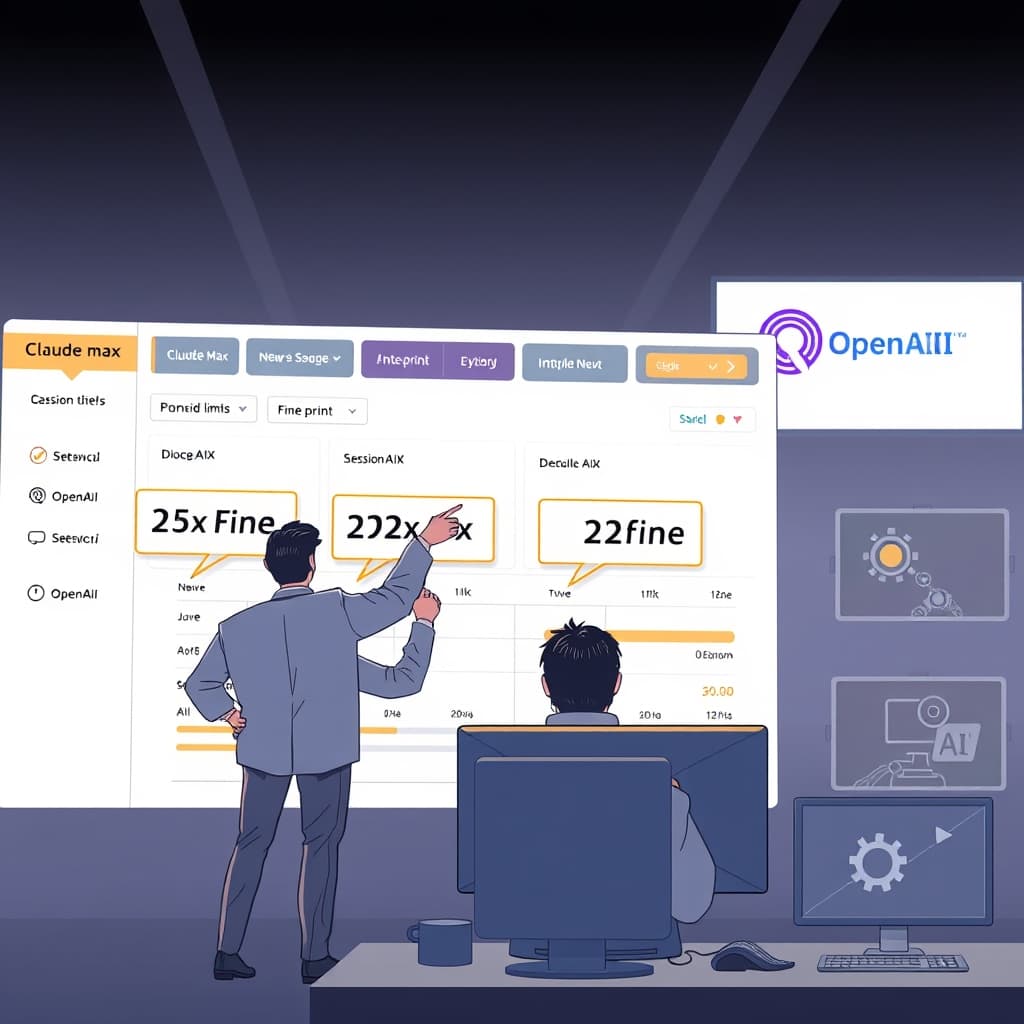
Anthropic’s marketing graphics display these multipliers without immediately clarifying that they apply only to five‑hour “session” windows subject to a weekly cap.
According to the complaint, the fine‑print requires users to click a hyperlink to see the word “session” and then another link to the Pro plan page for a definition of the term.
One Reddit user described the structure as “a bigger gas tank while keeping the fuel pump limited to one gallon every five hours.”
Attorney Monica Vaca explained that “you’ve got to dive deep” to uncover the session limits hidden in the site’s navigation.
Legal Action and Allegations
The lawsuit was filed in July 2026 by attorneys Monica Vaca and Kati Daffan, both former FTC staff who worked under Chair Lina Khan.
It alleges that Anthropic’s advertising misleads subscribers into believing they receive a straightforward increase in total usage capacity.
Vaca told The Verge that many Claude users upgrade mid‑project after hitting limits, only to discover the expanded allowance is constrained by the weekly session rule.
Anthropic introduced the Max plan in April 2025 but, according to the complaint, added the weekly limits only in August 2025 as it sought to compete with OpenAI’s offerings.
In a motion to dismiss the earlier filing, Anthropic argued that the session information was technically available and required “nothing more than clicking hyper‑links.”
Potential Implications for AI Pricing
Anthropic’s latest model release, Fable 5.1, referenced “addressing the feedback we’ve received from customers on price,” hinting at broader cost concerns.
The case highlights a growing tension in the AI industry where labs pass steep operating costs onto users through tiered subscription structures.
If the court finds the marketing practices deceptive, it could set a precedent for clearer disclosure of usage limits across AI service providers.
Power users, who represent a significant revenue stream for companies like Anthropic, may demand more transparent pricing or seek alternative platforms.
Regulators and consumer‑protection advocates are watching the case as an early test of how traditional truth‑in‑advertising standards apply to AI SaaS models.
Why This Matters: Anthropic’s alleged misleading subscription terms could shape how AI firms disclose usage limits and affect power‑user trust.
This digest was compiled from:
Share this digest
People Also Ask
- Meta launches Muse AI assistant to regain footing in AI competition
Meta launches Muse, a free personal AI assistant emphasizing ease of use and privacy, aiming to close the gap with OpenAI, Anthropic, and Google.
- Google DeepMind releases AlphaGenome Atlas, a predictive map of every possible DNA letter change
Google DeepMind releases AlphaGenome Atlas, an AI tool predicting effects of every possible single‑base DNA change to aid disease research.
- Magnific integrates GPT‑6 Astra into its multi‑model brand production workflow
Magnific uses GPT‑6 Astra as a chat front‑end to coordinate specialist AI models, streamlining end‑to‑end brand asset production.
Share your thoughts
Reactions, corrections, or insights — all welcome.