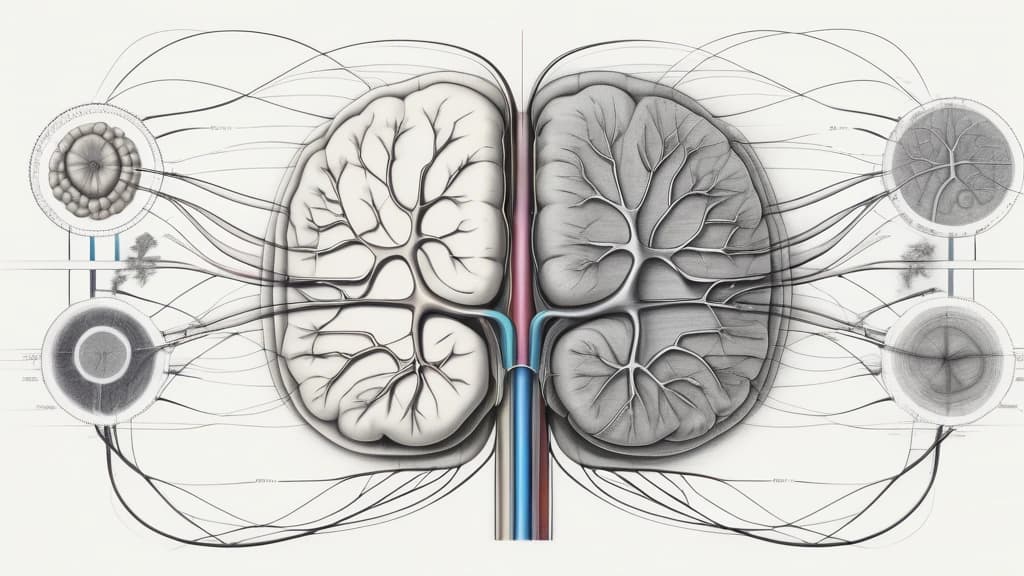
Cognitive Architectures and the Quest for Artificial Consciousness
For half a century, the study of human consciousness has relied heavily on the Global Workspace Theory, a framework that explains how the brain coordinates conscious and unconscious events. Originally conceptualized in cognitive psychology, this theory has recently emerged as a pivotal architecture for designing next-generation artificial intelligence. The biomedical literature reflects the massive scale of this scientific pursuit, boasting over 30000 published articles on the conscious brain and approximately 200 peer-reviewed papers specifically linking the global workspace to conscious experience. As George Mashour, the Director of the Center for Consciousness Science at the University of Michigan, noted, the theory has served as a cornerstone of modern consciousness science, gaining widespread support through its neural applications.
The Mechanics of Cognitive Synchronization
At its core, the Global Workspace Theory suggests that the conscious brain acts as an expansive biological adaptation utilizing the waking cortex. This aligns with the historical perspective of Wilder Penfield in 1934, who famously declared the cortex to be the organ of the mind. Empirically, the model is validated by sensory experiments, such as channeling competing audio streams into a subject's ears. When two identical speech streams are perfectly synchronized, they merge into one conscious experience. However, introducing a time shift of 100 milliseconds or more causes the streams to compete, forcing one out of conscious awareness while the brain continues to process the silent stream unconsciously. This mechanism demonstrates how a centralized workspace selects and broadcasts information globally across various specialized brain systems.
From Biological Brains to Deep Learning Networks
The conceptual bridge between neuroscience and artificial intelligence has strengthened significantly in recent years. In 2021, researchers Rufin VanRullen and Ryota Kanai published an opinion piece in Trends in Neurosciences exploring the integration of deep learning with Global Workspace Theory. This intersection has paved the way for more advanced autonomous agents. In a paper completed in March 2023, researchers proposed the Unified Mind Model, a theoretical cognitive architecture designed to guide the development of human-level autonomous agents. By leveraging the cognitive foundations of the global workspace alongside the capabilities of large language models like ChatGPT and GPT-4, the model supports multimodal perception, reasoning, planning, memory, and reflection. This architecture was materialized in MindOS, an agent-building engine created to help users deploy specialized autonomous agents without writing code.
Assessing Global Workspace Markers in Modern Models
As large language models continue to evolve, researchers are actively investigating whether these systems exhibit properties of biological workspaces. In January 2026, researchers Izak Tait, Benjamin Rode, and Joshua Bensemann submitted a preprint titled Evaluating Global Workspace Markers in Contemporary LLM Systems. This work evaluates modern language models against established global workspace criteria to determine how closely their internal processing mirrors human cognitive architecture. Whether these computational workspaces will eventually transition from merely mimicking cognitive structures to genuinely replicating the biological spark of consciousness remains one of the most profound questions of the algorithmic era.
This digest was compiled from:
Share this digest
People Also Read
- Modal hits $1 billion ARR and $16 billion Series D valuation, becoming NYC’s newest AI infrastructure decacorn after three‑fold usage surge
Modal reaches $1 billion ARR and a $15.75 billion valuation, driven by a three‑fold usage surge and billions of sandboxes.
- Creating AI Systems for Consistent Performance: Insights from Industrial Robotics
Standard Bots uses modest AI models and high‑quality data to deliver reliable industrial robot performance for clients like NASA and Amazon.
- AlphaFold’s Limits Highlight Why Protein Folding Remains Unsolved, Say DeepMind and Biohub Experts
AlphaFold’s breakthrough is a stepping stone; experts say scaling alone won’t solve protein folding without better data and new model designs.
Share your thoughts
Reactions, corrections, or insights — all welcome.