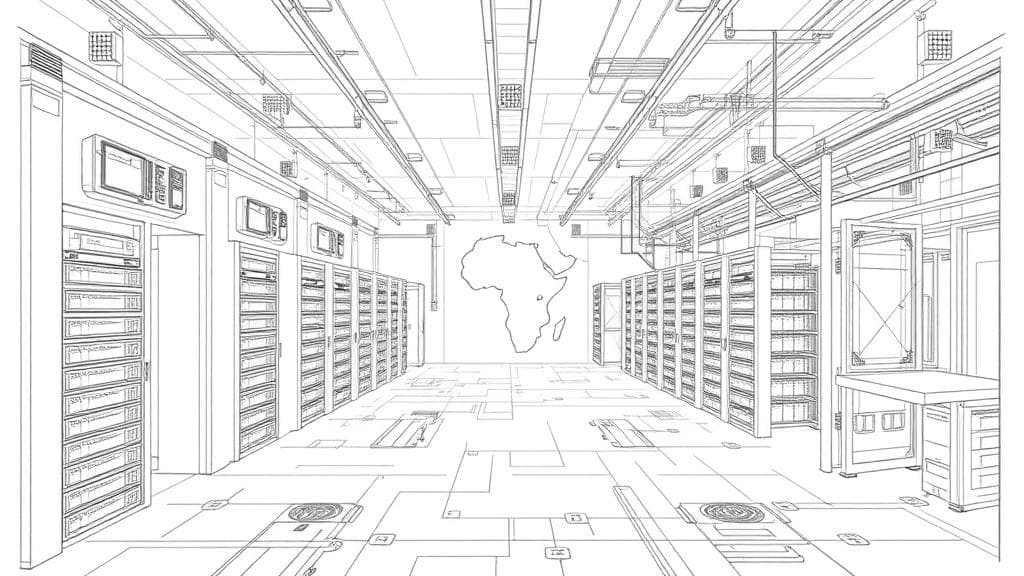
Egypt Secures $400 Million Data Center Deal as North and West Africa Build Digital Infrastructure
Egypt Accelerates AI Ambitions with $400 Million Data Center Deal
Egypt has taken a major step toward strengthening its digital infrastructure with the signing of a licensing agreement to establish and operate a new 400 million dollar data center complex. The agreement was signed by the National Telecommunications Regulatory Authority and Hassan Allam Digital Infrastructure, a specialized unit of the Cairo-headquartered engineering and construction group Hassan Allam Holding. Developed in a strategic partnership with the regional venture capital and technology fund A15, the project represents a milestone in Egypt's ambition to position itself as a regional hub for data exchange, cloud computing, and advanced technology services.
The licensing ceremony, held in Cairo, was witnessed by the Minister of Communications and Information Technology, Raafat Hindi. The agreement was formally signed by Mohamed Shamroukh, CEO of the National Telecommunications Regulatory Authority, and Dalia Wahba, Board Member of Hassan Allam Digital Infrastructure. Mohamed Magdy Allam, Managing Director of Hassan Allam Digital Infrastructure, confirmed that the facility will be built to the highest international standards to serve government institutions, financial organizations, and both local and international businesses requiring robust cloud computing and artificial intelligence infrastructure. This project aligns with Egypt's national strategy to generate 42.7 billion dollars in AI-related economic value and boost the technology sector to deliver 7.7 percent of the national gross domestic product by 2030.
Expanding Regional Cloud and AI Capacity
The newly approved facility is the tenth data center license issued by Egypt's telecommunications regulator over the past two years, reflecting strong investor confidence in the country's digital transformation agenda. Currently, Egypt hosts only 14 data centers, which accounts for just 5.5 percent of the region's total capacity. By building out state-of-the-art facilities, Egypt aims to retain more data within its borders, reduce processing latency, and improve the reliability of financial transactions, AI processing, and cloud services for domestic and international users.
This development follows other major digital infrastructure initiatives in the country, including a 250 million dollar joint venture between UAE-based Khazna Data Centers and Egypt's Benya Group. Led by Ahmed Mekky, Chairman and CEO of Benya Group, that project aims to build Egypt's first hyper-scale data center in the Maadi Technology Park, featuring an expected capacity of 25 MW of IT load. Together, these investments are transforming Egypt's capacity to support emerging, data-driven technologies across the Middle East and North Africa.
Nigeria Tackles Power Deficits to Support Digital Growth
While North Africa rapidly expands its data storage and processing capabilities, West African nations are focusing on the foundational infrastructure required to power the digital economy. Nigeria continues to face persistent electricity challenges, with 85 million citizens currently lacking access to grid power. In response, the Nigerian Federal Government has sought Egypt's technical expertise to help improve and reform its domestic power sector.
To address these structural bottlenecks, Nigeria has outlined a National Energy Compact aligned with its National Electrification Strategy. The compact aims to accelerate the pace of electricity access from 4 percent to 9 percent per annum, while increasing the country's renewable energy share in the generation mix from 22 percent to 50 percent by 2030. Achieving these targets will require mobilizing 23.2 billion dollars in total financing, with the Nigerian government calling on development partners and the private sector to secure 15.5 billion dollars specifically for last-mile electrification.
Establishing Regulatory Frameworks for Digital Services
As physical infrastructure and power grids expand, African regulators are also updating legislative frameworks to govern the digital services running on these networks. In Nigeria, the National Insurance Commission has introduced comprehensive licensing guidelines to structure the growing financial technology space. Released in January 2026, the Guidelines on Licensing and Renewal of Insurance Institutions establish clear regulatory pathways for both standalone insurtech companies and partnering insurtech entities. This regulatory clarity ensures that digital financial services can scale safely, securely, and in line with international compliance standards.
What this means for Africa: As Egypt rapidly scales its physical cloud and AI infrastructure, regional peers like Nigeria must concurrently solve foundational power and regulatory challenges to ensure the continent can fully capitalize on the digital economy.
This digest was compiled from:
- https://www.youtube.com/watch?v=i41HOJmBqWw
- https://www.middleeastainews.com/p/egypt-ntra-signs-data-centre-deal
- https://www.billionaires.africa/2026/06/17/hassan-allam-commits-400-million-to-egypt-data-centre-project
- https://techafricanews.com/2026/06/16/egypt-approves-400-million-data-center-project-to-boost-cloud-infrastructure
- https://khaznadatacenters.com/press-release/khazna-data-centers-plans-to-enter-egypt-with-benya-group-to-set-up-the-countrys-first-hyper-scale-data-center-in-maadi-technology-park-with-a-total-investment-of-usd-250m
Share this digest
People Also Read
- OpenAI’s 2026 DevDay: Major Unveilings and Key Takeaways
OpenAI held its annual DevDay on September 29, 2026 in San Francisco, marking the company’s most high‑profile event of t...
- Anthropic’s IPO filing mixes massive losses, soaring revenue and a direct warning that its AI could threaten humanity
Anthropic’s IPO prospectus reveals huge losses, rapid revenue growth and, for the first time, an explicit warning that its AI could end humanity.
- Leo Stan Ekeh Opens AI Learning Centres at Two Lagos Secondary Schools
Leo Stan Ekeh’s foundation opened AI‑enabled learning centres in two Lagos schools, pairing renewable power and Starlink internet to boost digital education.
Share your thoughts
Reactions, corrections, or insights — all welcome.