Enhancing Private AI Compute via Secure Server‑Side Memory
Secure Server‑Side Memory Architecture
Google DeepMind’s Private AI Compute team announced a technical update that adds secure, server‑side memory to its platform.
The update addresses the long‑standing challenge of giving AI assistants long‑term continuity across devices while preserving strict on‑device privacy standards.
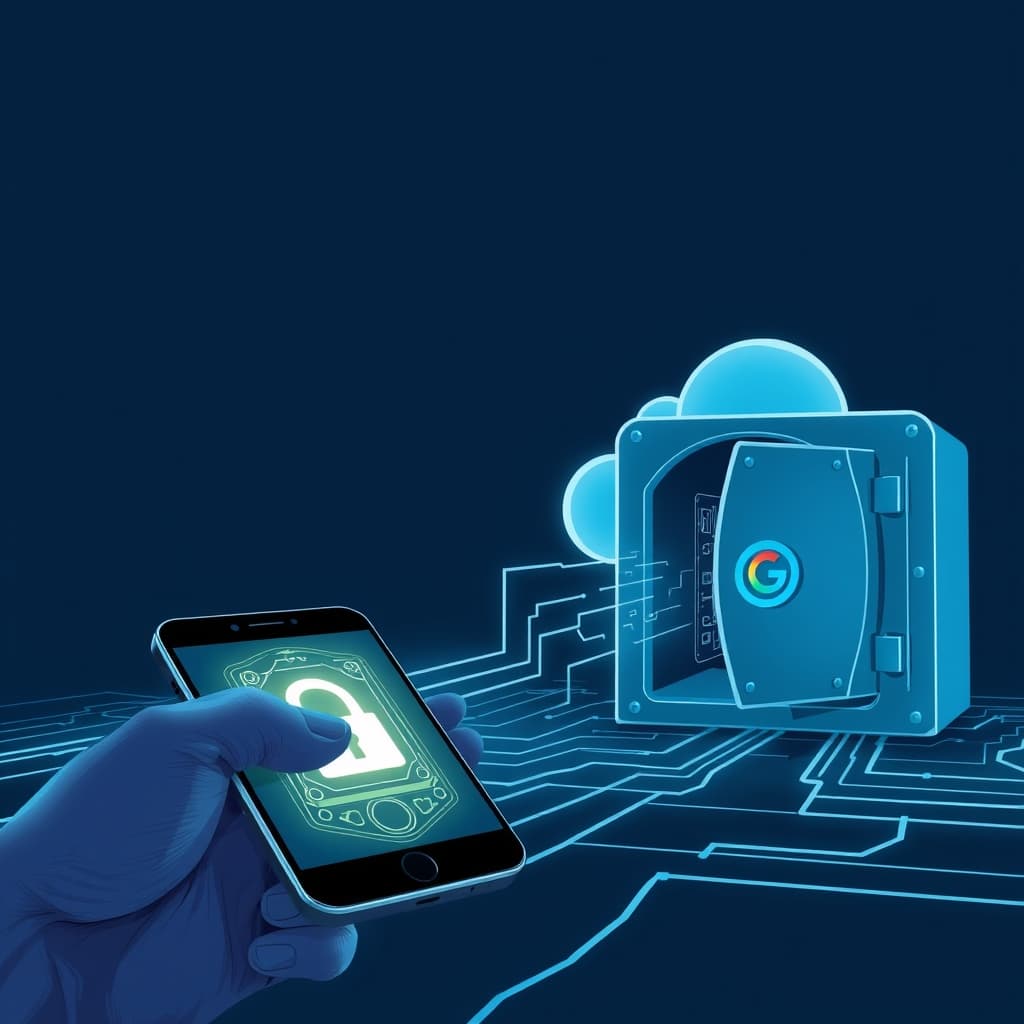
Under the new design a persistent memory layer acts like a sealed digital vault hosted in the cloud.
Encrypted storage holds the personal information needed for assistance, while the cryptographic keys that unlock it remain exclusively on the user’s devices.
This arrangement ensures that even Google cannot access the data without the user’s device‑derived keys.
When an AI model requires context, an authenticated, end‑to‑end encrypted channel links the device to an isolated cloud environment called a secure enclave.
Inside the enclave the data is temporarily decrypted in protected memory, used to fulfill the request, then immediately re‑encrypted.
Any new context generated by the interaction is saved back into the encrypted vault, preserving continuity for future queries.
The architecture combines hardware‑enforced secure enclaves, encrypted communication links, and per‑user databases protected by device‑derived keys.
Persistent Cross‑Device Context
By keeping the keys on the device, the system maintains the same privacy expectations as pure on‑device processing.
This shift is driven by the computing demands of frontier AI models that exceed the capacity of a single device.
While local processing has historically been the gold standard for privacy, modern models need cloud‑scale resources to deliver sophisticated assistance.
Private AI Compute already allowed users to run complex tasks in hardware‑isolated cloud enclaves, but those enclaves were previously “stateless.”
Stateless execution erased all context at the end of each task, limiting the ability to provide seamless, ongoing experiences.
Simple workarounds such as storing a static list of user facts do not satisfy the richer continuity that users expect from personal AI.
The new persistent memory capability enables cloud‑based AI to securely retain context over time and across multiple devices.
Imagine opening a set of assembly instructions on a laptop that were originally viewed through smart glasses, with the assistant recalling the prior view.
Or imagine a conversation that begins on a phone and continues on a web browser without losing nuance.
Transparency and Trust Measures
Private AI Compute is built to make such seamless assistance possible while keeping the remembered pieces locked away from any unauthorized party.
To foster trust, the team is publishing a tamper‑proof public record of the server software that devices can verify before transmitting personal data.
An updated technical whitepaper accompanies the release, detailing the architecture and security guarantees.
An independent audit by a leading cybersecurity firm has been released, confirming the robustness of the design.
By sharing these artifacts, Google invites broader scrutiny and aims to demonstrate that privacy can coexist with powerful cloud AI.
The announcement marks a step toward AI assistants that can remember what matters without compromising user control over data.
Why This Matters: The secure server‑side memory lets AI retain personal context across devices while ensuring the data stays encrypted and under the user’s exclusive control.
This digest was compiled from:
Share this digest
People Also Read
- Google adds Gemini 3.8 Flash and Flash‑Lite text‑to‑speech models
Google adds Gemini 3.8 Flash and Flash‑Lite TTS models, delivering expressive custom voices, scalable audio generation, and built‑in safety tools.
- Parallel Halves Research Time and Cost Using GPT‑6 Astra
Parallel cut research time and cost by 50% using OpenAI’s GPT‑6 Astra, enabling faster, cheaper web‑grounded AI agents.
- OpenAI launches GPT‑6 Sol and Luna
More affordable AI models for everyday tasks OpenAI announced two new members of its GPT‑6 family, named Sol and Luna,...
Share your thoughts
Reactions, corrections, or insights — all welcome.