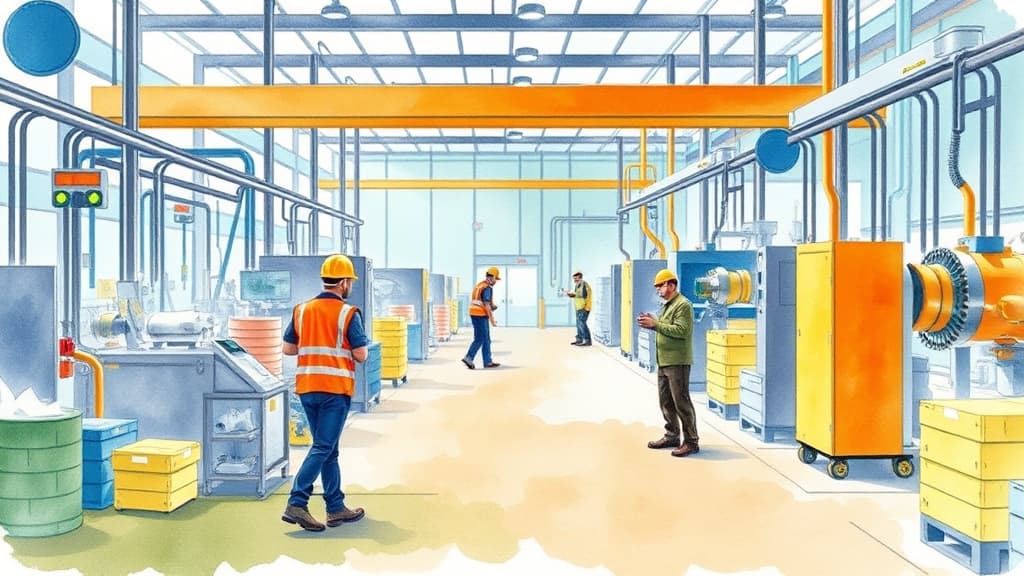
Enhancing Workplace Safety through Risk Assessment
Workplace safety is a critical concern for employers and employees alike, with the potential for accidents and injuries having severe consequences for individuals and organizations.
The importance of safety risk assessments cannot be overstated, as they provide a systematic process for identifying hazards and evaluating associated risks, enabling employers to implement control measures to remove or reduce risks.
Understanding Safety Risk Assessments
Safety risk assessments involve identifying workplace hazards and evaluating their risk level, with employers required by OSHA's General Duty Clause to provide a workplace free from recognized hazards.
These assessments are particularly crucial for critical systems, including robotics and automation, as they help limit legal liability for manufacturers by demonstrating due diligence in addressing human safety concerns.
Regular updates to safety risk assessments are necessary to reflect changes in tasks, equipment, or personnel, ensuring that employers remain proactive in managing workplace safety.
Industry Solutions for Safety Testing
Companies such as LISUN offer various test systems, including goniophotometer test systems, to provide solutions for safety testing of LEDs, luminaries, LED drivers, and home appliances.
Additionally, organizations like Midot provide assessment tools, such as SafetyTEST, to identify candidates and employees with high risks of unsafe behaviors and accidents, helping organizations manage their safety culture and reduce costs related to accidents at work.
Best Practices for Risk Assessment
Risk assessment is a legal requirement for employers and self-employed people, and it is essential to follow a systematic process of identifying hazards and evaluating associated risks to implement control measures.
The British Safety Council provides guidance on risk assessment, emphasizing the importance of regular updates and additional training to complete or reassess risk management procedures.
The webinar on Safety Risk Assessment in Practice, hosted by Stuart Mader and Andrew Lofton, reviews key challenge areas for safety risk assessment in practice and provides examples of ways agencies can address these challenges.
Implications and Opportunities
The implementation of safety risk assessments and safety testing solutions can have significant implications for organizations, including reduced costs related to accidents at work and improved personnel trustworthiness throughout the employment lifecycle.
As the importance of workplace safety continues to grow, organizations must remain proactive in managing safety risks, and the use of safety testing solutions and assessment tools can provide a competitive advantage in ensuring a safe working environment.
With the estimated percentage of workplace accidents caused by people's unsafe behaviors ranging from 80%-90%, the need for effective safety risk assessments and safety testing solutions cannot be overstated.
Why This Matters: Effective safety risk assessments and safety testing solutions are crucial for ensuring workplace safety, and organizations must prioritize these measures to reduce costs and improve personnel trustworthiness.
This digest was compiled from:
- https://www.youtube.com/watch?v=0Pf4Aw1efGc
- https://www.lisungroup.com/news/technology-news/what-is-safety-testing-and-what-are-the-safety-testing-projects.html
- https://midot.com/product/safetytest-safety-assessment
- https://www.pattiengineering.com/blog/understanding-safety-risk-assessments
- https://www.britsafe.org/training-and-learning/informational-resources/risk-assessments-what-they-are-why-theyre-important-and-how-to-complete-them
Share this digest
People Also Read
- OpenAI’s 2026 DevDay: Major Unveilings and Key Takeaways
OpenAI held its annual DevDay on September 29, 2026 in San Francisco, marking the company’s most high‑profile event of t...
- Anthropic’s IPO filing mixes massive losses, soaring revenue and a direct warning that its AI could threaten humanity
Anthropic’s IPO prospectus reveals huge losses, rapid revenue growth and, for the first time, an explicit warning that its AI could end humanity.
- Leo Stan Ekeh Opens AI Learning Centres at Two Lagos Secondary Schools
Leo Stan Ekeh’s foundation opened AI‑enabled learning centres in two Lagos schools, pairing renewable power and Starlink internet to boost digital education.
Share your thoughts
Reactions, corrections, or insights — all welcome.