From Brutalist Fortresses to Smart Hubs: The Changing Physical Footprint of Global Technology
The Physical Architecture of Infrastructure and Survival
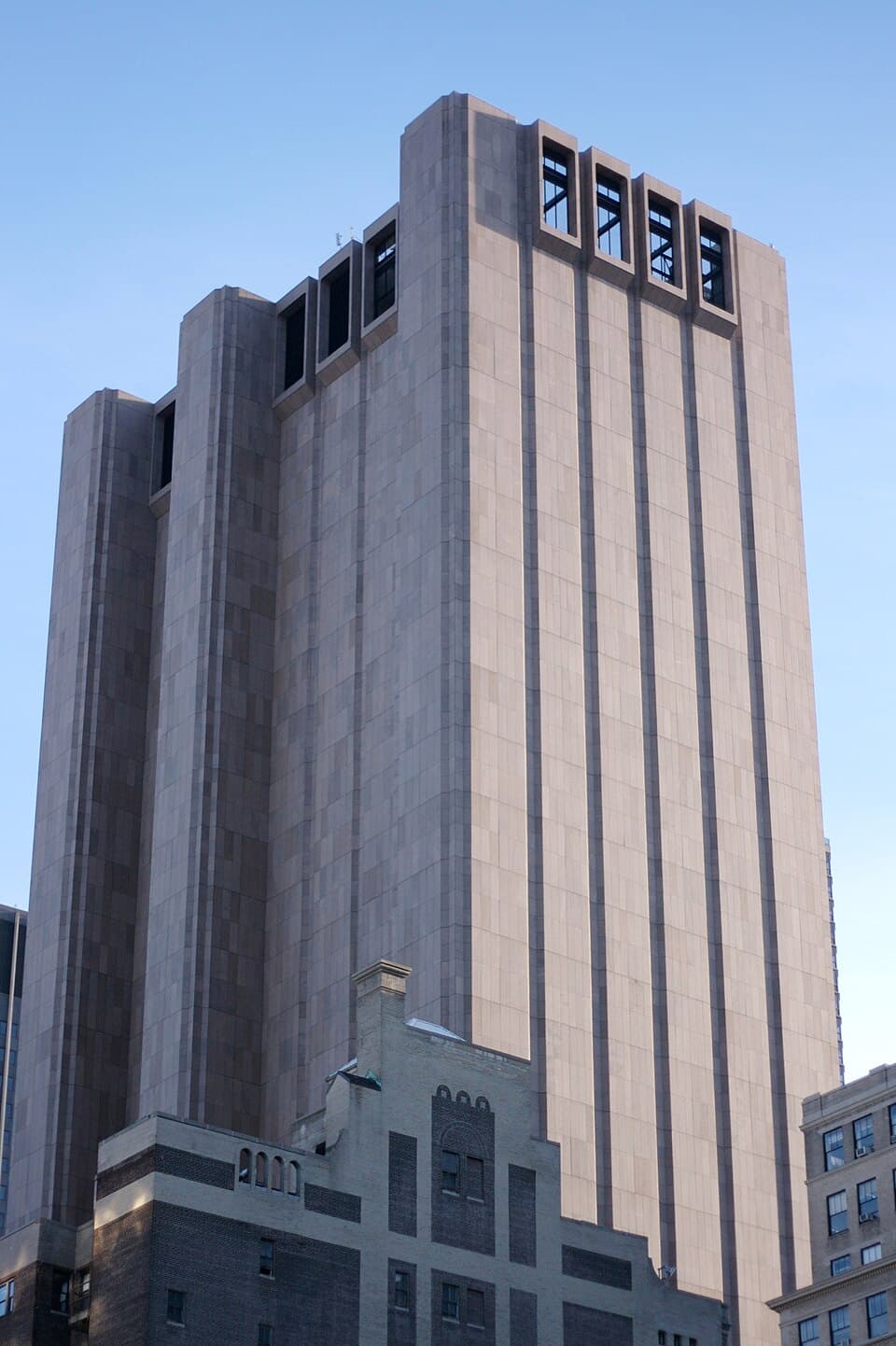
Technology is defined not just by virtual software, but by the physical structures that house its operations, history, and pioneers. In Lower Manhattan, the 550-foot-tall Brutalist skyscraper at 33 Thomas Street, designed by John Carl Warnecke and Associates and completed in 1974, serves as a windowless telephone exchange. Owned by AT&T, the 29-story building contains three major 4ESS switches used for long-distance calling. This legacy of heavy, protective infrastructure contrasts sharply with historic academic anchors like Georgia Tech's Tech Tower in Atlanta. Completed in September 1888 and designed by Bruce and Morgan, the Victorian and Romanesque Revival building stands 130 feet wide and 120 feet deep, serving as a long-standing administrative hub for technological education.
Today, modern corporate architecture focuses heavily on environmental responsiveness and intelligence. Deloitte's Amsterdam headquarters, known as The Edge and designed by PLP Architecture, utilizes LED panels packed with roughly 28,000 sensors that track motion, light, temperature, and humidity. This network allows the building to operate efficiently with only 1,000 hot desks, which employees navigate using a dedicated smartphone app. On a grander scale, the 101-story Taipei 101 tower, designed by C.Y. Lee and Partners, achieved LEED Platinum certification in 2012 by integrating advanced disaster prevention features to withstand East Asian typhoons. For ultimate protection, tech leaders including Sam Altman, Mark Zuckerberg, and Jeff Bezos are taking structural engineering underground, constructing secret bunkers designed to survive world war crises, pandemics, and climate disasters.
Building Regional Innovation Ecosystems
Beyond individual buildings, governments are attempting to replicate the geographic success of Silicon Valley by funding regional innovation ecosystems. In October 2023, the United States Department of Commerce's Economic Development Administration announced the first recipients of its Tech Hubs Program. Authorized by the CHIPS and Science Act of 2022 and backed by an initial 500 million dollars in funding, the initiative designated 31 tech hubs across the country. This program focuses on ten critical technology areas, aiming to help regions manufacture, commercialize, and deploy innovative industries on a global scale.
Atlanta's Bid for Top-Tier Tech Status
Atlanta is one city actively positioning itself to enter the top tier of these national markets. A report by the Boston Consulting Group outlines how a coordinated public-private partnership could unlock a flywheel effect for entrepreneurship in the city. Georgia Tech, the largest non-medical university by research budget, is central to this effort. According to Raghupathy Siva Sivakumar, the university's vice president for commercialization, the institution is investing heavily in resources to build an entrepreneurial culture. This ecosystem includes the 7,000-square-foot Flowers Invention Studio for makers, and Science Square, a premier life sciences development located on the west side of the campus. This talent pipeline, combined with a lower cost of living and the local presence of tech giants like Google and Microsoft, forms the bedrock of Atlanta's bid to become a top five technology hub.
As tech leaders secure underground shelters and governments spend hundreds of millions to decentralize innovation, the future of technology appears increasingly divided between highly fortified physical fortresses and distributed regional hubs.
This digest was compiled from:
- https://en.wikipedia.org/wiki/33_Thomas_Street
- https://en.wikipedia.org/wiki/Tech_Tower
- https://timesofindia.indiatimes.com/world/us/sam-altman-mark-zuckerberg-jeff-bezos-and-other-tech-giants-to-go-underground-building-secret-bunkers-for-world-war-crises-pandemics-and-climate-disasters/articleshow/123044689.cms
- https://archipreneur.com/10-of-the-worlds-most-technologically-advanced-buildings
- https://tcf.org/content/commentary/8-things-the-tech-hubs-program-can-learn-from-silicon-valley
Share this digest
People Also Read
- OpenAI’s 2026 DevDay: Major Unveilings and Key Takeaways
OpenAI held its annual DevDay on September 29, 2026 in San Francisco, marking the company’s most high‑profile event of t...
- Anthropic’s IPO filing mixes massive losses, soaring revenue and a direct warning that its AI could threaten humanity
Anthropic’s IPO prospectus reveals huge losses, rapid revenue growth and, for the first time, an explicit warning that its AI could end humanity.
- Leo Stan Ekeh Opens AI Learning Centres at Two Lagos Secondary Schools
Leo Stan Ekeh’s foundation opened AI‑enabled learning centres in two Lagos schools, pairing renewable power and Starlink internet to boost digital education.
Share your thoughts
Reactions, corrections, or insights — all welcome.