From Diamonds to Critical Minerals: Botswana Leverages AI and Geophysics for a Major Economic Shift
The Diamond Trap and the Push for Diversification
For decades, Botswana has relied heavily on its diamond industry, which historically accounted for eighty percent of export revenues and a quarter of the country's gross domestic product. Joint ventures like Debswana Diamond Company, owned equally by the government and the De Beers Group, propelled the nation into a stable middle-income economy. However, the global diamond market is facing severe disruption. Lab-grown diamonds, which are thirty to seventy percent cheaper than natural stones, have flooded global markets and depressed prices. In response, President Duma Boko's administration has prioritized economic diversification, launching a five-year investment plan in October 2025 valued at 388 billion pulas, or approximately 28.5 billion dollars, under the 12th National Development Plan.
AI and Geospatial Data Unlock Concealed Copper
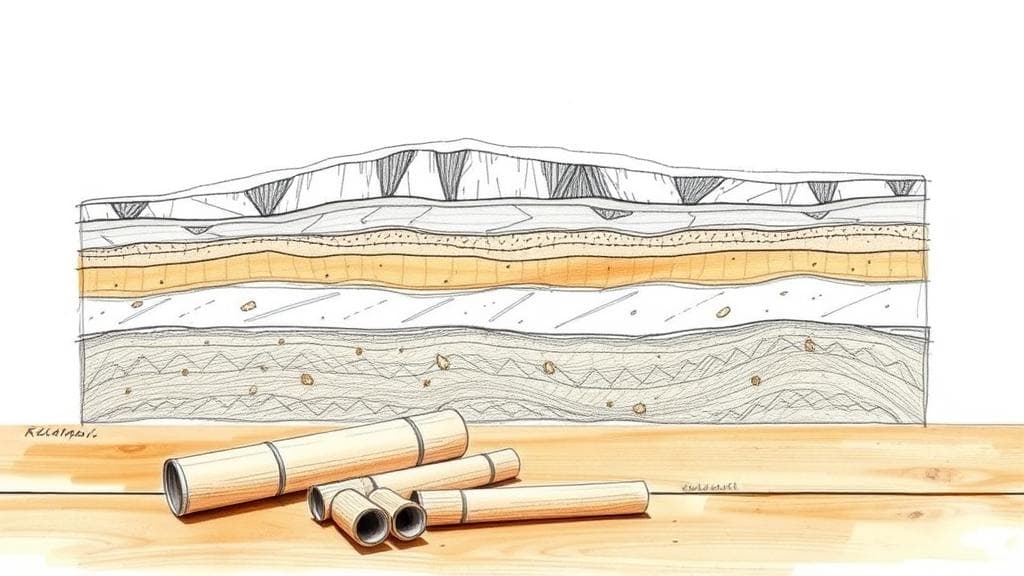
To accelerate this transition, mining companies are deploying advanced technology to locate untapped resources hidden beneath the Kalahari sands. The mining firm Botswana Minerals recently utilized artificial intelligence to analyze over one gigabyte of legacy geological records, some dating back more than fifty years. By reviewing reports from historical drill holes originally dug in search of diamonds and uranium, the AI successfully identified primary copper sulphide and altered copper minerals. This computational review revealed a previously concealed mineralized corridor. Similarly, exploration company Leviathan Metals has acquired twelve thousand square kilometers in the Kalahari Copper Belt. Led by chief executive officer Luke Norman, the company is using airborne geophysics to pinpoint targets for a major drilling campaign scheduled to begin in March 2026.
A Strategic Rare-Earth Discovery
A major breakthrough occurred in late February 2026 when Canadian exploration firm Tsodilo Resources announced the discovery of all fifteen rare-earth minerals listed on the 2025 United States Geological Survey Critical Minerals List. Located at the Gcwihaba Metals project in northwestern Botswana, these deposits sit just twenty to fifty meters below the surface, making extraction highly economical. The site contains neodymium-praseodymium at levels competitive with major global mines, alongside copper, cobalt, nickel, vanadium, and silver. To confirm commercial viability, Tsodilo plans a fifteen-thousand-meter drilling program in 2026 consisting of fifty drill holes. This discovery holds significant geopolitical weight, as Western nations seek alternatives to China, which currently controls seventy percent of global mine supply and ninety percent of processing capacity for these transition minerals.
Governance Challenges in the New Era
While international surveys frequently rank Botswana as the most favorable mining jurisdiction in Africa, transitioning from diamonds to critical minerals presents new regulatory hurdles. A report by International IDEA highlights that the country still lacks a formalized Environmental, Social, and Governance reporting framework. The study advises the government to avoid creeping nationalism in these newly emerging commodity sectors, warning that such policy shifts could disincentivize foreign investment and disrupt the public-private partnership model that defined the nation's historical success. To support this expansion, the government has also initiated diplomatic outreach to alternative partners, including Russia, to invite investment in its rare-earth sector.
Whether Botswana can successfully replicate its historic diamond partnership model without succumbing to resource nationalism will determine its standing in the highly competitive global race for energy transition minerals.
This digest was compiled from:
- https://www.youtube.com/watch?v=J14mL01fZsQ
- https://www.youtube.com/watch?v=lC-koebs5qU
- https://iafrica.com/botswana-minerals-uses-ai-to-uncover-concealed-copper-in-50-year-old-drill-records
- https://www.azomining.com/Article.aspx?ArticleID=83
- https://www.bgi.org.bw/sites/default/files/Brochure%20on%20Botswana%20Mineral%20Projects%20and%20Prospects%202020%20Version.pdf
Share this digest
People Also Read
- OpenAI’s 2026 DevDay: Major Unveilings and Key Takeaways
OpenAI held its annual DevDay on September 29, 2026 in San Francisco, marking the company’s most high‑profile event of t...
- Anthropic’s IPO filing mixes massive losses, soaring revenue and a direct warning that its AI could threaten humanity
Anthropic’s IPO prospectus reveals huge losses, rapid revenue growth and, for the first time, an explicit warning that its AI could end humanity.
- Leo Stan Ekeh Opens AI Learning Centres at Two Lagos Secondary Schools
Leo Stan Ekeh’s foundation opened AI‑enabled learning centres in two Lagos schools, pairing renewable power and Starlink internet to boost digital education.
Share your thoughts
Reactions, corrections, or insights — all welcome.