Google Transforms Gemini API Managed Agents Into Hosted Background Workers
Understanding the Managed Agent Architecture
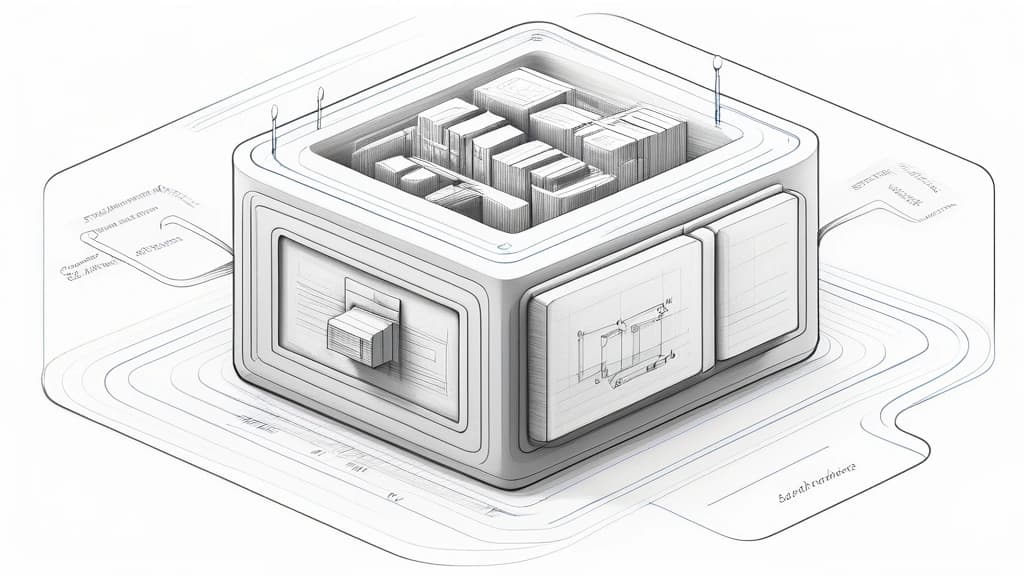
Google has introduced a major shift in how developers build autonomous AI applications by launching Managed Agents on the Gemini API. Rather than requiring developers to construct complex orchestration pipelines, manage execution environments, and set up custom tool-calling infrastructure, the platform collapses these steps into a single API call. This request automatically provisions a secure, ephemeral Linux sandbox hosted by Google, where an autonomous agent can execute tasks, write code, run bash commands, manage files, and browse the web.
According to Google developers Ali Cevik and Philipp Schmid, the system operates through two primary interfaces. The Interactions API acts as the runtime interface, allowing developers to submit tasks and receive executed results. Meanwhile, the Agents API serves as the control plane, enabling the definition, registration, and management of named agents using custom instructions, tools, and skills. The infrastructure is powered by the Antigravity Agent Harness, which also runs Google first-party products like the Antigravity IDE. While Google first managed agent was the specialized Deep Research tool, the general-purpose Antigravity agent, running on Gemini 3.5 Flash, now serves as the standard runtime model.
New Capabilities for Production-Ready Autonomy
In July 2026, Google DeepMind developer relations engineer Philipp Schmid and product manager Mariano Cocirio announced a suite of upgrades designed to transition managed agents from simple chat interfaces into robust, hosted background workers. The first major addition is long-running background execution, which allows interactions to run asynchronously on the server. Developers can initiate a task, drop the active HTTP connection, and reconnect later to retrieve the output, enabling a fire-and-forget operational model.
Additionally, the update introduces support for remote Model Context Protocol servers. This allows managed agents to connect directly to private databases as well as internal and external APIs without requiring proxy middleware. Security has also been bolstered with network credential refresh, a feature that lets developers rotate API keys mid-session without losing the state of the sandbox filesystem. Finally, custom function calling has been integrated, allowing developers to seamlessly add custom tools within the built-in sandbox environment.
Customization, Skills, and Developer Workflows
Developers can customize the default Antigravity agent, such as the antigravity-preview-05-2026 model, either inline during an interaction or by saving a permanent configuration to be called by a specific ID. Customization is managed through specific files and parameters, including system instructions, AGENTS.md, and SKILL.md. By targeting specific file paths like .agents/AGENTS.md for structural behavior or .agents/skills/ for custom tools, developers can define precise guidelines and capabilities for their agents.
The flexibility of these remote sandboxes was demonstrated in a live project where developers used the Interactions API to parse Hacker News threads and convert them into a three-minute radio show. This workflow combined Gemini with Lyria, Gemini TTS, and Nano Banana to process, script, and generate audio entirely within the hosted environment. Because the code execution occurs entirely inside Google isolated Linux container, developers do not have to worry about executing untrusted, agent-generated code on their own production application servers.
By shifting the developer paradigm from ephemeral chat prompts to persistent, self-managing server runtimes, Google is positioning the cloud sandbox as the primary battleground for enterprise AI deployment.
This digest was compiled from:
- https://x.com/googleaidevs/status/2074538486762192902
- https://www.linkedin.com/posts/gilsonmelo_expanding-managed-agents-in-gemini-api-background-activity-7480617048839192576-pxCf
- https://www.youtube.com/watch?v=Psa8mLikdag
- https://blog.google/innovation-and-ai/technology/developers-tools/expanding-managed-agents-gemini-api
- https://blog.google/innovation-and-ai/technology/developers-tools/managed-agents-gemini-api
Share this digest
People Also Read
- Itaú builds generative AI to serve its entire client base
Brazil’s Itaú bank rolls out OpenAI‑powered generative AI, ia.i, aiming to cover all 70 million customers by 2026.
- Block Leverages OpenAI’s Daybreak to Accelerate Security Operations
Block’s use of OpenAI’s Daybreak cuts weeks‑long security tasks to minutes, boosting analyst productivity and enabling deeper threat detection.
- Amp expands AI agent functions beyond coding using OpenAI’s latest models
Amp adds token‑friendly sign‑in, a real‑time assistant, and faster model modes to let developers use OpenAI agents for more than just code.
Share your thoughts
Reactions, corrections, or insights — all welcome.