Harvard AI Professor Says Those Most Vulnerable to AI Aren’t Who You Expect
Overview
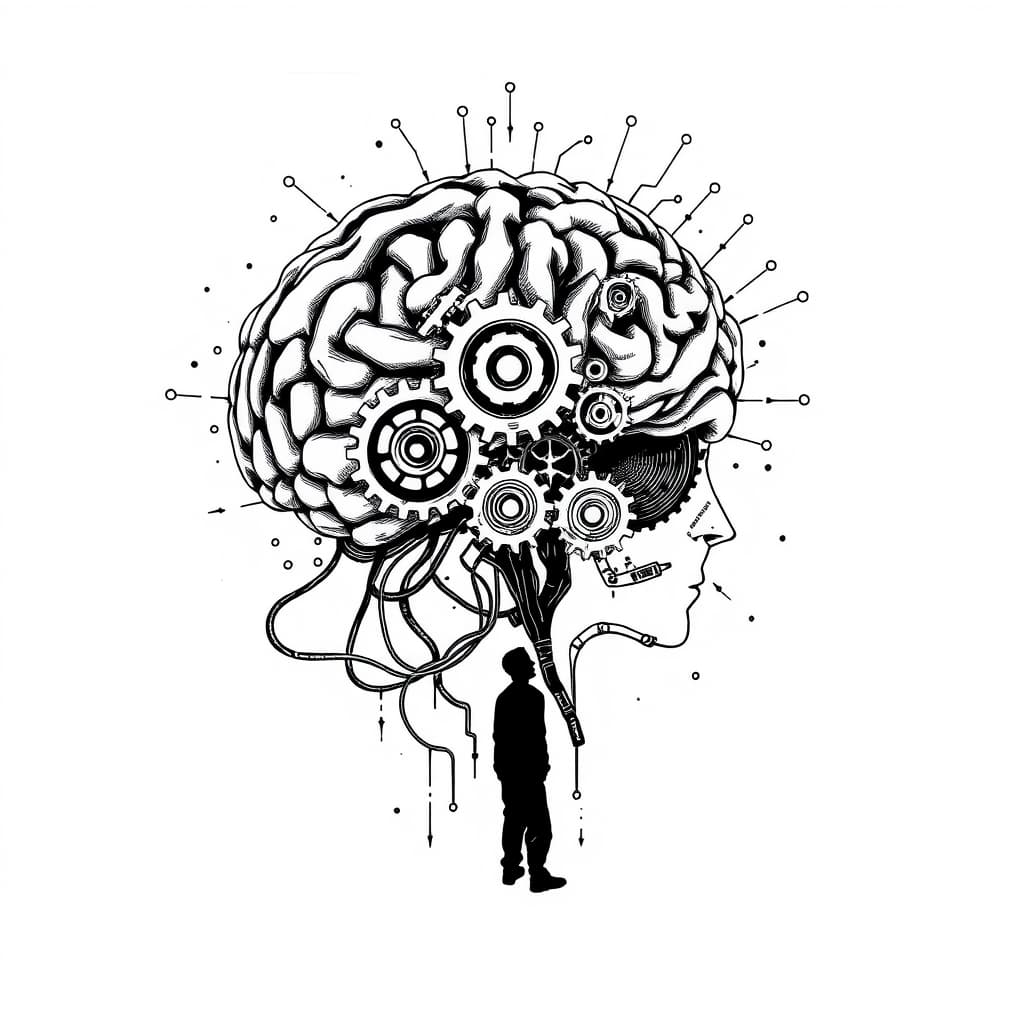
The Silicon Valley Girl podcast sits down with Harvard Business School professor Karim R. Lakhani to unpack a paradox: the workers most at risk from AI are not the low‑skill laborers everyone warns about, but the very people who surrender their thinking to the machines.
Lakhani draws on large‑scale experiments with BCG, Procter & Gamble and H & M, revealing three distinct ways professionals interact with AI—cyborgs, centaurs and self‑automators—and showing how each approach reshapes learning, judgment and career resilience. Listeners walk away with a clearer view of how to keep AI as a tool rather than a crutch, and why staying hands‑on is now a competitive advantage.
Key Takeaways
- Three AI collaboration models—cyborgs (co‑creative), centaurs (task‑splitting) and self‑automators (full delegation)—produce dramatically different learning outcomes.
- Self‑automators risk “sleeping at the wheel” because they stop exercising critical thinking.
- Even the most persuasive AI can hallucinate; rigorous prompting and adversarial questioning are essential.
- Judgment, taste and domain expertise remain irreplaceable, especially as AI models become more generic.
- Leaders must personally experiment with AI to set realistic expectations for their teams.
- Rapid model upgrades demand a habit of constantly reassessing which tasks belong to the human versus the machine.
- When a new AI model launches, businesses must ask whether it amplifies their value or merely absorbs it.
Cyborgs, Centaurs, and Self‑Automators: Mapping How We Work with AI
Lakhani’s BCG study of 244 consultants uncovered three collaboration styles. Roughly 60 % were “cyborgs,” who stay intimately involved with the model, iterating and co‑solving problems.
Another 14 % acted as “centaurs,” assigning clearly defined sub‑tasks to the AI while supervising the output. The remaining 27 % fell into the “self‑automator” camp, pressing play on AI solutions without engaging the underlying reasoning.
He notes that self‑automators “have stopped thinking… they’ve stopped engaging in the activities,” which makes them the most vulnerable to skill erosion.
The Perils of Over‑Delegation and the Need for Skeptical Prompting
AI’s fluency can be misleading. Lakhani points out that “the AI can sound convincing and still be wrong,” a danger amplified when users accept the first answer.
He recommends a prompting recipe that forces the model to argue against its own suggestions, flag confidence levels and surface “black‑swans. ” One practical prompt he shares starts with a counter‑argument: “I want to figure out X; first, explain why my initial assumption might be wrong.
” This adversarial stance keeps the human in the loop and prevents the “AI gave me that” excuse.
Building Judgment, Taste, and Expertise in an AI‑Rich World
Even as AI handles routine execution, the differentiator becomes “judgment and taste.” Lakhani illustrates this with design work: “the AI can provide a semblance of design, but will you get the average design or the one based on expertise?” He argues that junior professionals must deliberately practice the “frontier tasks” that push both human and model capabilities, thereby sharpening their own intuition. For senior leaders, the message is clear: “CEOs need to use AI themselves” to understand its limits and to set realistic, higher‑order business goals before delegating.
Practical Applications
- Adopt a “first‑answer‑never‑accept” rule: always request at least two alternative outputs before deciding.
- Structure prompts to start with a counter‑argument, forcing the model to surface potential flaws.
- Identify which of your tasks sit on the “jagged frontier” and keep a human hand on those, revisiting them whenever a new model is released.
- Allocate time each week for “AI‑skill drills” where you deliberately work as a cyborg, iterating with the model on a complex problem.
- For managers, map team members to the three collaboration styles and provide coaching to move self‑automators toward centaur or cyborg behaviors.
Final Thoughts
The episode makes clear that AI will not wholesale replace workers; instead, it reshapes the skill landscape, rewarding those who keep their analytical muscles engaged. As models improve, the real competitive edge will be the ability to continuously interrogate AI, adapt task boundaries, and preserve the human qualities—judgment, taste, and curiosity—that machines cannot replicate.
Why This Matters
Understanding the nuanced risk profiles of AI‑augmented roles helps organizations design training, staffing and leadership strategies that protect talent while leveraging AI’s productivity gains.
Source
Podcast: Silicon Valley Girl
Guest: Karim R. Lakhani
Channel: Silicon Valley Girl
Published: October 30, 2026
Share this digest
People Also Read
- Stop Chasing Software Start‑ups – The Real AI Money Lies in Skillful Agent Management
Discover why launching a SaaS startup is no longer the shortcut to AI wealth and learn the four skills that keep you indispensable in an AI‑first world.
- How One Personal AI Agent Can Automate Almost All of Your Daily Tasks
Discover how a single, continuously running AI assistant can replace dozens of apps, filter information overload, and turn forgotten tasks into habits—freeing you to focus on what truly matters.
- How to Get Your Content Cited by ChatGPT and Gemini with Generative Engine Optimization
Discover how to make your website appear as a trusted citation inside ChatGPT and Gemini answers with the new Generative Engine Optimization framework.
Share your thoughts
Reactions, corrections, or insights — all welcome.