Nigerian Universities, Polytechnics, and Colleges of Education Set for Massive Financial Boost as TETFund Unveils 2026 Intervention Allocations
Massive Financial Boost for Nigerian Tertiary Institutions
The Tertiary Education Trust Fund has unveiled its 2026 Intervention allocations, earmarking over 2.5 billion Naira for each public university in Nigeria. Under this disbursement cycle, public polytechnics are set to receive 1,871,059,920.53 Naira each, while Colleges of Education will be allocated 2,056,527,973.04 Naira each. Sonny Echono, the Executive Secretary of the fund, announced these figures during the Strategic Planning Workshop held at the headquarters in Abuja. The 2026 disbursement guidelines received timely approval from President Bola Ahmed Tinubu, aligned with the administration's Renewed Hope Agenda, following swift transmission by the Minister of Education, Dr. Maruf Alausa, and preparation by the Board of Trustees chaired by Bello Masari. The direct disbursement constitutes 90.75 percent of the total funds, split into Annual Direct Disbursement at 50 percent and Special Direct Disbursement at 40.75 percent.
Driving Local Scientific Innovations and Community Solutions
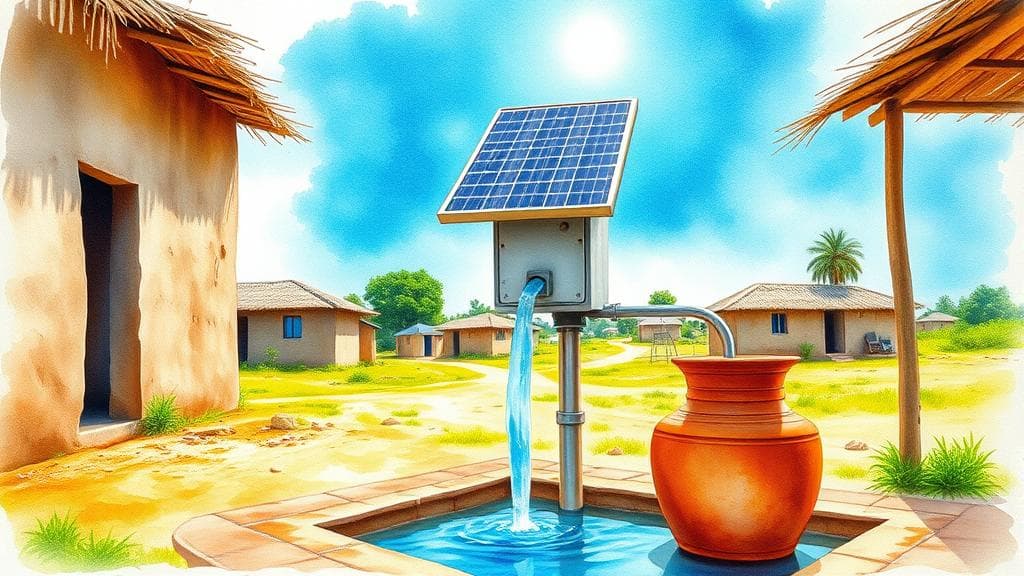
The intervention agency's active role in the Science Granting Councils Initiative has redirected academic research toward solving real-world challenges in Nigerian communities. This intervention has birthed critical technological solutions, such as a solar-powered biosensor filtration device developed by researchers led by Professor Victor Nwaugo from Abia State University. The device targets Nigeria's severe water crisis, where UNICEF estimates that 70 percent of consumed water is contaminated, leading to 117,000 annual deaths of children under five. By utilizing a biosensor to detect pathogens and a three-layer filtration system powered by ultraviolet rays, the device purifies water in areas with limited electricity. Additionally, a team of five Nigerian researchers developed AirVolt, an innovative wind-energy system designed to provide sustainable electricity to off-grid rural communities in northern Nigeria, helping power critical local services like healthcare.
The Mechanics of National Research Funding and Guidelines
Originally established in 2011 to manage and disburse education taxes collected from registered companies in Nigeria, the funding scheme has consistently worked to revitalize public tertiary education. The fund operates two primary research grant models: the National Research Fund and Institution Based Research. The national fund, which focuses on cutting-edge research across 28 prioritized thematic areas in science, technology, humanities, and social sciences, has a funding limit of 50 million Naira per project. In contrast, the institution-based grant supports smaller projects with a cap of 2 million Naira, administered directly by the respective institutions. At institutions like the University of Nigeria, Nsukka, the agency has sponsored vital medical and scientific studies, including Dr. Romanus Nwachukwu Eze's galactic ridge x-ray research, Dr. Maduka Donatus Ughasoro's pediatric trials on neonatal jaundice and childhood anemia, and genetic research on sickle cell anemia by Theresa Nwagha and Anazoeze Madu.
Historically, the national fund received an initial 3 billion Naira in 2009 under President Umaru Musa Yar'Adua. It later grew to award 3.9 billion Naira to 128 projects in the 2019 cycle, followed by a 7.5 billion Naira allocation approved by President Muhammadu Buhari for the 2020 cycle. Over the years, under past leadership such as former Executive Secretary Professor Suleiman Elias Bogoro, the agency revised its operational guidelines to address the historical challenge of unaccessed funds, which often accumulated due to improper documentation, lack of financial returns, and public procurement infractions.
What this means for Africa: The strategic scaling of local research funding in Nigeria empowers academic institutions to develop commercialized, home-grown technological solutions to critical public health, energy, and environmental challenges.
This digest was compiled from:
Share this digest
People Also Read
- OpenAI’s 2026 DevDay: Major Unveilings and Key Takeaways
OpenAI held its annual DevDay on September 29, 2026 in San Francisco, marking the company’s most high‑profile event of t...
- Anthropic’s IPO filing mixes massive losses, soaring revenue and a direct warning that its AI could threaten humanity
Anthropic’s IPO prospectus reveals huge losses, rapid revenue growth and, for the first time, an explicit warning that its AI could end humanity.
- Leo Stan Ekeh Opens AI Learning Centres at Two Lagos Secondary Schools
Leo Stan Ekeh’s foundation opened AI‑enabled learning centres in two Lagos schools, pairing renewable power and Starlink internet to boost digital education.
Share your thoughts
Reactions, corrections, or insights — all welcome.