NITDA Announces Initiative to Standardize Innovation Hubs Nationwide
Standardisation Framework Unveiled
NITDA has launched a drive to standardise innovation hubs across Nigeria in order to broaden the country’s technology ecosystem beyond the traditional centres of Lagos and Abuja.
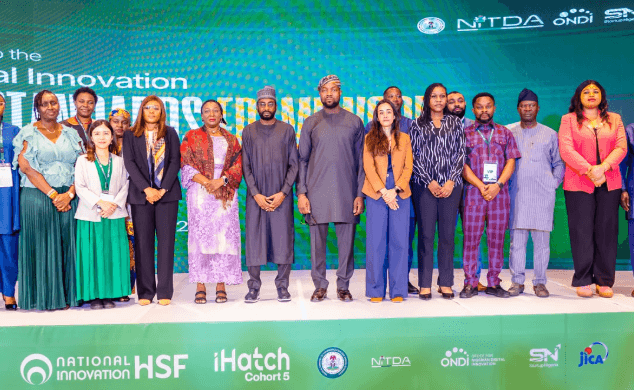
The plan was presented at the National Innovation Hub Standards Framework Technical Validation Workshop held on Thursday at the Abuja Continental Hotel.
The workshop gathered innovation hub operators, investors, development partners, academics, government officials and other stakeholders to review and validate the proposed framework.
NITDA Director‑General and Chief Executive Officer Kashifu Inuwa Abdullahi described the framework as a significant milestone for building a more inclusive and balanced innovation ecosystem.
“Today, for me, marks a remarkable milestone in our journey of making innovation evenly distributed across Nigeria,” he said.
Abdullahi explained that thriving innovation requires well‑designed ecosystems that give entrepreneurs the support needed to turn ideas into commercially viable solutions.
He noted that innovation hubs have become critical drivers of technology ecosystems by providing spaces for collaboration, mentorship, funding and market‑ready development.
He stressed that the proposed standards framework is intended as a guide rather than a regulatory instrument, enabling hubs to assess strengths, identify operational gaps and chart clear pathways toward growth and maturity.
Abdullahi disclosed that Nigeria currently hosts more than 339 innovation hubs, although the majority are concentrated in Lagos, Abuja and a few other states.
The uneven distribution often forces entrepreneurs from other regions to relocate in search of opportunities.
“We don’t need to build Yaba everywhere. Every state is unique.
We can look at the problems around each state and the strengths of each state to build on that,” he said.
He added that each state’s distinct challenges and assets should shape the design of local hubs rather than replicating a single model.
The framework assesses hubs across seven key dimensions and about 35 assessment indicators, providing measurable benchmarks for continuous improvement.
Participants were urged to provide constructive feedback during the validation process, as the document remains a working draft that will benefit from stakeholder contributions before final adoption.
Collaboration and Skills Development
Abdullahi called for stronger collaboration among government, innovation hubs, universities, investors, development partners and the private sector to sustain ecosystem growth.
He identified the weak connection between academia and industry as a major constraint limiting Nigeria’s innovation potential.
He revealed that the Federal Government is working with the Ministry of Education to integrate digital skills into the national education system and produce graduates capable of building globally competitive businesses.
Government Vision for Digital Transformation
Minister of Communications, Innovation and Digital Economy Dr. Bosun Tijani said Nigeria has developed a clearer understanding of the role technology must play in transforming the economy and improving productivity across sectors.
Tijani explained that the country’s digital transformation agenda rests on three interconnected layers.
The first layer consists of foundational infrastructure such as fibre‑optic networks, telecommunications towers, satellites and data centres.
He indicated that the remaining layers will build on this foundation to enhance connectivity, services and market access nationwide.
Overall, the initiative seeks to decentralise tech support, giving innovators across the nation better access to resources, mentorship and markets.
Why This Matters: The framework aims to spread support for innovators beyond Lagos and Abuja, offering more regions the chance to develop technology solutions.
This digest was compiled from:
Share this digest
People Also Read
- Data Shortages Undermine Africa’s Fight Against Antimicrobial Resistance
Africa’s AMR crisis is deepened by scarce laboratory data, delayed test results, and widespread counterfeit medicines, hindering effective treatment.
- Enterprise AI agents require stronger knowledge integration
Enterprise AI agents struggle to reach production due to missing contextual knowledge, but firms investing in retrieval tech and knowledge graphs see higher success rates.
- NITDA Cautions Employees Not to Upload Sensitive Data to Public AI Services
NITDA cautions Nigerian workers and firms against uploading confidential information to public AI platforms, urging strict data‑handling policies.
Share your thoughts
Reactions, corrections, or insights — all welcome.