Operational Halts and Financial Strain Force FoodCourt to Suspend Services
A Sudden Halt to Orders
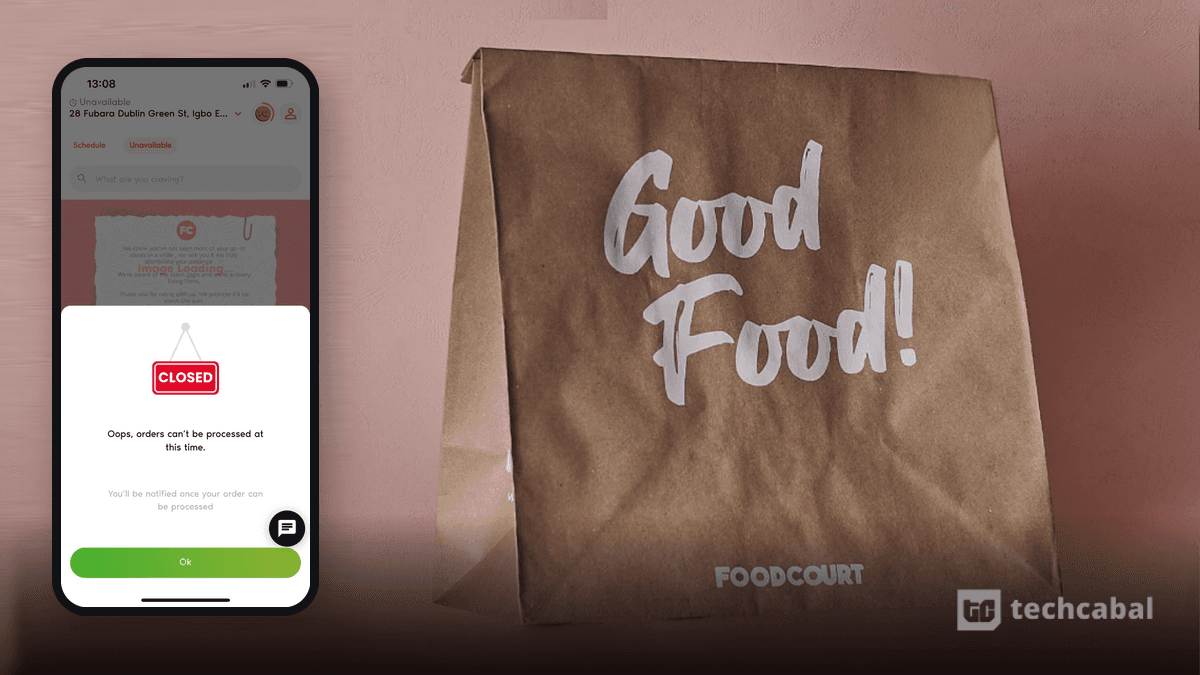
On March 4, 2026, customers of FoodCourt, a Nigerian cloud kitchen startup backed by Y Combinator, opened their mobile applications to find they could no longer place orders. Instead of the usual food menus, the app displayed a message stating that orders could not be processed. This sudden disruption marked a major turning point for the startup, which had previously delivered over one million meals to its customer base.
Unpaid Wages and Kitchen Strikes
Behind the scenes, the operational freeze was triggered by severe financial difficulties. In March 2026, a kitchen strike broke out as workers protested unpaid wages. The staff responsible for preparing meals, supplying ingredients, managing deliveries, and running the branches stopped working due to unpaid salaries and mounting vendor debts. This strike forced the company to switch off its application. By April 2026, the cloud kitchen paused operations at its final remaining branch while its leadership sought new funding to resolve the crisis.
A Challenging Landscape for African Food Tech
FoodCourt is not the only company in the region struggling to navigate the difficult unit economics of the food delivery and kitchen sector. In February 2026, the Nigerian home services startup Eden Life paused its consumer-facing subscription business to focus entirely on its higher-margin corporate catering and industrial food operations, aiming for profitability by 2026. These struggles mirror the exit of larger players, such as e-commerce giant Jumia, which shut down its Jumia Food delivery service across seven African markets due to rising operational costs and intense competition.
The rapid operational freeze at FoodCourt highlights the fragile unit economics of venture-backed food delivery in Africa, raising tough questions about whether pure-play consumer food tech can survive without transitioning to corporate-focused models.
This digest was compiled from:
- https://techcabal.com/2026/07/06/%F0%9F%91%A8%F0%9F%8F%BF%F0%9F%9A%80techcabal-daily-foodcourt-pauses-operations
- https://techcabal.com/2026/07/03/foodcourt-pause-operations
- https://www.linkedin.com/posts/techcabal_why-foodcourt-paused-operations-activity-7478857963051507712-_quW
- https://techcabal.com/2024/04/02/techcabal-daily-thepeer-shuts-down
- https://www.instagram.com/p/DaXOpjvjF7k
Share this digest
People Also Read
- OpenAI confirms GPT‑6.1 Sol Ultrafast will arrive soon, but pricing and date remain unclear
OpenAI confirms its GPT‑6.1 Sol Ultrafast speed tier is imminent but provides no price or exact launch date.
- Cotool builds configurable AI agents to automate repetitive security investigations
Cotool builds configurable AI agents to automate repetitive security investigations, letting teams reuse analyst expertise while retaining control and auditability.
- TUT Forum Urges Immediate AI Rollout Amid 62.8% Youth Joblessness
South Africa’s youth unemployment crisis spurs TUT’s Institute for the Future of Work to demand swift AI implementation and coordinated skills development.
Share your thoughts
Reactions, corrections, or insights — all welcome.