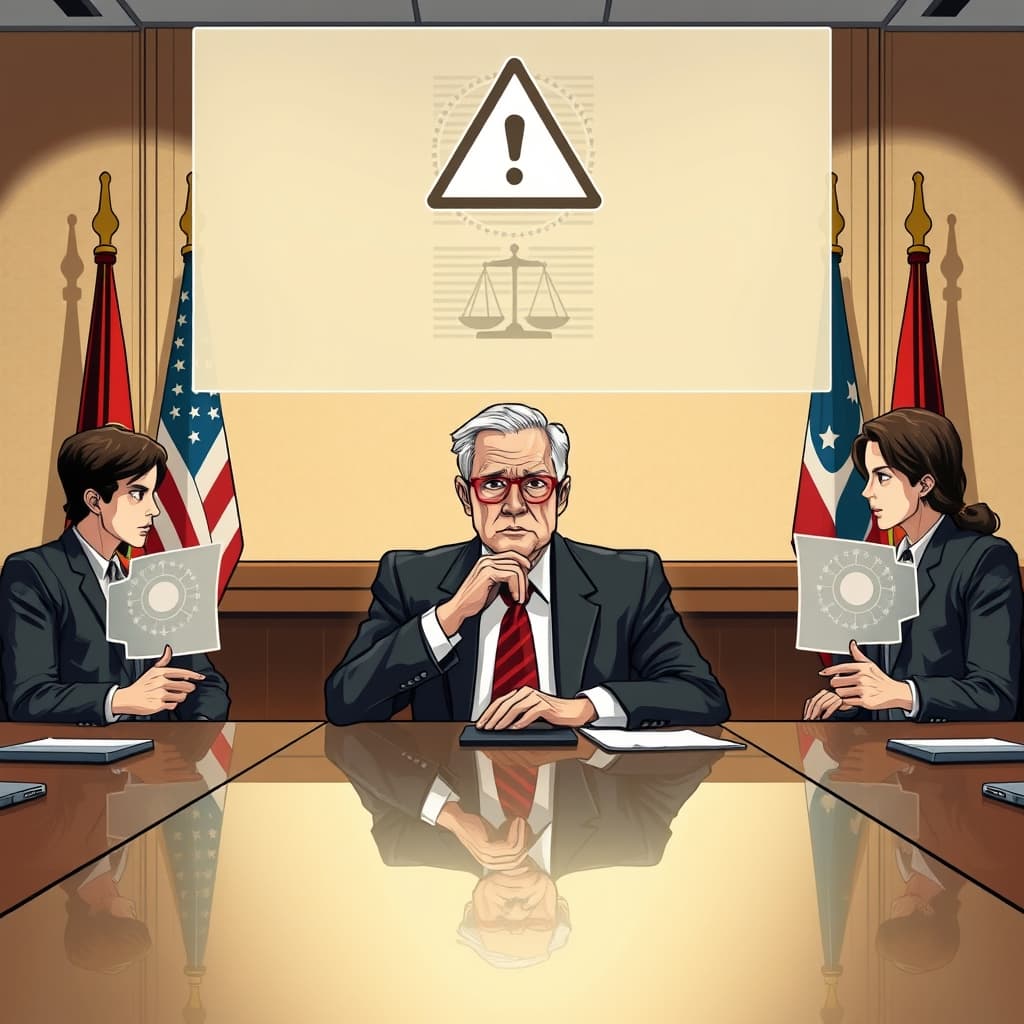
Should AI receive an antitrust exemption to avert existential risk?
AI safety concerns spark calls for coordinated regulation
The AI industry is currently embroiled in a heated debate over safety, with senior researchers at leading labs such as Anthropic and Google DeepMind resigning publicly and warning that the models they build could pose genuine existential threats.
Some of those departing scientists have even quantified the risk, estimating that the probability of artificial intelligence causing human extinction exceeds ten percent.
In response, CEOs across the sector have begun to advocate for a deliberate slowdown in development and for the creation of regulatory frameworks that could mitigate the danger.
Among the policy proposals circulating, a number of executives have suggested that the companies should be granted an antitrust exemption so they can coordinate safety standards without violating competition law.
Antitrust exemptions raise fears of a cartel and regulatory capture
Critics quickly seized on that suggestion, arguing that the exemption could enable the dominant firms to form a cartel, sidestep market forces, and capture regulatory processes to protect their own financial interests.
The concern is amplified by the timing of upcoming initial public offerings, which some observers believe could motivate the firms to seek relief from investor pressure by securing a privileged regulatory position.
Adding a surprising twist to the discussion, libertarian commentator and former Trump AI adviser David Sacks has publicly retweeted antitrust scholar Lina Khan’s claim that no such exemption is needed, thereby aligning with a broader coalition that opposes the idea of a safety‑focused cartel.
The clash over exemption requests has become a focal point for broader anxieties about whether the United States can balance rapid AI advancement with the need to prevent a scenario in which the technology “kills everyone,” a phrase echoed in many of the podcast’s talking points.
Former DOJ antitrust chief Jonathan Kanter weighs in
To shed light on the legal dimensions of the dispute, Nilay Patel invited Jonathan Kanter, the former head of the Department of Justice’s Antitrust Division, to discuss the intersection of competition policy and AI safety on the Decoder podcast.
Kanter, who now teaches law at Washington University and technology policy at Carnegie Mellon, reminded listeners that he helped lead high‑profile antitrust actions against Google, Apple, and Ticketmaster, and that those cases reshaped the modern U.S. antitrust landscape.
He noted that while the Google and Ticketmaster cases concluded with victories for the government, the Apple litigation remains pending from the previous administration, illustrating the continuity and volatility of enforcement across political cycles.
When asked whether the current AI firms are attempting to form a cartel, Kanter cautioned that any coordination on safety must be carefully structured to avoid violating the Sherman Act, and that “the line between collaboration for public good and illegal market manipulation is thin.”
He also emphasized that antitrust law can coexist with safety regulation, but that policymakers must design exemptions with strict oversight to prevent abuse.
The conversation further explored how U.S. competition policy might interact with China’s rapidly expanding AI sector, raising the specter of a geopolitical race that could influence domestic regulatory choices.
Throughout the interview, Kanter’s tone remained measured, and he concluded with a personal remark that highlighted his new freedom from government service, saying “I can say whatever I want. I feel so free.”
The episode ended with Patel noting that the discussion is only the first part of a two‑part series, signaling that the debate over AI safety, antitrust exemptions, and market dynamics will continue to evolve.
Why This Matters: Understanding whether AI firms can obtain antitrust exemptions is crucial because it will shape how safety standards are coordinated and how competition is preserved in a technology that could have existential consequences.
This digest was compiled from:
Share this digest
People Also Ask
- Anthropic runs a wet lab for biological experiments
Anthropic’s new Bay Area wet lab lets its AI models run real biology experiments, sparking excitement and safety concerns.
- Egypt and Intel to Educate One Million Citizens in AI Each Year; South African Protest Over Data Centres
Egypt and Intel will train one million people per year in AI, while Africa sees major AI funding, infrastructure projects, and regulatory moves.
- Researchers used Anthropic’s Claude to tap an OpenAI employee’s ChatGPT account and view private code cache
Security researchers used Claude to access an OpenAI employee’s ChatGPT account, exposing gaps in identity‑based safeguards for AI‑driven code access.
Share your thoughts
Reactions, corrections, or insights — all welcome.