Supabase’s Appeal to AI Agents Explained
Build
The podcast host first met Paul Copplestone and Ant Wilson in Singapore after their Y Combinator S20 batch.
Six years later the duo discuss how Supabase helped their open‑source, fully remote startup reach a $10 billion valuation.
Supabase groups its product announcements into Build, Operate and Scale, a framework the host uses to evaluate agent‑friendly features.
One Build feature is an alpha runtime that lets developers launch a local Supabase backend without Docker.
The host notes, “I use Colima rather than Docker Desktop, and even then, removing another dependency from the path to a working database is welcome.”
Eliminating Docker simplifies repeated environment creation, a task that AI agents must perform when generating and testing applications.
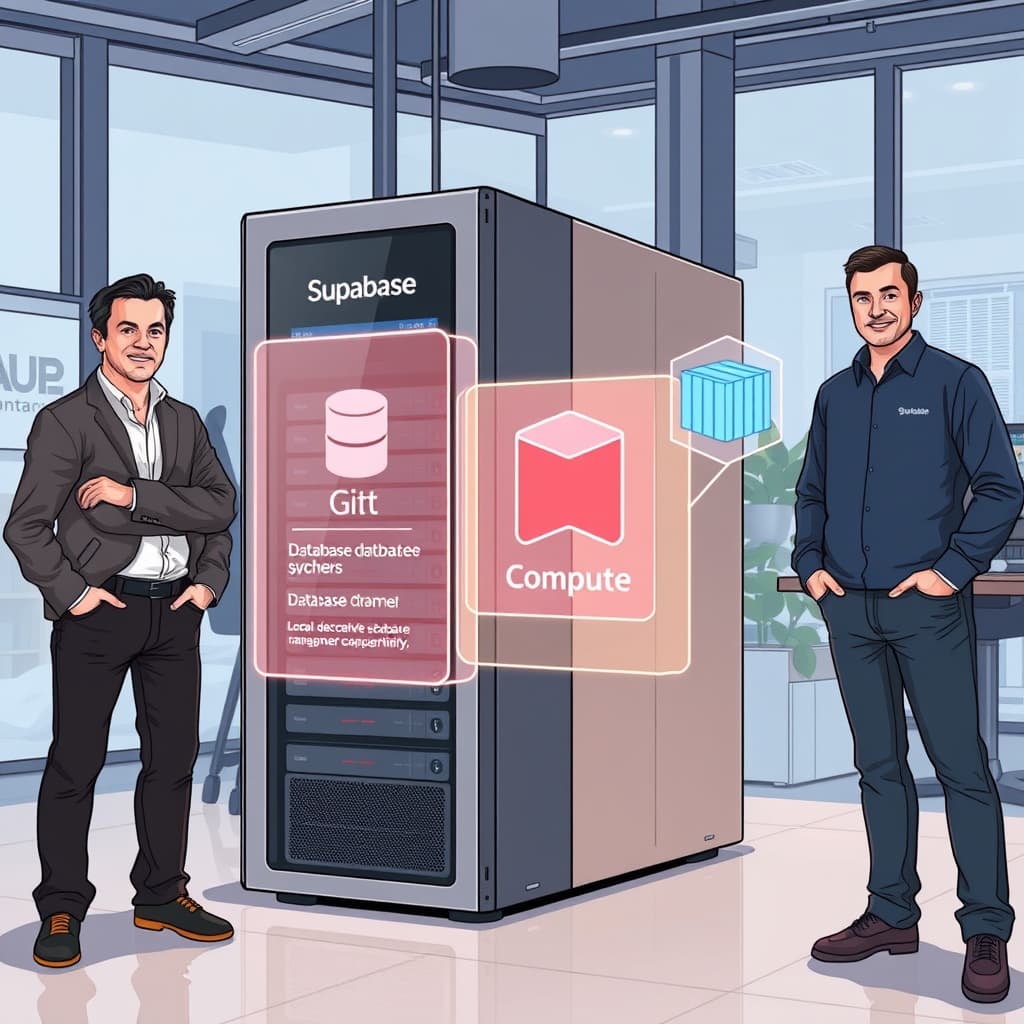
Supabase also supports declarative database schemas stored in Git, turning the schema into a set of files an agent can read and edit.
The host compares this to a “Terraform moment for the database,” because the desired state lives in version control.
With schema files in Git, an agent can fork, modify, and apply migrations without reconstructing the entire history.
Human developers gain the same clarity, as the backend’s structure is visible without replaying every migration step.
Operate
Supabase Compute, now in private alpha, adds a runtime for executing code close to the database.
The host explains, “An application needs somewhere to do its work as well as somewhere to store the result.”
Running containers beside the database reduces the number of separate services an agent must configure and connect.
Edge functions remain useful, but they cannot cover every workload such as document chunking or embedding generation.
Operating‑side tools like logs, health checks, and connection contexts give agents insight into database contents and failure modes.
When a model issues SQL, it also needs to know the schema, usage patterns, and recent error traces to act safely.
Supabase’s Operate announcements therefore complement the Build features by exposing runtime observability to agents.
Scale
In the host’s frontier AEO tracker, Supabase consistently appears as the first‑choice backend for frontier models including Astra, Fable and Muse.
The tracker shows Supabase competing well against other managed Postgres providers across a range of model‑driven applications.
By keeping the database and compute tightly coupled, Supabase simplifies scaling from prototype to petabyte‑scale workloads.
The combination of local‑first development, Git‑backed schemas, and nearby compute creates a streamlined stack for agents to iterate rapidly.
These practical improvements align with the host’s observation that the most valuable developer‑tool announcements feel “of course I want this today.”
Agents, which repeatedly perform the same backend setup steps, experience a tangible reduction in friction.
Supabase’s focus on developer ergonomics thus translates directly into lower operational overhead for AI‑driven pipelines.
Why This Matters
This digest was compiled from:
Share this digest
People Also Read
- NVIDIA Introduces NVKE, a Managed Kubernetes Service for On‑Prem GPU Clusters
NVKE enables on‑prem teams to run managed Kubernetes clusters on NVIDIA GPUs, but remains a preview with limited production readiness.
- Ripple-65B Preview Achieves New U.S. Open‑Weight Benchmark in Agentic Coding
Ripple‑65B Preview sets a new U.S. open‑weight coding benchmark while costing just $32 million to train.
- Kyle Kingsbury’s Warning on LLM‑Driven Trust Erosion
Kyle Kingsbury warns that LLMs undermine confidence in software documentation and calls on maintainers to find ways to prove correctness.
Share your thoughts
Reactions, corrections, or insights — all welcome.