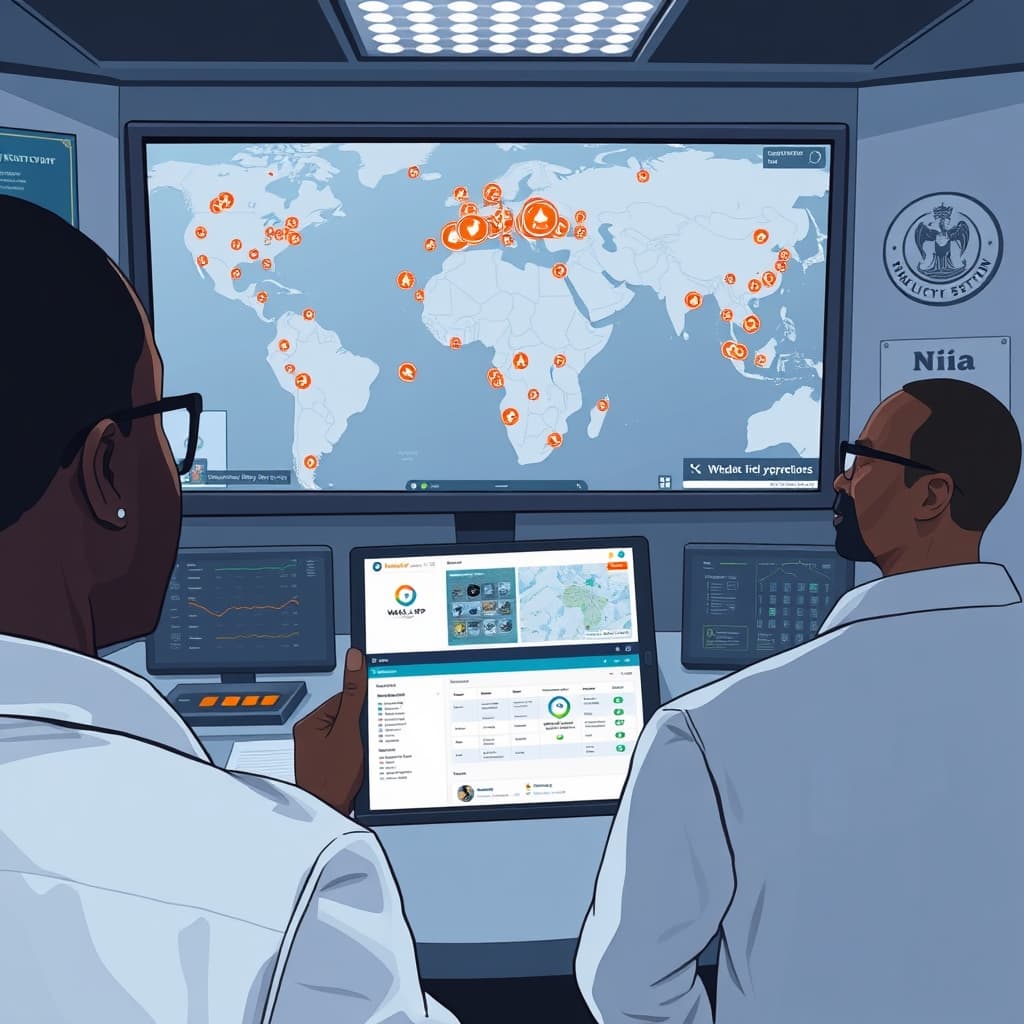
AI Boost for Nigerian Security as Wahala App Teams Up with NIIA
AI‑Enabled Early Warning Partnership
Nigerian tech firm Wahala App Ltd has entered a partnership with the General Leo Irabor Early Warning Systems Centre (GLIC) of the Nigerian Institute of International Affairs (NIIA).
The collaboration is designed to bring artificial intelligence and real‑time data analytics to security intelligence and business risk management in Nigeria.
By merging citizen‑generated incident reports with AI‑driven analysis, the partnership aims to improve early warning capabilities for emerging threats.
According to BusinessDay and THISDAY, GLIC will gain access to the Wahala Network, a digital platform that aggregates reports from individuals, businesses and participating organisations.
The network’s purpose is to identify security risks and potential operational disruptions across the country.
Oriekaose Agholor, co‑founder and chief executive officer of Wahala App Ltd, said, “Safety is a shared responsibility, and timely information can help people make more informed decisions about their surroundings. Our partnership with GLIC is an important step towards connecting citizen participation with wider early warning efforts,” Agholor said.
Agholor added that Wahala App is seeking further collaborations with government agencies, corporate organisations and other institutions to broaden the reach of its technology.
Dr Omotola Ilesanmi, acting head of GLIC, emphasized that “Effective early warning depends on the timely identification of risks and the availability of reliable information to support informed decision‑making,” Ilesanmi said.
She also noted that technology and citizen participation could strengthen awareness of emerging risks and support preparedness.
How the Wahala Network Operates
The Wahala Network allows users to submit incident reports via a mobile app, specifying location and nature of the event.
Collected data are processed by AI‑powered analytical tools that look for connections between incidents that may initially seem unrelated.
This capability helps institutions recognise broader risk patterns and make better‑informed decisions.
Businesses linked to the network can receive alerts about incidents that might affect their operations.
The information can guide choices on transport routes, logistics arrangements, personnel safety and business continuity planning.
However, the system’s effectiveness will hinge on the accuracy, verification and timeliness of the information submitted.
Wahala App’s platform also offers location‑based alerts, emergency notifications to designated contacts, and a public‑participation drive called Ambassadors Against Wahala.
The Ambassadors programme encourages responsible incident reporting and safety awareness in workplaces, schools, religious institutions and communities.
Implications for Businesses and Security
The partnership arrives amid growing interest in technology‑driven approaches to security monitoring in Nigeria.
Businesses are increasingly looking for tools to manage risks that affect personnel, transportation, logistics and supply chains.
AI‑enhanced analysis of crowd‑sourced data promises a more dynamic picture of security threats than traditional reporting methods.
By feeding citizen reports into an institutional early‑warning centre, the initiative seeks to bridge the gap between community observations and official risk assessments.
If successful, the model could provide a template for other African nations seeking to leverage AI for public safety.
Nevertheless, the reliance on user‑generated content raises concerns about data quality and potential misinformation.
Ensuring rigorous verification processes will be critical to maintaining trust among businesses and government agencies.
Wahala App’s stated goal of expanding real‑time incident reporting and AI‑driven risk analysis reflects a broader trend toward data‑centric security strategies.
Stakeholders will be watching how the partnership balances rapid information flow with the need for reliable, actionable intelligence.
Why This Matters: The alliance creates a direct pipeline for AI‑processed citizen reports to inform institutional early‑warning systems, potentially enhancing security decision‑making for businesses and authorities in Nigeria.This digest was compiled from:
Share this digest
People Also Read
- Nvidia launches probe into CEO Jensen Huang’s ties to alleged Chinese spy
Nvidia’s board has opened an independent investigation into CEO Jensen Huang’s alleged ties to a Chinese intelligence‑linked Megaspeed executive.
- AI is shattering cybersecurity; the industry faces a looming dark age
Alex Stamos warns AI‑enabled attacks are chaining breaches across the tech industry, ushering a dark age for cybersecurity.
- OpenAI secures $11 billion in funding, pushing valuation to $1.25 trillion
OpenAI raised $11 billion, valuing it at $1.25 trillion, amid a funding round that may total $20 billion and a shifting AI market.
Share your thoughts
Reactions, corrections, or insights — all welcome.