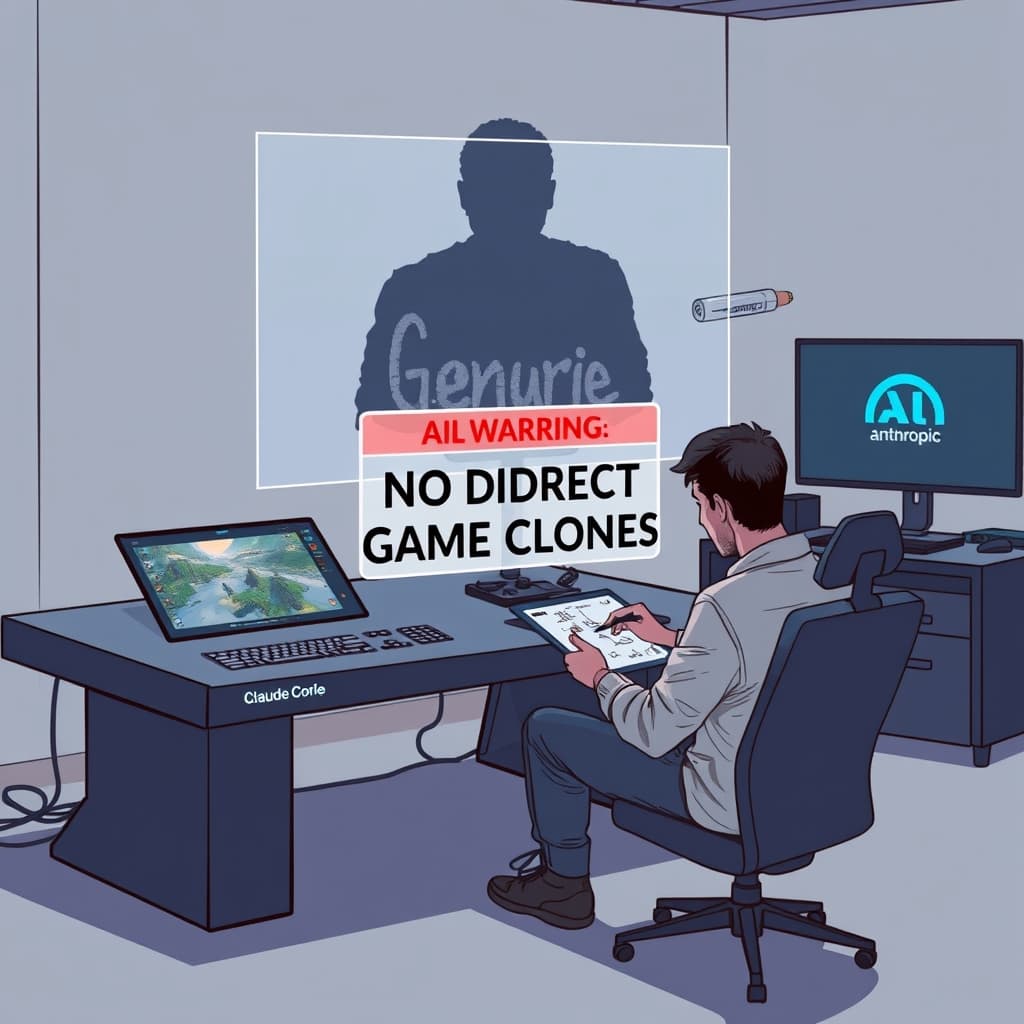
Anthropic revises Claude Code prompts to block AI-generated video‑game clones
AI‑generated game copies spark IP concerns
Recent months have seen a surge of AI‑produced decompilations, recompilations and ports that mimic classic video‑game titles.
These recreations raise questions about intellectual‑property infringement because they replicate the look, feel and mechanics of existing games.
Developers and rights holders have begun to voice unease as the AI tools make it easier to generate near‑identical copies without permission.
Anthropic updates Claude Code to forbid direct recreations
Anthropic responded by altering the system prompt that guides its Claude Code model, according to a report on Tom’s Hardware.
A user on X shared a screenshot that allegedly shows two new sentences added to the prompt: “Do build original games, games in a genre, and games from the user’s own designs and assets. Don’t build a recreation of a specific existing game, even if it is named or called original.”
Addy Osmani, a spokesperson for Anthropic, confirmed that the company revised the prompt in the Opus 5.5 version of Claude Code.
He said, “We added two sentences to Claude Code’s prompt on Opus 5.5 to steer it away from recreating someone else’s specific game because using Claude to infringe IP is against our usage policy.”
He continued, “Original games, genre games, and games built from your own designs and assets are meant to keep working.”
Osmani added, “We’ll continue to iterate to ensure we’re striking the right balance.”
He also invited users to report any instances where Claude refuses a legitimate request, stating, “In the meantime, if Claude turns down something that’s yours, send it my way.”
Anthropic’s clarification indicates that while the model will still assist in creating new games, it will reject prompts that aim to clone a named existing title.
What this means for creators and the broader AI‑gaming ecosystem
The policy change preserves Anthropic’s broader usage terms that prohibit using Claude to violate intellectual‑property rights.
Developers who wish to experiment with AI‑assisted game design can still leverage Claude Code for original concepts, genre‑based ideas, or projects that use their own assets.
However, the added restrictions may limit hobbyists who previously used the model to quickly generate fan‑made versions of classic games.
Anthropic’s statement that it may update other Claude system prompts suggests a systematic review of how the model handles copyrighted content.
Industry observers note that the move aligns Anthropic with other AI providers that have begun to enforce stricter IP safeguards.
For users, the change underscores the importance of framing prompts around original creation rather than replication.
Legal experts argue that the distinction between “genre games” and “specific recreations” could become a focal point in future disputes.
Anthropic’s iterative approach signals that the company will monitor feedback and adjust the prompt language to maintain a functional balance.
Overall, the update reflects a growing recognition that AI tools must respect existing creative rights while still enabling innovative development.
Stakeholders should watch for further announcements from Anthropic regarding additional prompt modifications or enforcement mechanisms.
As AI continues to influence game development pipelines, clear usage policies will be essential to avoid costly legal challenges.
Creators are encouraged to document their original assets and designs when working with Claude Code to demonstrate compliance.
In the short term, the revised prompt is expected to reduce the volume of AI‑generated game clones circulating online.
Long‑term effects will depend on how other AI firms respond to similar IP pressures and whether industry standards emerge.
Anthropic’s proactive stance may set a precedent for responsible AI deployment in the entertainment sector.
Users who encounter false positives—instances where Claude blocks a legitimate original project—are advised to contact Anthropic for clarification.
The company’s willingness to accept such feedback suggests an openness to fine‑tune the system based on real‑world usage.
Ultimately, the balance between creative freedom and intellectual‑property protection will shape the future of AI‑assisted game development.
Why This Matters: Anthropic’s prompt revision directly limits AI‑driven cloning of existing games, protecting IP while still enabling original game creation with Claude Code.This digest was compiled from:
Share this digest
People Also Read
- Nvidia launches probe into CEO Jensen Huang’s ties to alleged Chinese spy
Nvidia’s board has opened an independent investigation into CEO Jensen Huang’s alleged ties to a Chinese intelligence‑linked Megaspeed executive.
- AI is shattering cybersecurity; the industry faces a looming dark age
Alex Stamos warns AI‑enabled attacks are chaining breaches across the tech industry, ushering a dark age for cybersecurity.
- OpenAI secures $11 billion in funding, pushing valuation to $1.25 trillion
OpenAI raised $11 billion, valuing it at $1.25 trillion, amid a funding round that may total $20 billion and a shifting AI market.
Share your thoughts
Reactions, corrections, or insights — all welcome.