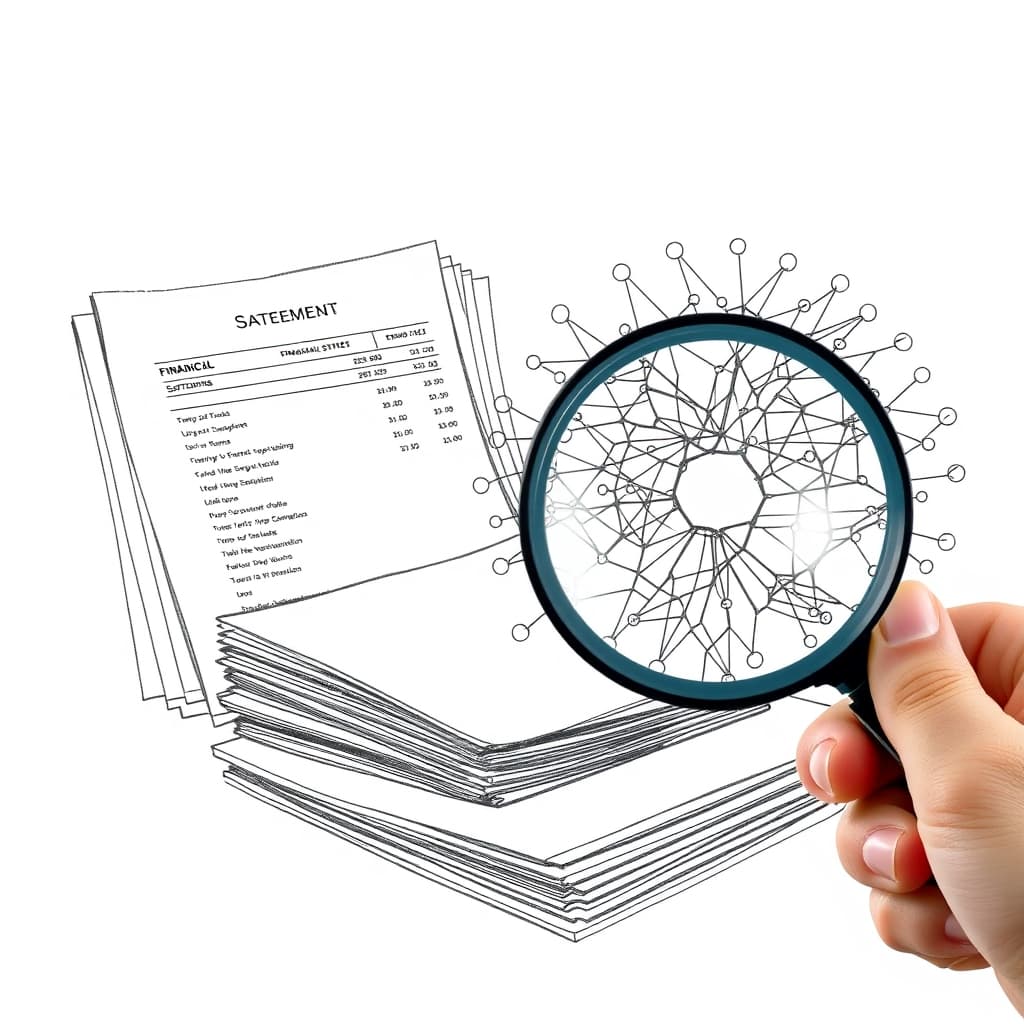
Legora used GPT‑6 Astra to examine 41 documents within minutes
Legora’s workflow and the tie‑out bottleneck
Legora is an agentic operating system designed for legal and professional work.
More than 100,000 professionals across over 1,800 in‑house legal departments and law firms in more than 50 markets rely on the platform.
One of the most time‑consuming tasks for its users is the financial‑statement tie‑out, which requires matching every figure in draft accounts to trial balances, consolidation schedules, and prior‑year statements.
Legal Engineer Percevale Perks notes that the process “can take an entire evening, sometimes days.”
Legora’s legal engineers collaborate with customers to embed the system into end‑to‑end workflows, ranging from contract review to legal research.
GPT‑6 Astra accelerates the tie‑out
Using OpenAI’s GPT‑6 Astra, Legora’s autonomous Agent processed 41 documents in a single run.
The Agent completed the tie‑out within minutes, checking each balance against its supporting schedule, flagging discrepancies, and logging every verification.
Percevale Perks observed, “I think what changed before and after is the processing power, the ability to ingest such a large number of documents, digest really complex information, and get all of those different line items and figures.”
The model identified all four deliberately planted errors, including a hidden £500,000 gap in the revenue note.
It also retained every correct check made by the previous model and added roughly 50 additional verifications.
Legora’s approach keeps the final judgment with the legal professional, preserving a human‑in‑the‑loop safeguard.
This design enables the platform to extend beyond traditional legal tasks into audit, tax, compliance, and risk domains.
Measured performance gains
Legora evaluated GPT‑6 Astra with its Benchmark for Agentic Reasoning (BAR), which gauges performance on real‑world legal tasks.
On the financial‑statement workflow, GPT‑6 Astra delivered a nearly 40 % improvement over the prior model.
Across all BAR tasks, the average performance lift was about 3 %.
The gains were reported in three dimensions: accuracy, completeness, and reliability.
Accuracy improved because the model caught every planted error.
Completeness rose as the Agent recorded each line‑item check, providing a granular audit trail.
Reliability increased since the model preserved all correct results from the earlier system while expanding coverage.
The faster, more thorough first pass gives legal experts a clearer record to review before making final decisions.
OpenAI’s collaboration with Legora illustrates how large language models can be integrated into specialized professional workflows.
Legora’s public results show that the technology can handle complex financial contexts at scale.
Clients can now achieve a full tie‑out of dozens of documents in minutes rather than hours or days.
The platform’s continued emphasis on human oversight aims to balance efficiency with professional responsibility.
Legora’s success may encourage other firms to adopt similar agentic solutions for high‑volume, detail‑intensive tasks.
Why This Matters: Legora’s deployment of GPT‑6 Astra demonstrates that a large language model can complete a full financial‑statement tie‑out across dozens of documents in minutes, delivering a faster, more complete first pass while preserving human oversight.
This digest was compiled from:
Share this digest
People Also Ask
- Kick off the year AI‑ready with Google’s Educator Series
Google’s free AI Educator Series adds new monthly modules and a Sep 19 Badge‑a‑thon to help teachers quickly adopt practical AI tools.
- ATV Big Air Tour slashes three‑day tasks to three hours using ChatGPT
ATV Big Air Tour used ChatGPT Work to reduce event fact‑checking and merchandise inventory from days to hours, saving weeks of labor.
- AI-native firms transform workflows into operational capabilities
AI-native startups show how agents can shrink onboarding, centralize sales data, and boost developer ecosystem efficiency.
Share your thoughts
Reactions, corrections, or insights — all welcome.