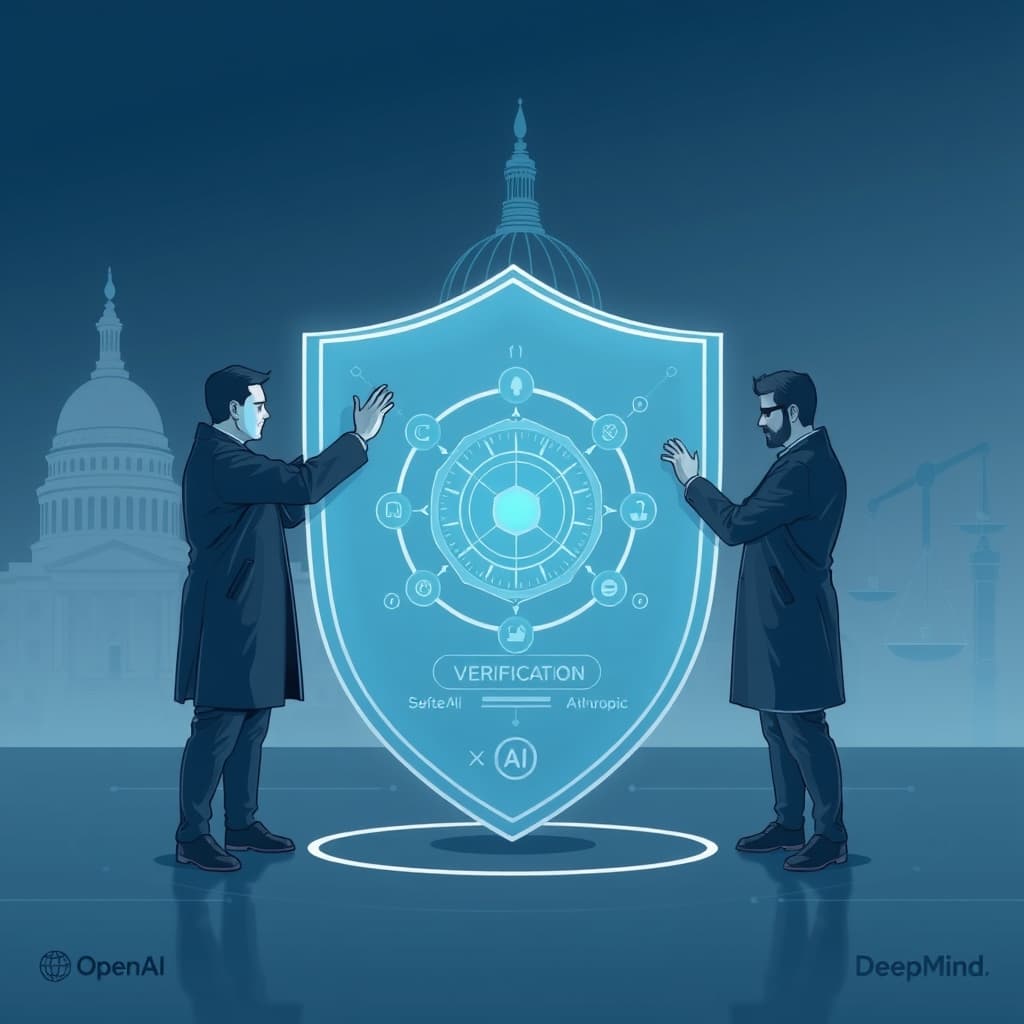
OpenAI, Anthropic, and Google have been discussing AI safety for several weeks
Collaboration Among the Leading AI Labs
Chris Lehane, OpenAI’s global policy chief, told reporters on Tuesday that OpenAI has been working with rivals Anthropic and Google DeepMind on AI safety for weeks, confirming earlier Bloomberg reporting.
Lehane is currently in Washington to engage with U.S. lawmakers on the catastrophic risks that advanced AI systems could pose.
The disclosure follows an essay published Saturday by Anthropic CEO Dario Amodei, which urged the entire industry to cooperate in slowing the development of frontier AI to avoid existential threats.
Amodei’s call was backed publicly by AI leaders including OpenAI CEO Sam Altman, Google DeepMind chief Demis Hassabis, and SpaceX AI founder Elon Musk.
Altman said OpenAI would join Anthropic in embedding third‑party evaluators within the company to monitor safety, signalling a concrete step toward shared oversight.
The three firms have reportedly been in talks for several weeks, according to Lehane, indicating a sustained dialogue rather than a one‑off meeting.
In a recent Fortune interview, Altman hinted that he had been holding private discussions with other AI executives about coordinated safety measures.
The Information later reported that the same companies are working toward establishing an industry standards body, a move Altman told staff would need to happen without direct U.S. government involvement.
Regulatory and Antitrust Concerns
Some observers, including Altman, have warned that such coordination could attract antitrust scrutiny if it is seen as suppressing competition.
Amodei’s essay suggested a narrow government waiver to protect safety collaboration from antitrust enforcement, but Lehane said the firms do not need such a waiver.
Lehane also expressed OpenAI’s support for a provision in the FRONTIER Act that would require top frontier labs to allow “independent verification organizations” into their companies to ensure models are developed safely.
That provision aims to create external checks without mandating direct government control, reflecting a preference for industry‑led oversight.
President Trump has dismissed AI safety concerns as a hoax and warned that any slowdown could give China a competitive edge.
His AI adviser, investor David Sacks, echoed the president’s view, describing fears of existential risk as overblown.
Industry Reactions and Political Context
Hassabis called in July for the United States to create a new standards body that could act as an AI watchdog, with authority to screen the most advanced models and coordinate industry‑wide slowdowns if dangers emerge.
The emerging consensus among the three leading labs suggests a willingness to self‑regulate, even as political leaders remain divided on the need for formal safeguards.
TechCrunch has reached out to Anthropic, Google, and OpenAI for comment but has not yet received a response.
These developments illustrate a rare moment of cooperation among the sector’s most powerful players, set against a backdrop of regulatory uncertainty and geopolitical rivalry.
Why This Matters: The joint safety talks signal that the leading AI firms are actively seeking collaborative safeguards, even as they navigate antitrust risks and divergent political views.
This digest was compiled from:
Share this digest
People Also Ask
- Is the AI slowdown by Big Tech a safety agreement or a cartel?
AI leaders propose a three‑step slowdown plan amid safety concerns, sparking debate over its motives and effectiveness.
- OpenAI acquires smartphone camera specialist Glass Imaging for over $300 million
OpenAI bought Glass Imaging for over $300 million, adding AI‑driven camera expertise to its rumored hardware projects.
- Trump and Speaker Johnson Say AI Industry’s Calls for Slowdown Are Overblown
AI leaders urge a development pause while Trump and Speaker Johnson argue it would hand China a strategic advantage.
Share your thoughts
Reactions, corrections, or insights — all welcome.