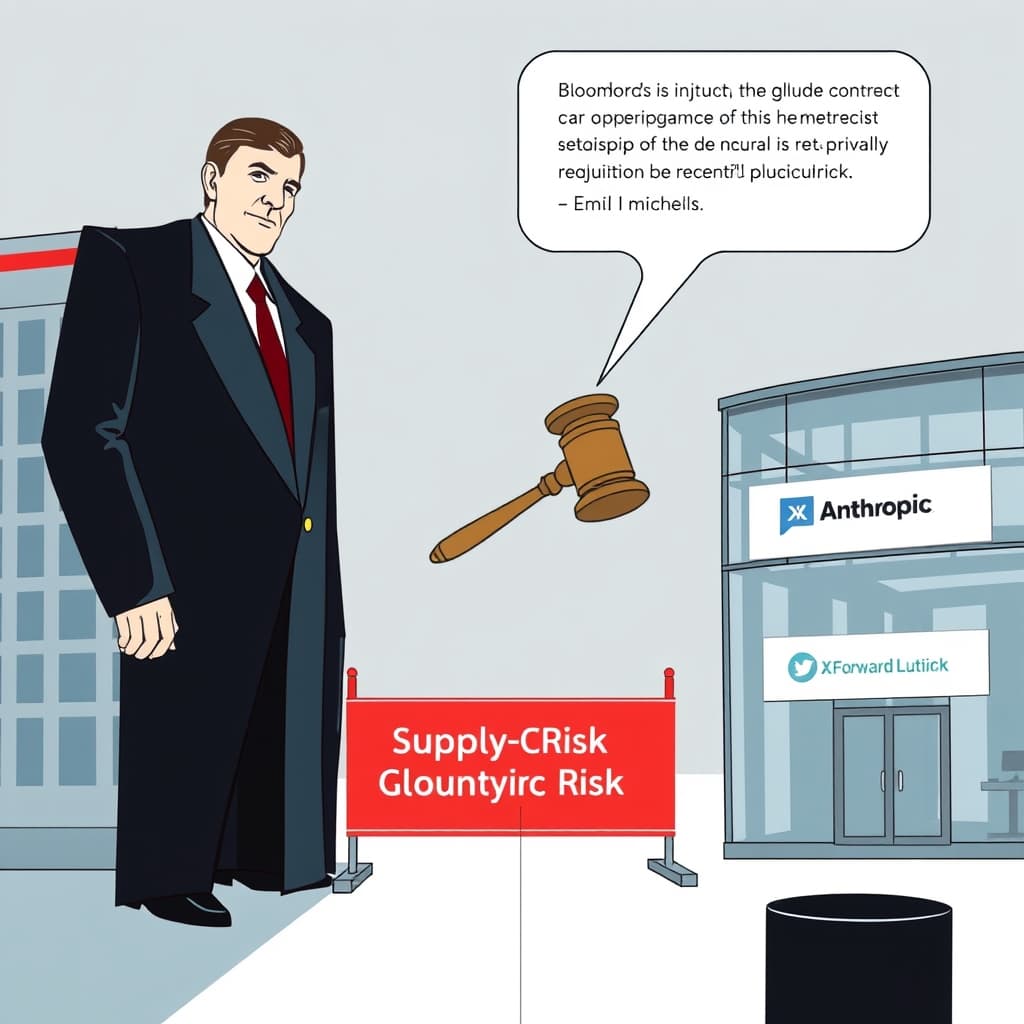
Pentagon maintains Anthropic’s supply‑chain‑risk designation despite recent reconciliation claims
The Pentagon continues to treat Anthropic as a supply‑chain risk, a status that remains despite recent comments suggesting a resolution.
Senior Defense Department official Emil Michael confirmed the designation on X on Thursday.
Michael wrote, “Anthropic is still a designated Supply Chain Risk at @DeptofWar and for the Defense Industrial Base.”
His post came one day after Commerce Secretary Howard Lutnick told Bloomberg Television that Anthropic had “gotten religion” and patched up its differences with the administration.
A top Anthropic executive appeared alongside Lutnick at a Group of 20 technology meeting in North Carolina on Wednesday.
The Defense Department declined to comment when Reuters requested a response.
Michael’s message made no reference to the ongoing litigation involving the company, according to Bloomberg.
Background of the dispute
The conflict originated earlier this year over a $200 million contract concerning deployment of Anthropic’s Claude models on classified Pentagon systems.
Anthropic requested contractual limits that would bar its models from autonomous lethal‑weapon systems and domestic mass‑surveillance applications.
The Defense Department rejected those limits, arguing that corporate contractors cannot dictate military operating rules.
Negotiations collapsed, and Defense Secretary Pete Hegseth designated Anthropic a supply‑chain risk, a status traditionally reserved for foreign entities deemed national‑security threats.
The designation effectively blocked every Pentagon contractor and supplier from doing business with Anthropic.
Legal rulings and current status
Anthropic challenged the designation through a federal district‑court suit in California and a separate appeal before the D.C. Circuit.
On August 27, U.S. District Judge Rita Lin of the Northern District of California ruled in Anthropic’s favor.
Judge Lin found that the Pentagon had retaliated against the company in violation of the First Amendment and had stripped it of liberty interests without adequate notice.
She set aside the supply‑chain‑risk designation and issued a permanent injunction ordering the Defense Department and other named agencies to withdraw all directives related to the designation.
The injunction does not obligate the Pentagon to adopt Anthropic’s products, nor does it prevent the government from moving to other AI providers, provided such actions comply with the law.
Separately, the Commerce Department’s export‑control dispute was resolved when Lutnick and Anthropic executive Tom Brown worked together to address concerns about potential misuse of two AI models.
Those export controls were lifted in late June.
Implications for AI suppliers
The continued Pentagon designation signals that supply‑chain‑risk status can persist even after a court vacates the original order.
For AI firms, the case illustrates how contractual demands related to weaponization and surveillance can trigger high‑level regulatory actions.
Anthropic’s experience shows that legal victories may not instantly restore access to defense markets, which remain governed by separate administrative judgments.
Companies seeking Pentagon contracts may need to negotiate terms that align with military policy without imposing usage restrictions that the Department of Defense views as overreach.
Stakeholders should monitor future statements from the Defense Department and any further legal filings that could clarify the practical effect of the injunction.
Because the Pentagon’s supply‑chain‑risk label historically targets foreign entities, its application to a U.S. AI company underscores a broader willingness to treat technology risk as a national‑security issue.
Observing how the Department of Defense balances security concerns with commercial partnerships will be essential for firms developing advanced AI models.
Why This Matters: the Pentagon’s ongoing supply‑chain‑risk designation keeps Anthropic barred from defense contracts, limiting the company’s market access and highlighting persistent regulatory risk for U.S. AI providers.
This digest was compiled from:
Share this digest
People Also Ask
- Anthropic’s Potential $2 Trillion IPO Valuation Sparks Value‑Investor Interest
Anthropic may debut at a $2 trillion valuation, but rapid revenue growth and a likely post‑IPO dip keep value investors interested.
- Pentagon confirms Anthropic remains designated as a supply‑chain risk
The Pentagon still classifies Anthropic as a supply‑chain risk, overriding a court injunction and limiting its defense contract opportunities.
- Anthropic forces automatic sign‑outs of Claude accounts after malware steals session data
Anthropic forced sign‑outs, removed payment data and refunded charges after infostealer malware stole Claude session cookies from Windows and macOS users.
Share your thoughts
Reactions, corrections, or insights — all welcome.