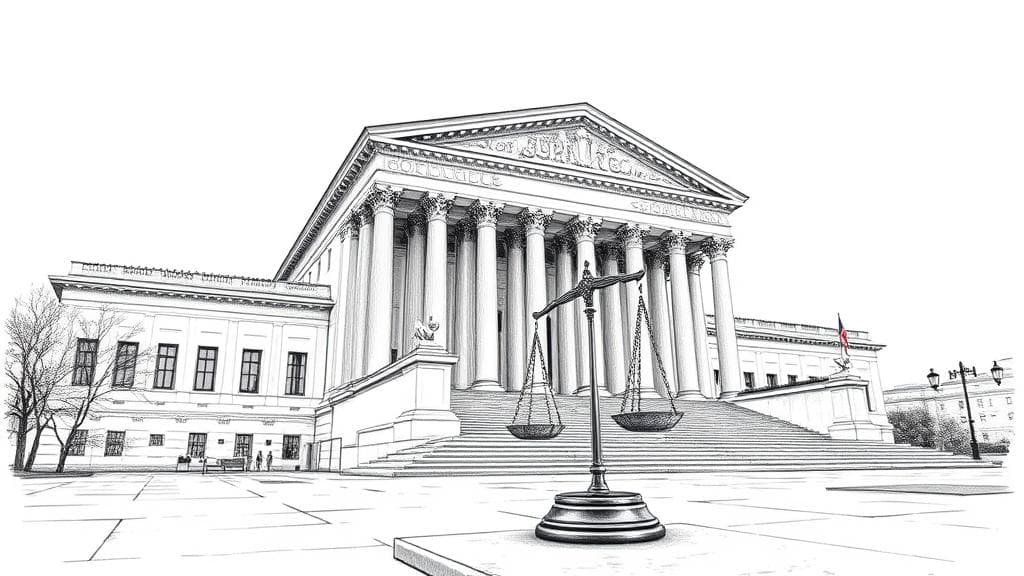
Supreme Court Checks Executive Power as Trump Administration Initiates Sweeping Policy Actions
Supreme Court Limits Executive Authority and Rules on Key Social Issues
In a series of landmark decisions at the end of June 2026, the Supreme Court of the United States issued rulings that directly challenged and shaped the agenda of the Trump administration. In the case of Trump v. Slaughter, the high court blocked President Donald Trump from firing a Federal Reserve governor, establishing a significant limit on presidential authority over independent regulatory bodies. The court also handed down a decision in Watson v. National Republic Committee, further defining the legal landscape surrounding national political organizations.
On social and electoral policy, the judicial decisions were mixed. The Supreme Court rejected a bid by the Trump administration to end birthright citizenship, declaring that America is a multiracial democracy. Additionally, the justices approved the continuation of mail-in voting, despite ongoing pressure from President Trump to pass the restrictive SAVE Act ahead of the upcoming midterm elections. However, the court ruled against transgender advocacy groups by upholding a ban on transgender girls and women participating in female sports categories.
White House Launches New Digital Portals and Executive Orders
Directly preceding these judicial rulings, President Donald Trump signed a new wave of executive orders on June 29, 2026. Following these directives, the White House updated its official digital channels under the Trump-Vance administration, featuring prominent roles for Vice President JD Vance and First Lady Melania Trump. The updated platform launched dedicated resources for the SAVE America initiative and published official files on highly debated topics.
Among the newly highlighted portals are dedicated sections investigating the origins of Covid-19, labeled as the Lab Leak, alongside resources detailing the events of January 6, which the administration has designated as a date of infamy. The administration also published directories concerning criminal aliens receiving Medicaid, linked to a Department of Homeland Security database of individuals designated as the worst of the worst. Furthermore, the White House opened access to historical government archives by releasing the JFK and RFK files to the public.
Global Landscape Defined by Sporting Events and Technological Trends
These domestic political battles occurred against a backdrop of major international events. In sports, the 2026 World Cup captured global attention, culminating in massive street celebrations in Mexico City on June 30, 2026, after Mexico defeated Ecuador to advance from the round of 32. Meanwhile, global news outlets reported that public interest remains heavily focused on geopolitical conflicts and technological shifts. The ongoing war in Ukraine, political friction in France and the European Union, and reports of a US-Israel attack on Iran in 2026 dominated global news feeds. Alongside these geopolitical crises, artificial intelligence continues to rank as one of the most highly searched and discussed subjects globally, reflecting the technology's persistent influence on public discourse.
With the high court establishing firm boundaries on presidential authority over independent regulators and citizenship, the Trump administration faces a challenging legal path as it attempts to push its legislative agenda ahead of the midterms.
This digest was compiled from:
Share this digest
People Also Read
- Google AI Model Tops Flu Hospitalization Forecast Rankings
Google’s AI model outperformed 38 competitors in CDC’s FluSight ranking, accurately forecasting flu hospitalizations for the 2025‑26 season.
- Introducing Gemini 4 Argon: ushering in a new frontier of AI intelligence
Google’s Gemini 4 Argon model, with a one‑million‑token limit, begins a phased rollout to cyber defenders, promising major gains in coding, security and enterprise tasks.
- Developing safety cases for cutting‑edge AI training
OpenAI outlines a draft safety‑case framework for frontier reinforcement‑learning training, detailing alignment, containment, and monitoring safeguards.
Share your thoughts
Reactions, corrections, or insights — all welcome.