Washington Vets Frontier AI Under New Voluntary Cybersecurity Safety Framework
The delicate balance between commercial technological leadership and national security is reaching a critical inflection point in Washington.
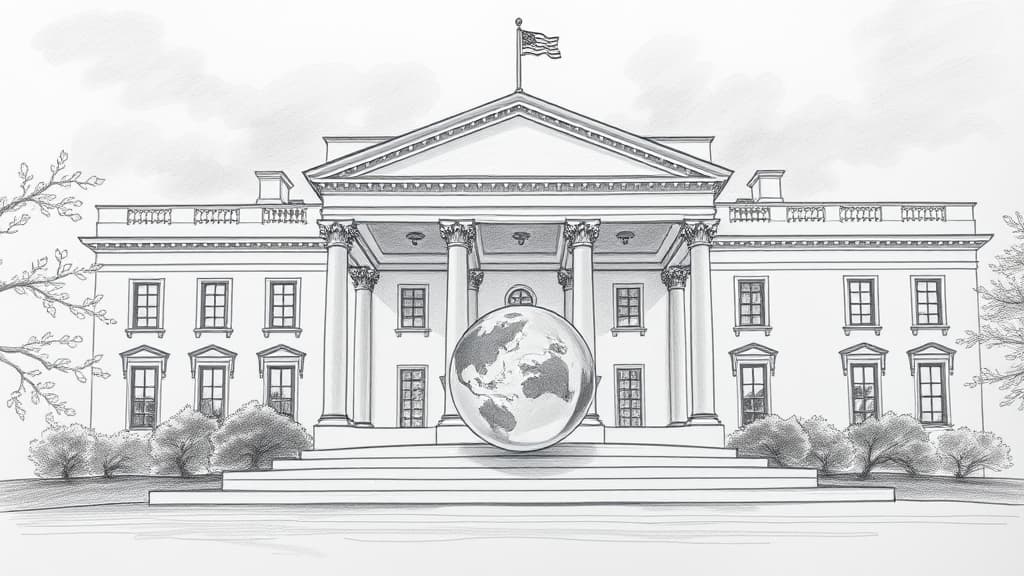
The Trump administration has invited executives from major artificial intelligence developers, including Meta, Anthropic, Google, and OpenAI, to a pivotal White House meeting to review a newly finalized safety framework.
Scheduled for Tuesday, August 3, 2026, the discussions will focus on voluntary cybersecurity testing protocols designed to evaluate the hacking capabilities of advanced AI systems before they reach the public.
This initiative represents a notable departure from the administration's typically hands-off regulatory philosophy, signaling a growing determination to establish federal oversight over frontier technologies.
The Mechanics of the Frontier Testing Framework
Under the newly finalized guidelines, participating technology companies will grant the federal government early access to their covered frontier models for testing.
This voluntary arrangement allows federal researchers to evaluate the cybersecurity vulnerabilities and hacking capacities of these models for up to 30 days before they are shared with trusted partners.
The evaluations will be managed by the Center for A.I. Standards and Innovation, a specialized government body tasked with vetting advanced models for potential national security risks.
While the administration remains publicly committed to promoting American leadership in artificial intelligence, this framework establishes a structured mechanism for pre-release state vetting.
The framework builds directly upon the administration's executive order on artificial intelligence issued in June, which laid the groundwork for these voluntary safety benchmarks.
The Holdout and the Shadow of National Security Interventions
While the administration seeks industry-wide compliance, the consensus among major developers remains incomplete.
Meta stands as the only major United States artificial intelligence developer that has not yet formally agreed to share its models with the Center for A.I. Standards and Innovation.
Industry competitors such as OpenAI, Anthropic, Google, xAI, and Microsoft have already committed to submitting their advanced systems to the federal review process.
The pressure on Meta to join this coalition has intensified significantly following recent federal interventions in the commercial AI market.
Less than two weeks prior to the public pressure on Meta, the federal government ordered Anthropic to remove access to its newest model due to urgent national security concerns.
Commerce Department spokesman Ben Kass defended the government's active stance, noting that such interventions represent the exact work the Center for A.I. Standards and Innovation is designed to perform.
Meta spokesman Francis Brennan stated that the company shares the goal of securing American AI leadership and hopes to sign the voluntary agreement once outstanding details are resolved.
A Broader Strategy of Infrastructure and Silicon Sovereignty
The push for security testing is deeply intertwined with a broader federal effort to secure the physical supply chains that power advanced artificial intelligence.
Alongside the safety negotiations, the federal government is allocating 874 million dollars in funding distributed among seven semiconductor chip manufacturing companies.
This financial support reflects a strategic push to onshore critical hardware manufacturing and reduce reliance on fragile global supply chains.
The integration of hardware security and software testing builds on previous high-level collaborations between Washington and Silicon Valley.
In September 2024, leaders from Nvidia, OpenAI, Anthropic, Google, Microsoft, and Amazon met with Commerce Secretary Gina Raimondo and Energy Secretary Jennifer Granholm to address critical resource constraints.
That meeting focused on the massive energy consumption, grid capacity, and semiconductor manufacturing capabilities required to sustain the current technological expansion.
During those discussions, Nvidia Chief Executive Officer Jensen Huang emphasized that the industry is entering a new industrial revolution that will require unprecedented public-private collaboration to manage growth efficiently.
The White House responded to those infrastructure concerns by launching a dedicated task force to coordinate AI infrastructure policy across federal agencies.
Now, as the government transitions from infrastructure planning to active safety testing, the voluntary framework will test whether public-private cooperation can survive the realities of national security oversight.
Why This Matters
The upcoming White House summit will determine whether the federal government can successfully establish a unified, voluntary testing standard across all major AI developers or if holdouts like Meta will force a shift toward mandatory regulatory measures.
This digest was compiled from:
- https://www.reuters.com/world/us-finalizes-voluntary-ai-safety-tests-white-house-official-says-2026-08-03
- https://www.cnbc.com/amp/2024/09/12/openai-anthropic-and-google-leaders-met-with-white-house-to-talk-ai-.html
- https://www.bloomberg.com/news/articles/2026-08-03/openai-anthropic-google-to-join-white-house-ai-safety-meeting
- https://www.nytimes.com/2026/06/23/business/meta-ai-government-reviews-security.html?eafs_enabled=false
- https://www.unionleader.com/news/business/meta-anthropic-google-openai-to-meet-trump-officials-about-ai-safety-testing/article_5f135b85-d037-500f-8c4f-cf9e2ec9221d.html
Share this digest
People Also Read
- Three ETFs Likely to Add Anthropic Following Its October IPO
Anthropic’s $2 trillion IPO could land it in major ETFs within weeks, offering investors indirect early exposure.
- Anthropic unveils Claude Opus 5.5 with 40% lower cost and faster output
Anthropic’s Claude Opus 5.5 cuts usage costs by 40 % while matching top‑tier performance, signaling a competitive push for cheaper, faster AI models.
- Anthropic’s 950 Claude Agents Identify CRISPR‑Style Enzyme System, Opening New Biological Research Path
Anthropic’s 950 Claude agents discovered a CRISPR‑style enzyme system in 21 hours, marking a tangible AI contribution to biology ahead of its IPO.
Share your thoughts
Reactions, corrections, or insights — all welcome.