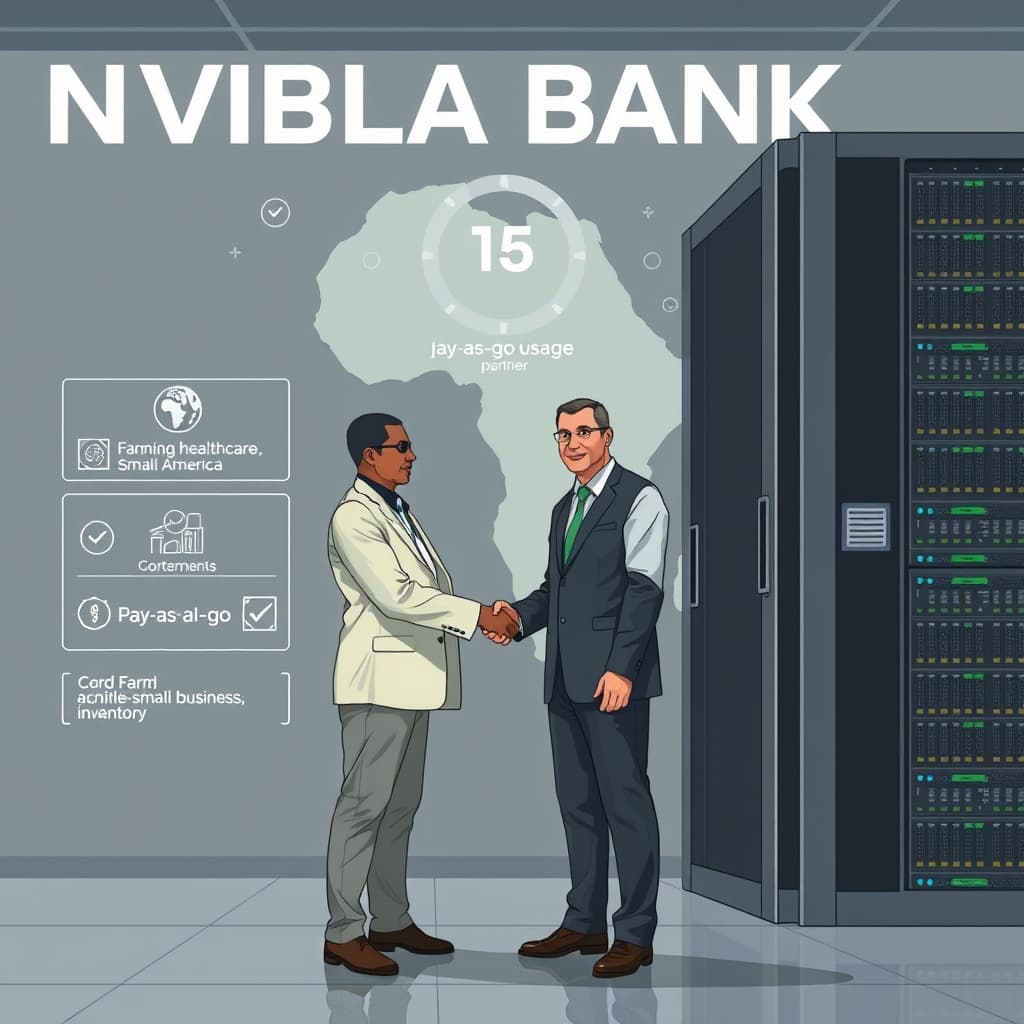
World Bank Introduces Shared AI Computing Service for African and Latin American Nations
The World Bank Group announced on October 20, 2026 in Seoul a new AI Infrastructure and Readiness Initiative aimed at African and Latin American governments.
The programme offers shared AI computing resources through a pay‑as‑you‑go model to lower the cost of adopting artificial intelligence.
By using shared graphics processing units, participating nations can access the processing power needed for AI applications without building dedicated national data centres.
How the Initiative Is Structured
The initiative partners with Cassava Technologies and NVIDIA, which will provide expertise in digital infrastructure and GPU‑based AI computing.
Under the model, governments pay only for the capacity they consume, turning a capital‑intensive investment into an operational expense.
This approach avoids the need for each country to fund expensive data‑centre construction, electricity, cooling systems and specialised technical staff.
The World Bank has not disclosed which countries will join, the exact pricing tiers, the total GPU capacity available, or the launch timeline.
Potential Impact on Developing Economies
For many African states, unreliable electricity, limited broadband and a shortage of AI talent have hampered the rollout of advanced analytics.
Access to on‑demand computing could enable pilots in public services, agriculture, health care and small‑business inventory management.
The Bank emphasizes “small AI”, practical tools designed for specific tasks and local conditions rather than massive, generic models.
Examples cited include AI that helps farmers spot crop diseases, supports health workers with diagnostic assistance, and streamlines inventory for micro‑enterprises.
By lowering the barrier to entry, the programme may encourage governments to experiment with AI solutions that directly address citizen needs.
Nevertheless, computing power alone will not solve challenges such as power reliability, data localisation, digital skills gaps and regulatory frameworks.
The World Bank’s broader digital strategy also targets expanded internet connectivity, cheaper devices, stronger digital services and enhanced cybersecurity.
Remaining Uncertainties and Next Steps
Stakeholders will await details on eligibility criteria, service‑level agreements and the mechanisms for tracking usage and costs.
Without transparent pricing, governments may find it difficult to budget for AI projects or compare the shared model with private cloud alternatives.
The initiative’s success will depend on how quickly participating countries can integrate the shared GPUs into existing data pipelines and policy environments.
If the model proves cost‑effective, it could become a template for other multilateral organisations seeking to democratise AI infrastructure.
Conversely, limited uptake or technical bottlenecks could reinforce the perception that high‑performance AI remains out of reach for low‑income nations.
Observers will monitor early adopters for evidence that shared AI computing translates into measurable improvements in service delivery.
The World Bank’s commitment to practical, task‑oriented AI reflects a shift toward solutions that deliver immediate socioeconomic benefits.
Why This Matters
This digest was compiled from:
Share this digest
People Also Read
- Nvidia launches probe into CEO Jensen Huang’s ties to alleged Chinese spy
Nvidia’s board has opened an independent investigation into CEO Jensen Huang’s alleged ties to a Chinese intelligence‑linked Megaspeed executive.
- AI is shattering cybersecurity; the industry faces a looming dark age
Alex Stamos warns AI‑enabled attacks are chaining breaches across the tech industry, ushering a dark age for cybersecurity.
- OpenAI secures $11 billion in funding, pushing valuation to $1.25 trillion
OpenAI raised $11 billion, valuing it at $1.25 trillion, amid a funding round that may total $20 billion and a shifting AI market.
Share your thoughts
Reactions, corrections, or insights — all welcome.