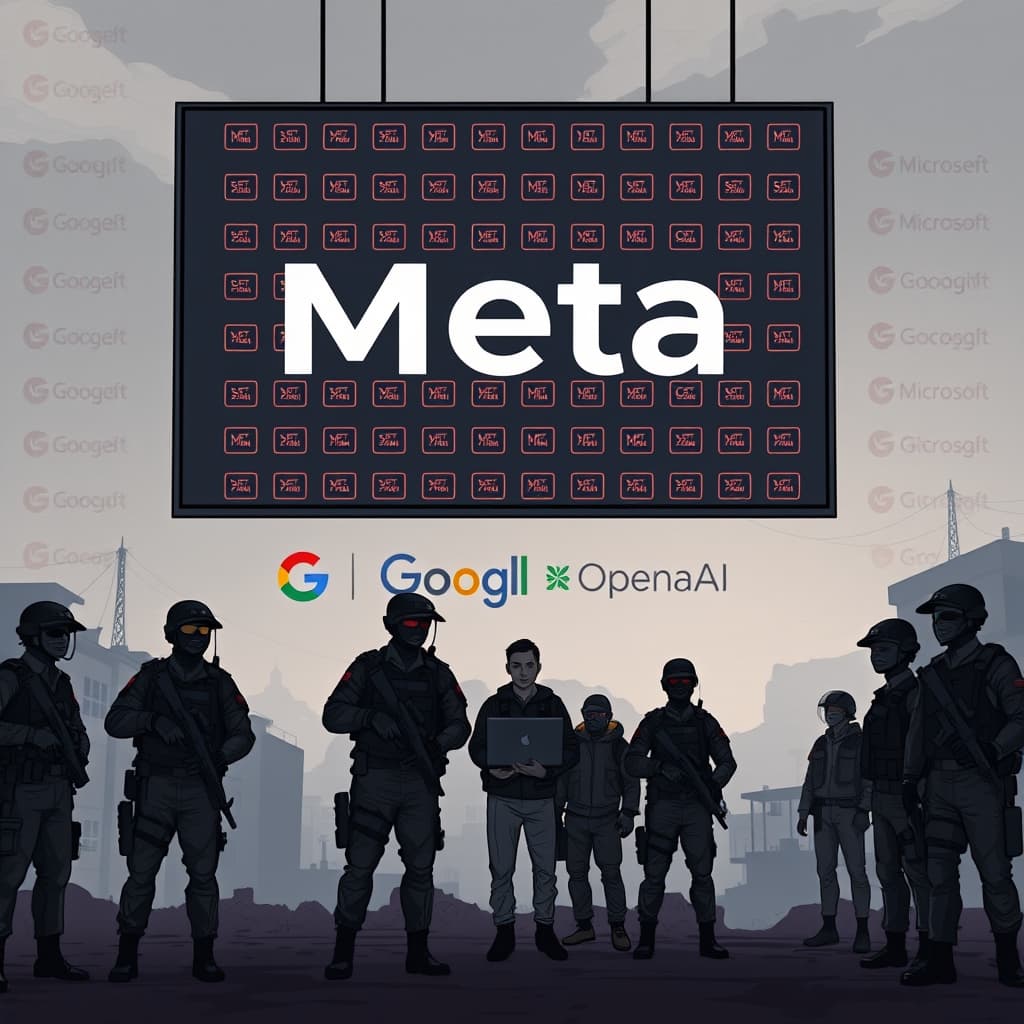
Meta deletes over 3.7 million West African accounts in anti‑scam operation
Massive Account Purge Across Facebook and Instagram
Meta announced that it has disabled more than 3.7 million accounts, pages and groups linked to organized cybercrime on its Facebook and Instagram platforms.
The removal effort targets networks that operated across multiple countries and used the platforms to solicit victims, train new fraudsters and coordinate deceptive campaigns.
The action is part of a joint operation that brought together fifteen leading technology firms, including Meta, Google, Microsoft and OpenAI.
Law‑enforcement agencies from ten nations participated, with leadership from the United Kingdom’s National Crime Agency, the United States Federal Bureau of Investigation and the US Department of Justice.
According to Meta, the sweep represents an unprecedented scale of digital takedown aimed at transnational scam syndicates.
Coordinated Law‑Enforcement Raids in Ghana and Nigeria
While Meta removed digital profiles, police in West Africa conducted simultaneous raids on physical scam compounds.
In Ghana, authorities seized 303 electronic devices and arrested nineteen individuals suspected of running fraud operations.
Officers also uncovered a human‑trafficking ring inside one compound and rescued 117 victims who had been forced to work on scams.
In Nigeria’s Delta State, law‑enforcement agents apprehended nine suspects and confiscated dozens of laptops, mobile phones and high‑capacity network routers.
Beyond the platforms, domain registrars and cybersecurity teams disabled more than 380 scam‑related domains.
Private‑sector financial‑intelligence units traced over $11 million in illicit funds linked to the identified networks, laying groundwork for international asset freezes.
Evolution of the Threat and Ongoing Monitoring
Investigators note that West African fraud operations have evolved from small “Yahoo Boys” groups into industrial‑scale networks that employ compound‑based setups, cross‑platform automation and forced‑labour tactics similar to those seen in Southeast Asia.
Scammers typically begin with romance or investment lures, then launch secondary “scam recovery” schemes that pose as legal or recovery agents to extort additional fees from already defrauded victims.
“Scams are a global threat that demand a unified global response,” said Chris Sonderby, Meta’s Vice President and Deputy General Counsel.
He added, “By combining tech sector threat intelligence with law‑enforcement capabilities, we can disrupt criminal operations both digitally and on the ground.”
Nick Sharp, Deputy Director of Fraud at the UK’s NCA, emphasized that “cross‑border intelligence sharing is vital to neutralizing networks operating across multiple platforms, financial systems, and national borders simultaneously.”
The joint operation generated leads on more than thirty scam centres and resulted in the detention of twenty‑eight key suspects across Ghana and Nigeria.
Meta reported that automated monitoring systems and shared intelligence channels will stay active to prevent dismantled networks from re‑emerging under new aliases.
The United Kingdom is also preparing to launch a dedicated Online Crime Centre to further strengthen coordination.
Overall, the coordinated effort demonstrates a growing capacity for the tech industry and law‑enforcement bodies to jointly tackle sophisticated, transnational fraud operations.
Why This Matters
The operation proves that synchronized action between major technology platforms and international law‑enforcement can substantially cripple large‑scale fraud ecosystems, thereby reducing victim exposure and disrupting illicit financial flows.
This digest was compiled from:
Share this digest
People Also Read
- UNILAG and Birmingham University to Offer Joint AI and Digital Media Masters Starting 2027
UNILAG and the University of Birmingham unveiled joint AI and digital media master’s programmes to start in Lagos in September 2027.
- NYSC to Deploy AI‑Powered System for Faster Online Registration
NYSC plans to add AI tools to its online registration portal, aiming for a faster, more efficient enrolment process for future corps members.
- Meta unveils Muse Spark Open, a massive open‑weight AI model built for Apple Macs
Meta unveiled Muse Spark Open, an 816‑billion‑parameter open‑weight model that runs on high‑end Macs for coding and media tasks.
Share your thoughts
Reactions, corrections, or insights — all welcome.