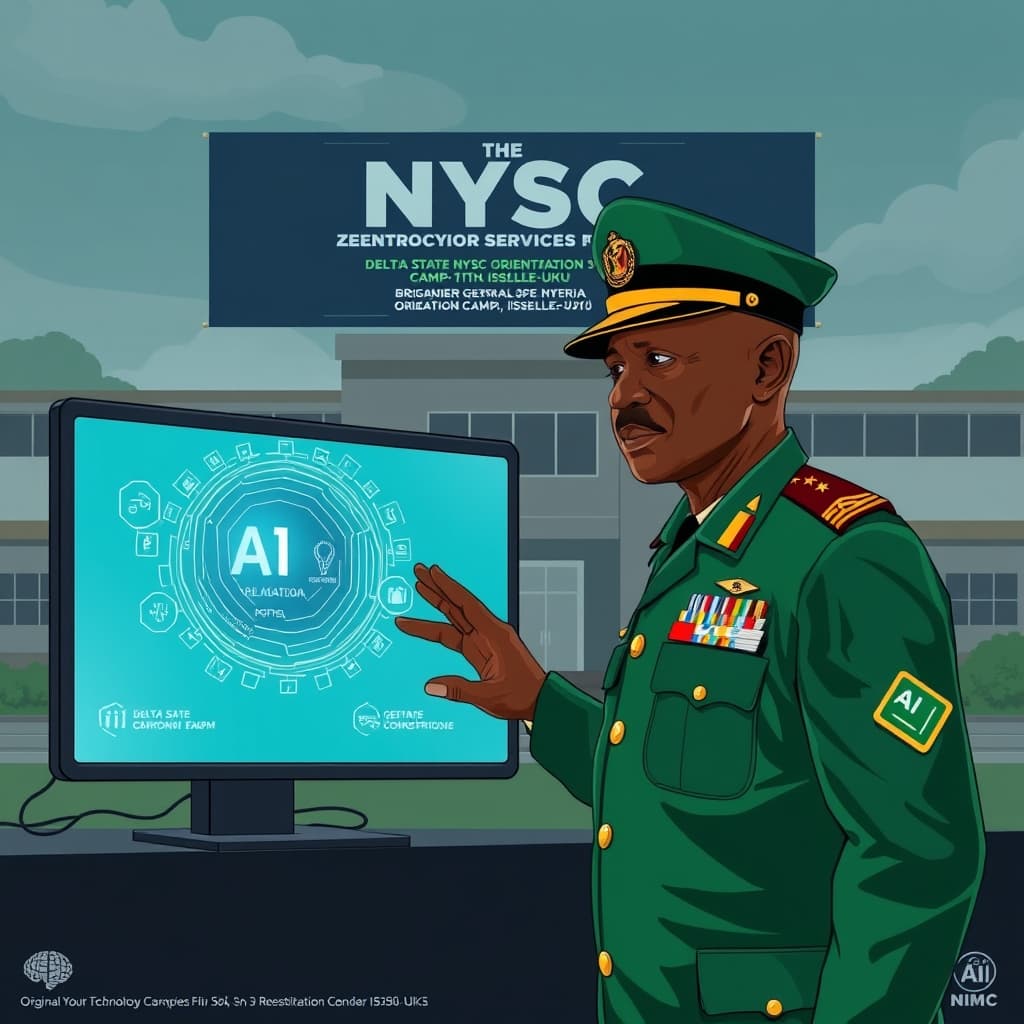
NYSC to Deploy AI‑Powered System for Faster Online Registration
AI Initiative Unveiled
The National Youth Service Corps announced that it will embed artificial‑intelligence tools into its online registration portal.
Director‑General Brigadier General Olakunle Nafiu made the declaration while addressing the 2026 Batch C Stream One at the Delta State NYSC Orientation Camp in Issele‑Uku.
A Voice of Nigeria report dated 15 October 2026 confirmed the plan to introduce AI‑enabled information and communication technology solutions.
The new system is intended to help eligible graduates complete their registration through the NYSC portal with greater ease.
Nafiu said the upgrade aligns the registration process with emerging technology and seeks to make NYSC services more efficient.
He also indicated that several NYSC operations will soon shift to technology‑driven platforms to improve service delivery.
Building on Ongoing Digital Reforms
These moves come as the scheme continues to address administrative bottlenecks that have long complicated the mobilisation of corps members.
Current registration requires graduates to submit personal details and fulfill a series of procedural steps before deployment.
In May 2026, Nafiu disclosed a partnership with the National Identity Management Commission to enhance biometric verification.
The collaboration aims to cut delays and enable prospective corps members to complete more of the process remotely.
The forthcoming AI upgrade builds on that biometric effort by adding intelligent automation to the online portal.
Specific AI features, the rollout timetable, and any changes to existing registration requirements have not yet been disclosed publicly.
Anticipated Impact and Uncertainties
Alongside the AI rollout, Nafiu announced plans to improve the quality of kits provided to corps members starting in 2027.
He urged the orientation participants to use their service year to forge professional relationships and acquire practical skills that could foster self‑employment and job creation.
NYSC Delta State Coordinator John Kwaghe reported that 1,697 corps members registered at the camp, while 1,094 were relocated from Lagos State to Delta.
The AI‑enabled upgrade represents another step in NYSC’s broader push to digitise its administrative processes.
Its ultimate impact will hinge on how effectively the technology is implemented across the nation’s diverse graduate population.
If successful, the system could make registration more accessible, reliable, and faster for eligible graduates.
Conversely, the lack of detailed implementation information introduces uncertainty about whether the promised efficiencies will materialise.
The initiative aligns with Nigeria’s wider e‑government agenda, which seeks to modernise public services through digital tools.
AI‑driven automation may reduce human error and shorten processing times, easing the administrative load on both officials and graduates.
Enhanced biometric verification, already in development with NIMC, could improve identity security within the registration workflow.
Remote completion of registration steps would lessen the need for physical visits to NYSC offices, a benefit for graduates in remote areas.
Overall, the NYSC appears to be positioning itself for a more technology‑centric future while still navigating the practical challenges of rollout.
Why This Matters
The AI‑enabled registration system could determine whether the NYSC can deliver a faster, more reliable enrolment experience for millions of graduates across Nigeria.
This digest was compiled from:
Share this digest
People Also Read
- UNILAG and Birmingham University to Offer Joint AI and Digital Media Masters Starting 2027
UNILAG and the University of Birmingham unveiled joint AI and digital media master’s programmes to start in Lagos in September 2027.
- Meta unveils Muse Spark Open, a massive open‑weight AI model built for Apple Macs
Meta unveiled Muse Spark Open, an 816‑billion‑parameter open‑weight model that runs on high‑end Macs for coding and media tasks.
- Meta deletes over 3.7 million West African accounts in anti‑scam operation
Meta and a coalition of tech firms and law‑enforcement agencies removed over 3.7 million fraudulent accounts and rescued 117 victims in West Africa.
Share your thoughts
Reactions, corrections, or insights — all welcome.