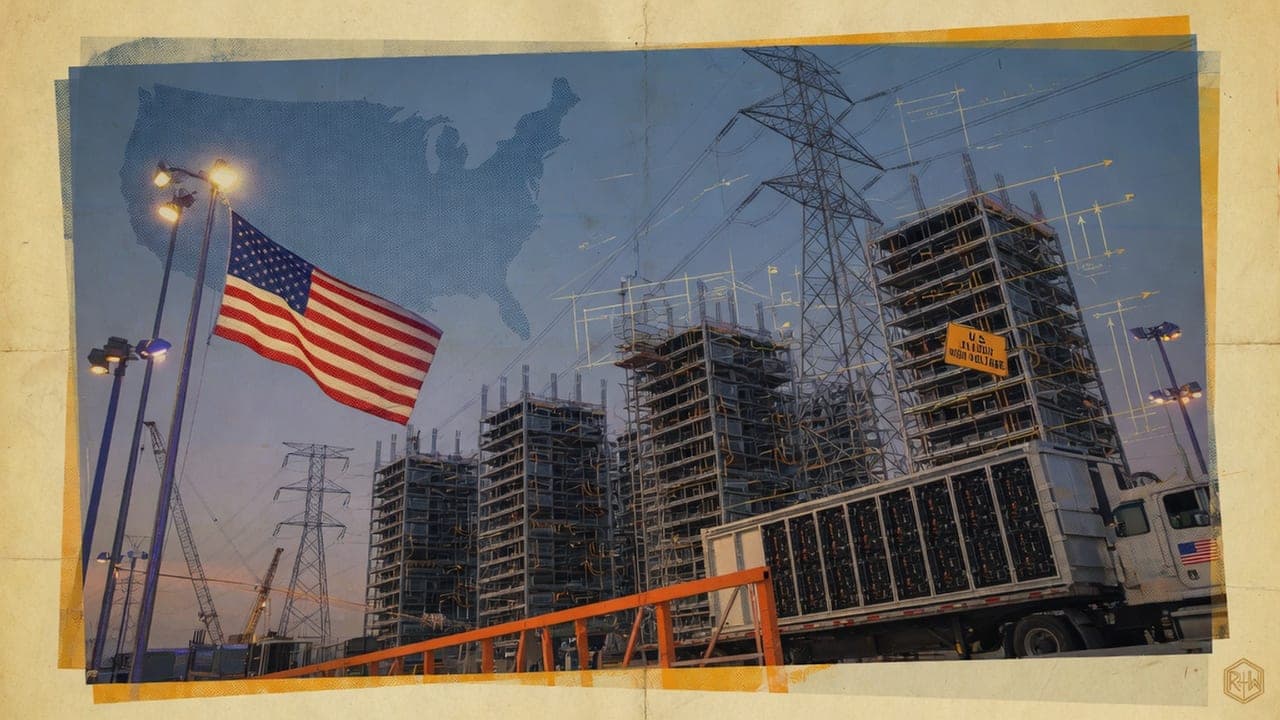
Nvidia commits $6 billion to license Poolside’s Model Factory for U.S. open‑weight AI models
Deal Overview
Nvidia has agreed to pay $6 billion for a non‑exclusive license to Poolside’s AI model‑development technology.
The agreement also includes job offers for 109 Poolside employees, giving Nvidia immediate access to the talent that built the system.
In addition, Nvidia will invest $1 billion in Poolside at a $12 billion pre‑money valuation, according to a Poolside investor letter.
Poolside plans to distribute the $6 billion licensing payment to its investors by the end of 2027.
Co‑founders Jason Warner and Eiso Kant are expected to remain at Poolside after the deal.
Warner previously served as GitHub’s chief technology officer and helped launch GitHub Copilot.
Before founding Poolside in 2023, Warner spent two years as a managing director at Redpoint Ventures.
Kant founded the developer‑software companies source{d} and Athenian, as noted in his Axon board biography.
Technology Behind the License
Poolside’s core asset is its Model Factory, an integrated suite of data pipelines, distributed training software, evaluation systems, inference infrastructure and reinforcement‑learning tools.
The Model Factory was designed to replace slow, manually coordinated training projects with a repeatable development process.
Technical reports for Laguna M.1 and Laguna XS.2 state that both models were trained from scratch within the Model Factory.
The two models together consumed more than 30 trillion training tokens.
Poolside reports that Laguna XS.2 moved from the start of training to release in five weeks.
In July, Poolside released Laguna S 2.1, a 118‑billion‑parameter mixture‑of‑experts model with eight billion active parameters per token.
Laguna S 2.1 supports a context window of up to one million tokens.
Poolside’s internal evaluations claim the model competes with much larger systems on agentic coding benchmarks.
Nvidia already documents support for the Laguna architecture in its NeMo AutoModel documentation.
Strategic Implications
The licensing deal gives Nvidia a ready‑made operation for building U.S. open‑weight models, extending its reach beyond chip manufacturing.
By acquiring the Model Factory and offering jobs to its engineers, Nvidia can produce additional models under its own direction.
The non‑exclusive nature of the license allows Poolside to continue using its technology while Nvidia incorporates it into its own workflow.
The Wall Street Journal describes Nvidia’s goal as a direct challenge to Chinese labs such as DeepSeek and Moonshot AI, as well as to closed‑model providers OpenAI and Anthropic.
The $6 billion payment also provides a substantial return for Poolside’s existing backers without transferring ownership.
Poolside’s funding history includes a $26 million seed round led by Redpoint Ventures, a $100 million Series A led by Felicis Ventures, and a $500 million Series B in 2024.
Series B investors included Bain Capital Ventures, DST Global, StepStone Group, Schroders Capital, Premji Invest, Dorsal Capital, BAM Elevate, Adams Street and Fin Capital.
Corporate venture arms such as Nvidia Ventures, Citi Ventures, Capital One Ventures, HSBC Ventures, LG Technology Ventures and eBay Ventures also participated in the Series B.
The structure mirrors previous Nvidia transactions that secured scarce AI technology and talent without full acquisitions.
By licensing the production line rather than buying the company, Nvidia retains flexibility to partner with other developers while strengthening its own model‑building capabilities.
Poolside’s ability to train large models quickly could accelerate Nvidia’s response to competitive pressures in the open‑weight AI market.
The deal positions Nvidia to offer U.S. customers models that are not constrained by export controls affecting Chinese AI labs.
It also aligns with broader industry trends toward modular AI infrastructure that can be reused across multiple model families.
Why This Matters: Nvidia now controls a proven model‑development pipeline and a skilled workforce, enabling faster U.S. open‑weight AI production while offering Poolside investors a sizable liquidity event.
This digest was compiled from:
Share this digest
People Also Read
- UNILAG and Birmingham University to Offer Joint AI and Digital Media Masters Starting 2027
UNILAG and the University of Birmingham unveiled joint AI and digital media master’s programmes to start in Lagos in September 2027.
- NYSC to Deploy AI‑Powered System for Faster Online Registration
NYSC plans to add AI tools to its online registration portal, aiming for a faster, more efficient enrolment process for future corps members.
- Meta unveils Muse Spark Open, a massive open‑weight AI model built for Apple Macs
Meta unveiled Muse Spark Open, an 816‑billion‑parameter open‑weight model that runs on high‑end Macs for coding and media tasks.
Share your thoughts
Reactions, corrections, or insights — all welcome.