NWU’s Language Media Centre Marks Ten Years, Calls for AI Work in Labs, Code and Data
Celebrating a Decade of Indigenous Language Media
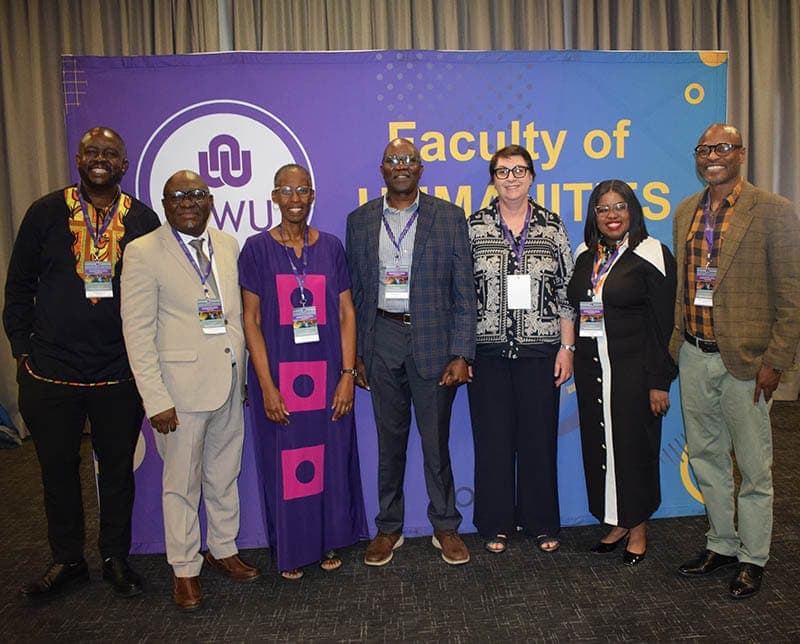
The Indigenous Language Media in Africa (ILMA) research centre at North‑West University marked its tenth anniversary with a two‑day symposium in Kempton Park on 25 and 26 August.
The event, held at the Birchwood Hotel and OR Tambo Conference Centre, carried the theme “Legends of the past, present and tomorrow.”
Professor Dumi Moyo, executive dean of the Faculty of Humanities, opened the symposium by noting that the anniversary honoured both a pioneering scholarly community and the emergence of indigenous language media as a recognised academic field.
He warned that colonial languages still dominate government, education, business and media across Africa, tying language directly to power.
“Indigenous language media therefore have a role in giving communities greater voice and recognition,” Moyo said.
Moyo credited ILMA director Professor Abiodun Salawu for moving the field from a peripheral concern to a recognised discipline.
AI Research Bridging Language Gaps
Professor Monica Chibita of Uganda Christian University delivered the keynote challenge, rejecting the notion that indigenous language media merely preserve heritage.
“Indigenous language media do something more than preserve,” she said. “They allow people to participate in the present.”
Her presentation, titled “Preservation and more: Indigenous language media, social change and the African Knowledge Society,” argued that indigenous languages enable engagement with public policy, health, education, business and knowledge.
Chibita called for “dynamic preservation,” urging the use of African languages in investigative journalism, climate science, public health, entrepreneurship, coding, data journalism and artificial intelligence.
She emphasized that languages must be represented “in the labs, in the code, in the data, in the standards and in the governance.”
North‑West University already showcases such integration through the work of Dr Seani Rananga, who earned a PhD developing a multilingual AI framework that detects misinformation across English, isiZulu and Sepedi.
Rananga’s project received a Google PhD Fellowship and won Best Poster at the 2025 Deep Learning IndabaX.
His findings revealed that machine‑translation quality directly determines AI performance on low‑resource languages, meaning upstream improvements benefit downstream applications.
NWU also became the first South African university to adopt an official AI policy in January, formalising its commitment to responsible AI development.
Challenges and the Road Ahead
Despite these advances, African languages account for less than 0.1 % of internet content, according to the source.
The GSMA estimates that fewer than 2 % of the continent’s languages receive meaningful support from modern AI platforms.
Nine of South Africa’s eleven official languages are classified as low‑resource for language modelling.
Nevertheless, initiatives are accelerating: the Gates‑funded African Next Voices dataset records 9,000 hours across 18 languages.
Lelapa AI’s InkubaLM, LINGUA Africa’s 26 funded projects, and the GSMA’s five‑government ATLAS Umoja initiative are further expanding language‑focused AI resources.
Chibita’s call for “dynamic preservation” aligns with these efforts, seeking to embed indigenous languages not only in content but also in the technical foundations that shape digital communication.
By integrating languages into AI pipelines, researchers hope to improve representation, reduce misinformation, and empower communities to participate fully in the digital economy.
The symposium concluded with a consensus that sustained investment in multilingual AI research and policy will be essential to keep African languages vibrant in the age of algorithms.
Why This Matters: The ten‑year milestone highlights concrete progress in embedding African languages into AI systems, a step that can broaden digital inclusion across the continent.
This digest was compiled from:
Share this digest
People Also Read
- UNILAG and Birmingham University to Offer Joint AI and Digital Media Masters Starting 2027
UNILAG and the University of Birmingham unveiled joint AI and digital media master’s programmes to start in Lagos in September 2027.
- NYSC to Deploy AI‑Powered System for Faster Online Registration
NYSC plans to add AI tools to its online registration portal, aiming for a faster, more efficient enrolment process for future corps members.
- Meta unveils Muse Spark Open, a massive open‑weight AI model built for Apple Macs
Meta unveiled Muse Spark Open, an 816‑billion‑parameter open‑weight model that runs on high‑end Macs for coding and media tasks.
Share your thoughts
Reactions, corrections, or insights — all welcome.