Omeife: Pioneering Africa's Humanoid Robotics and Culturally Aware AI
Africa's First Humanoid: Omeife's Official Debut
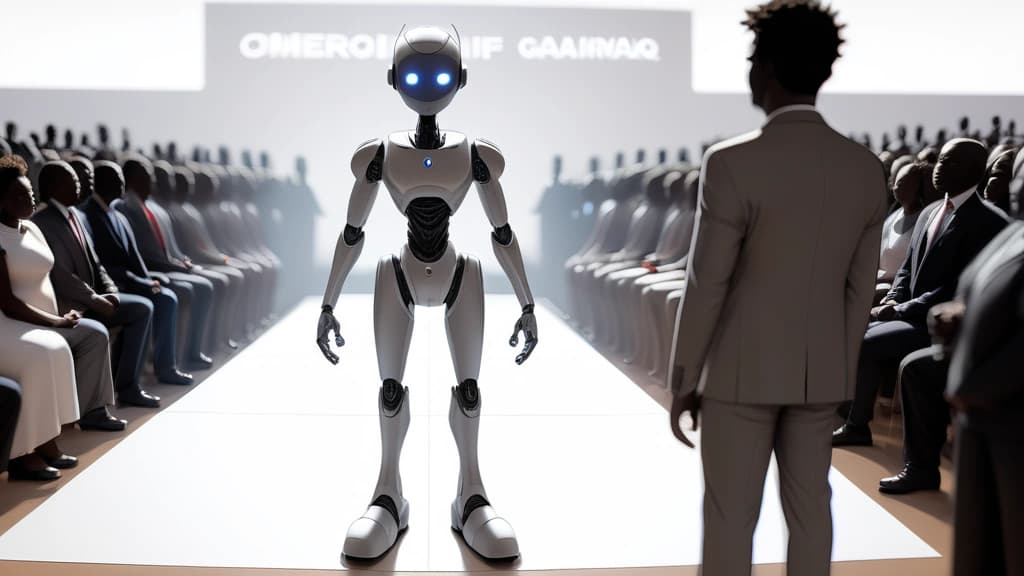
Omeife, heralded as Africa's first humanoid robot, officially debuted in Abuja, Nigeria, on December 2, 2022. The robot was developed by Uniccon Group, a fast-growing Nigerian technology startup based in Abuja, with a team of engineers and programmers from the University of Nigeria, Nsukka also credited for its creation. The unveiling event, held at the Lagos/Osun Hall of the Transcorp Hilton, was themed "The Future of Artificial Intelligence in the African Tech Ecosystem" and saw its launch by then Vice President Yemi Osinbajo. The occasion brought together tech leaders, the diplomatic community, and government officials from various African nations, including Nigeria, Kenya, Uganda, Rwanda, and South Africa. Notable attendees included Nigeria's Minister of Communications and Digital Economy, Prof Isa Pantami, and the Rwandan High Commissioner to Nigeria, Stanislas Kamanzi. Omeife stands as a symbol of technological advancement, designed to showcase the potential of African innovation in artificial intelligence and robotics.
Multilingual and Culturally Intelligent Design
Omeife is engineered to resemble and behave like a human, with a distinct female, African appearance, featuring dark skin and curly hair. Standing six feet tall, the humanoid is programmed to speak several African languages, including English and Igbo, and is capable of natural interaction with people. Its design incorporates a deep understanding of African culture and behavioral patterns, enabling it to provide "language as a service" for businesses seeking to engage native African audiences. This focus on cultural relevance underscores the goal behind Omeife: to demonstrate that Africans can develop solutions that reflect local cultures, languages, and everyday realities.
Advanced Features and Practical Applications
Constructed partly from recycled materials such as old car parts and electronic waste, Omeife exemplifies what can be achieved with limited resources. The robot is equipped with sensors and actuators that allow it to interact with its environment, move its arms and legs, and express emotions through its face. It features a head with a solar panel and can connect to the internet and other devices via Wi-Fi. Omeife's capabilities extend to practical tasks such as picking up objects weighing up to five pounds, avoiding obstacles using its sensors, and giving voice-based directions. In a significant application, Omeife can measure a person's blood pressure with hand sensors and provide healthcare information and advice, a feature that is now being leveraged to power a telemedicine revolution. Version 3.0 of Omeife has been noted for its enhanced features and improved aesthetics, building upon its predecessors, versions 1.0 and 2.0.
Inspiring Future Growth and Global Impact
The development of Omeife is intended to inspire young Africans to pursue careers in science and technology, fostering a new generation of innovators. It signals a continent confidently stepping into the future, with innovation growing across Africa. Beyond its local impact, Omeife has gained international recognition, being associated with the AI for Good Global Summit, highlighting its potential contributions to global challenges through artificial intelligence.
The development of Omeife underscores a growing commitment within Africa to not only participate in the global AI landscape but also to shape it with unique cultural and linguistic relevance.This digest was compiled from:
- https://www.linkedin.com/posts/philip-adetunji_omeife-humanoidrobot-africaninnovation-activity-7306464845359386624-kBjS
- https://www.instagram.com/reel/DRUjxu4iF50
- https://www.linkedin.com/posts/omeife-technologies_omeife-30-activity-7346435468265189377-wU6B
- https://techpoint.africa/brandpress/africas-first-ai-model-and-humanoid-robot
- https://guardian.ng/news/osinbajo-launches-africas-first-humanoid-robot-omeife
Share this digest
People Also Read
- UNILAG and Birmingham University to Offer Joint AI and Digital Media Masters Starting 2027
UNILAG and the University of Birmingham unveiled joint AI and digital media master’s programmes to start in Lagos in September 2027.
- NYSC to Deploy AI‑Powered System for Faster Online Registration
NYSC plans to add AI tools to its online registration portal, aiming for a faster, more efficient enrolment process for future corps members.
- Meta unveils Muse Spark Open, a massive open‑weight AI model built for Apple Macs
Meta unveiled Muse Spark Open, an 816‑billion‑parameter open‑weight model that runs on high‑end Macs for coding and media tasks.
Share your thoughts
Reactions, corrections, or insights — all welcome.