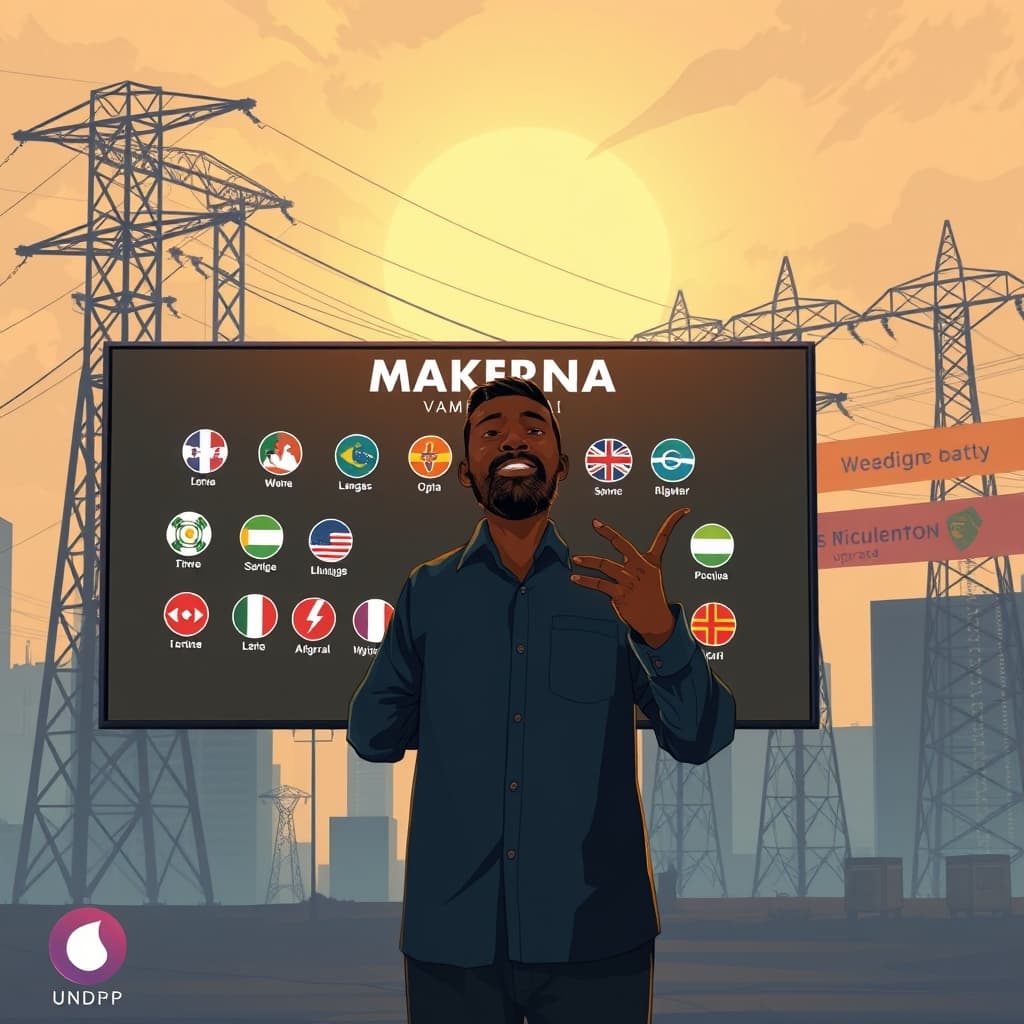
Vambo AI launches African language model as Nigeria aims to quadruple data‑centre capacity to 200 MW
African AI activity is accelerating, with new language models and ambitious data‑centre plans emerging across the continent.
Vambo AI launches MORENA language model
South‑African startup Vambo AI announced the release of MORENA, an open‑weight language model built from scratch.
MORENA comprises 1.5 billion parameters and is trained to understand twelve African languages in addition to English and French.
The company states that the model delivers performance that surpasses a Google model eight times larger while keeping operating costs lower for African developers.
By targeting indigenous languages, Vambo AI aims to fill a gap left by most large‑scale models that focus primarily on Western languages.
The launch follows a broader push by organisations such as UNDP and GSMA to scale African‑led AI solutions that support local languages.
Nigeria targets 200 MW of data‑centre capacity
In parallel, the Nigerian government unveiled a plan to boost its data‑centre capacity from 50 MW to 200 MW within the next five years.
The strategy also seeks $750 million in private‑cloud infrastructure investment over the next 24 months.
Officials acknowledge that unreliable electricity could jeopardise these ambitions, underscoring the need for parallel energy‑infrastructure upgrades.
Nigeria’s target represents a four‑fold increase in power availability for hosting AI workloads and other cloud services.
The expanded capacity is expected to accommodate both domestic startups and multinational providers looking to serve African markets.
Implications for the African AI ecosystem
Together, the MORENA model and Nigeria’s data‑centre expansion illustrate a shift toward building AI capabilities locally rather than relying on overseas cloud providers.
Local models reduce data‑transfer latency and can operate within the power constraints of regional data centres.
At the same time, increased power supply will enable more intensive training and inference tasks without overburdening existing grids.
Stakeholders such as Vertiv and Cybastion are already partnering to deliver power‑and‑cooling solutions across several African markets, reinforcing the infrastructure backbone needed for AI growth.
The combined efforts signal a maturing ecosystem where language‑specific models and reliable compute resources reinforce each other.
However, a Veeam and ITWeb survey cited in the same digest found that only 29 % of African firms feel ready to scale AI initiatives.
This readiness gap highlights the importance of training, governance, and reliable infrastructure to translate technical advances into business value.
If Nigeria succeeds in delivering stable electricity to its new data centres, it could become a regional hub for AI services tailored to African languages.
Conversely, persistent power shortages would risk stalling both local model adoption and foreign investment.
The next few years will likely reveal whether policy, investment, and technical innovation can align to sustain this momentum.
Why This Matters
This digest was compiled from:
Share this digest
People Also Read
- UNILAG and Birmingham University to Offer Joint AI and Digital Media Masters Starting 2027
UNILAG and the University of Birmingham unveiled joint AI and digital media master’s programmes to start in Lagos in September 2027.
- NYSC to Deploy AI‑Powered System for Faster Online Registration
NYSC plans to add AI tools to its online registration portal, aiming for a faster, more efficient enrolment process for future corps members.
- Meta unveils Muse Spark Open, a massive open‑weight AI model built for Apple Macs
Meta unveiled Muse Spark Open, an 816‑billion‑parameter open‑weight model that runs on high‑end Macs for coding and media tasks.
Share your thoughts
Reactions, corrections, or insights — all welcome.