World Bank Advises Sub‑Saharan Nations to Focus on Small‑Scale AI Rather Than Cutting‑Edge Systems
The World Bank’s latest Africa Economic Update advises Sub‑Saharan governments to concentrate on low‑bandwidth, small‑scale AI applications instead of pursuing frontier AI systems.
Economic Outlook and AI Focus
The report lifts the region’s projected growth to 4.3 % in 2026, up from 4.1 % for 2025, marking a 0.3‑percentage‑point improvement over the April forecast.
Nearly three‑quarters of the 54 countries reviewed received upward revisions, reflecting stronger macro‑economic resilience and rising domestic demand.
The Bank attributes the upgrade to progress in the energy transition, expanding digital technologies, and more stable fiscal conditions.
Within the AI discussion, the Update highlights productivity, public‑service delivery and job creation as the primary benefits of artificial‑intelligence deployment.
Adoption remains early across the continent, with most activity clustered in Kenya, Nigeria and South Africa.
Infrastructure Requirements for Small AI
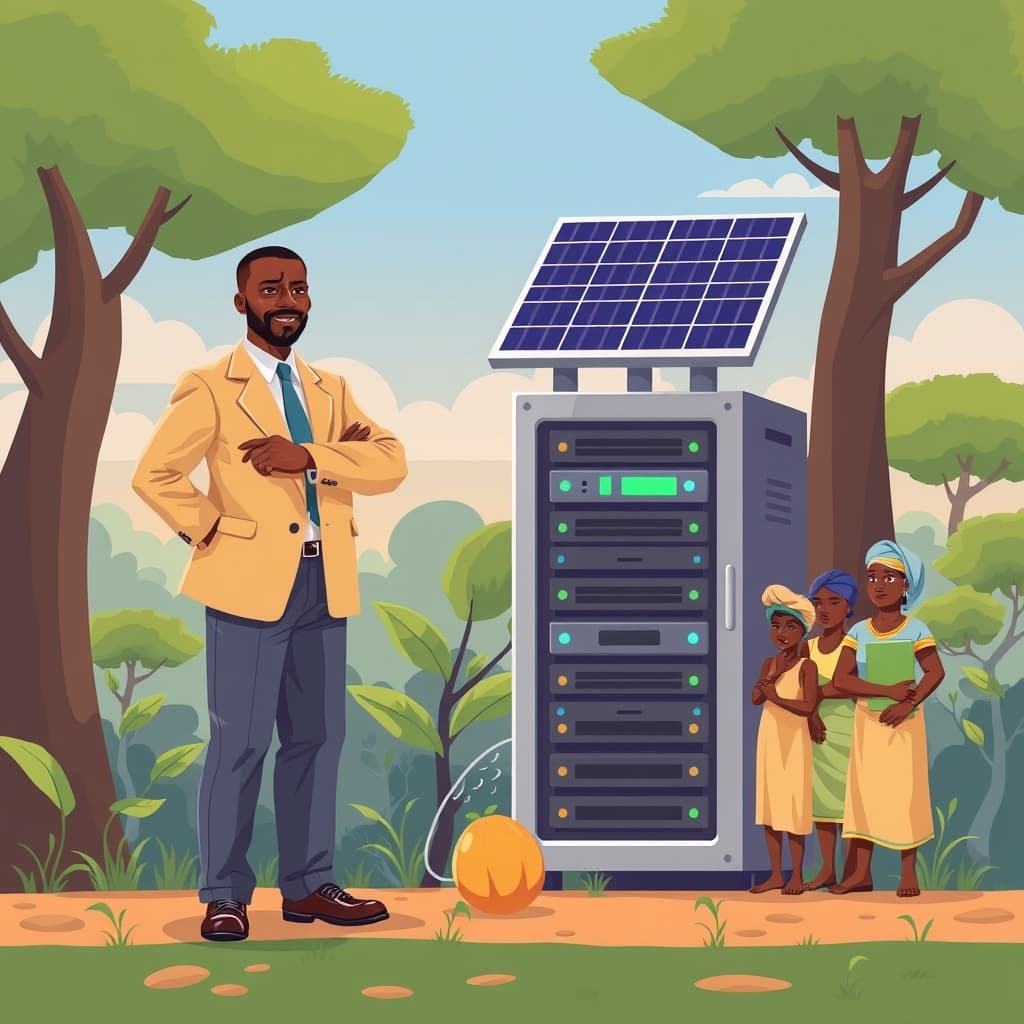
The Bank’s specific recommendation is to prioritise small AI solutions that operate efficiently on low‑bandwidth networks.
Target sectors include education, agriculture, health, finance, logistics and public administration.
The guidance is presented as a direction rather than a caution, indicating where the Bank believes returns are realistic given current infrastructure.
Realising those returns, the report argues, will require sustained investment in reliable electricity.
Affordable connectivity must also expand to support data‑intensive but bandwidth‑light AI models.
Building a skilled digital workforce and ensuring access to quality data are cited as essential complements.
Compute infrastructure and effective governance frameworks are listed among the critical enablers.
The Update stresses that strong institutions, technical capacity and regional cooperation are key to scaling AI benefits.
The African Union’s Continental AI Strategy and the African Continental Free Trade Area are named as pathways for collaborative growth.
Fiscal Constraints and Risks
Andrew Dabalen, World Bank Chief Economist for the Africa Region, said the region’s resilience rests on years of reform and better economic management, with the next priority being conversion of growth into employment and opportunity.
He added that building the foundations of an AI‑ready economy could unlock productivity gains, spur innovation and accelerate structural transformation.
The fiscal backdrop, however, remains constrained by rising inflation and public‑debt pressures.
Median inflation is projected at 5.5 %, up from 3.7 % in the previous outlook.
Public debt hovers around 57 % of GDP, limiting fiscal space for new spending.
Higher global prices for fuel, fertilizer and food are reversing recent disinflationary gains.
Development assistance is declining, prompting governments to strengthen domestic revenue mobilisation.
Deepening local capital markets and securing more sustainable financing are identified as urgent priorities.
These financial pressures must be balanced against the need to fund electricity, connectivity, skills and compute investments.
The Update warns that further geopolitical tension could lift commodity prices, intensify inflation and weaken external balances.
Climate shocks, including a potential El Niño event, could disrupt agricultural output and worsen food insecurity.
Tighter financing conditions would further restrict fiscal space, complicating AI‑related investments.
The report therefore frames the small‑AI focus as a pragmatic response to both opportunity and constraint.
By aligning AI development with existing infrastructure realities, policymakers can aim for measurable productivity improvements without overextending limited budgets.
Why This Matters
This digest was compiled from:
Share this digest
People Also Read
- UNILAG and Birmingham University to Offer Joint AI and Digital Media Masters Starting 2027
UNILAG and the University of Birmingham unveiled joint AI and digital media master’s programmes to start in Lagos in September 2027.
- NYSC to Deploy AI‑Powered System for Faster Online Registration
NYSC plans to add AI tools to its online registration portal, aiming for a faster, more efficient enrolment process for future corps members.
- Meta unveils Muse Spark Open, a massive open‑weight AI model built for Apple Macs
Meta unveiled Muse Spark Open, an 816‑billion‑parameter open‑weight model that runs on high‑end Macs for coding and media tasks.
Share your thoughts
Reactions, corrections, or insights — all welcome.